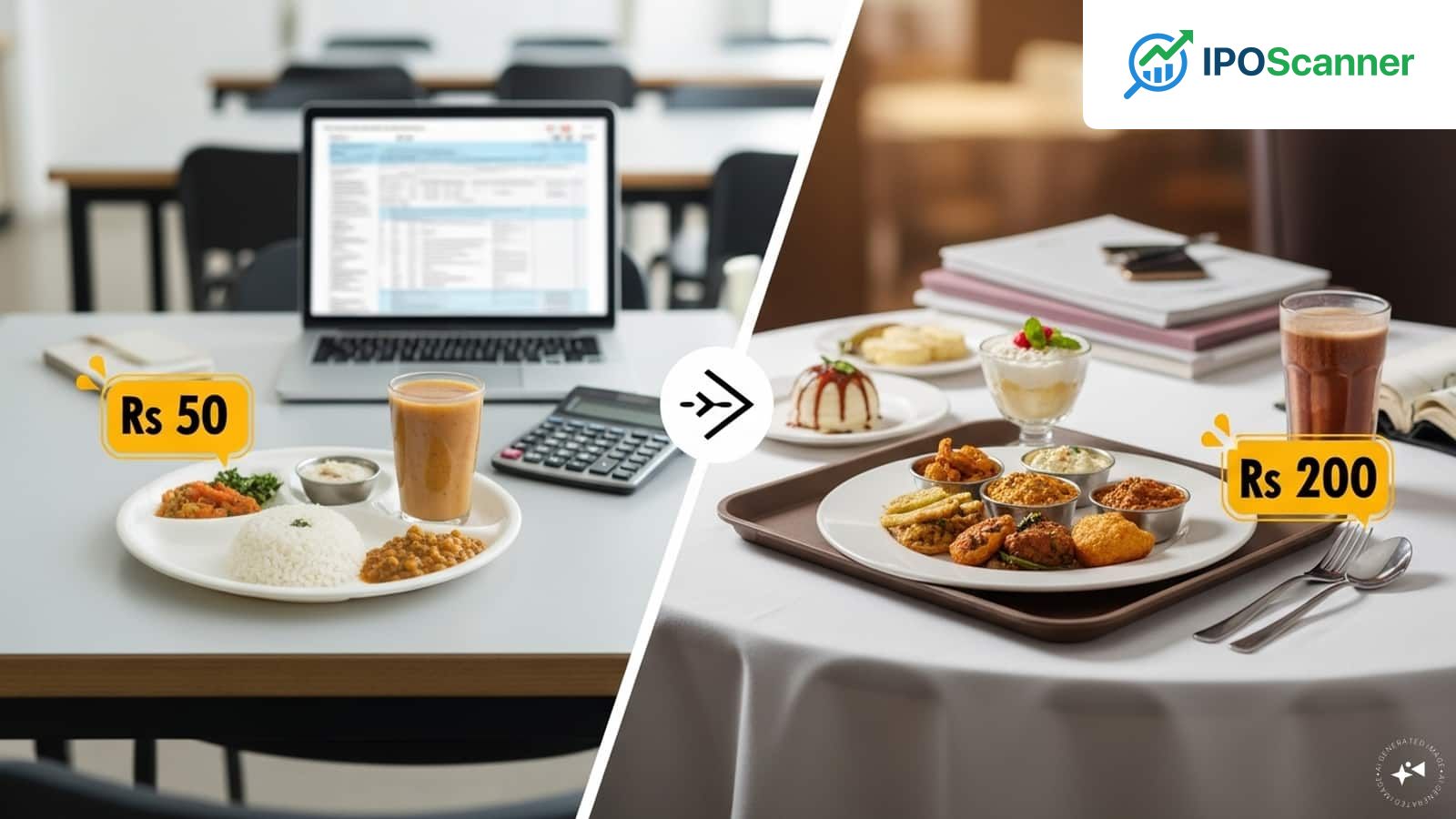
Tax Department Clarifies Eligibility for Meal Voucher Reimbursement Under ITR Filing
Meal Voucher Tax Exemption Rule Causes Confusion for Salaried Taxpayers
The income tax exemption on meal vouchers has become a point of confusion for salaried taxpayers, particularly while filing income tax returns (ITR) for the financial year (FY) 2025–26. The confusion stems from the fact that the higher exemption limit of Rs 200 per meal is not applicable for the current filing year.
Under the new Income Tax Act, many employees are now receiving meal benefits of up to Rs 200 per day through cards or vouchers for FY 2026–27. However, the tax exemption on this enhanced limit will apply only from the next year. For FY 2025–26 (AY 2026–27), the exemption continues under the older framework, where only Rs 50 per meal is tax-free and only if the taxpayer opts for the old tax regime.
The exemption limit of Rs 50 per meal remains in effect for FY 2025–26 (AY 2026–27) and is available only under the old tax regime. Where employers are crediting higher amounts, everything above Rs 50 per meal is taxable in the current year. This means that even if an employer provides Rs 200 per meal, only Rs 50 qualifies as exempt income, and the remaining Rs 150 is treated as a taxable perquisite and forms part of the employee’s salary.
Read also: Treasury Yields Experience Largest Increase in Two Weeks Following Release of Labor Market Data
| Comparison of Meal Voucher Exemption Limits | | --- | --- | | Old Tax Regime (FY 2025–26) | New Tax Regime (FY 2026–27) | | Rs 50 per meal | Rs 200 per meal | | Available only under old tax regime | Available under both tax regimes |
The Rs 200 limit comes from revised provisions introduced under the new Income-Tax Rules, but these changes are prospective. According to Rule 15(5)(a) of the Income-tax Rules, 2026, the enhanced exemption limit of Rs 200 per meal will apply from the Tax year 2026–27 onwards. Any meal benefit provided in excess of the applicable threshold will continue to be taxable as a perquisite.
In simple terms, while the exemption limit has been increased on paper, it will only apply from the next tax cycle. Meal vouchers up to Rs 200 per meal are not taxable, and this is applicable for those under the new tax regime. This will equate to Rs 4,400 for one meal a day or Rs 8,800 for two meals a day, based on 22 working days a month.
Another key point adding to the confusion is the tax regime. For FY 2025–26, meal voucher exemption is not available under the new tax regime. Taxpayers will continue to be governed by the existing provisions of the Income-tax Act, 1961, and the tax treatment of meal benefits remains unchanged. Exemption is available only to individuals opting for the old tax regime.
Read also: US-Iran Tensions Spark Uptick in Oil Prices Amid Global Market Decline
Employees who receive meal cards or Sodexo benefits should not assume that if the benefit is not visible in Form 16, it is not taxable. Part B of Form 16 typically does not show meal vouchers as a distinct line item, but rather captures the aggregate value of perquisites under Section 17(2). Employees may consider Form 12BA alongside their salary structure, payslips, or detailed compensation break-up provided by the employer to determine the specific bifurcation of such benefits.
Employees should retain supporting documentation related to the meal card benefit, such as transaction statements, employer policies, salary records, usage details, etc. These documents help substantiate compliance with the prescribed conditions under Rule 15(5)(a) of the Income-tax Rules, 2026, and support the claim of exemption, where applicable.
More in Economy

Treasury Yields Experience Largest Increase in Two Weeks Following Release of Labor Market Data

US-Iran Tensions Spark Uptick in Oil Prices Amid Global Market Decline

MoSPI Releases Uniform Norms for DDP Estimates with 2022-23 Base Year

