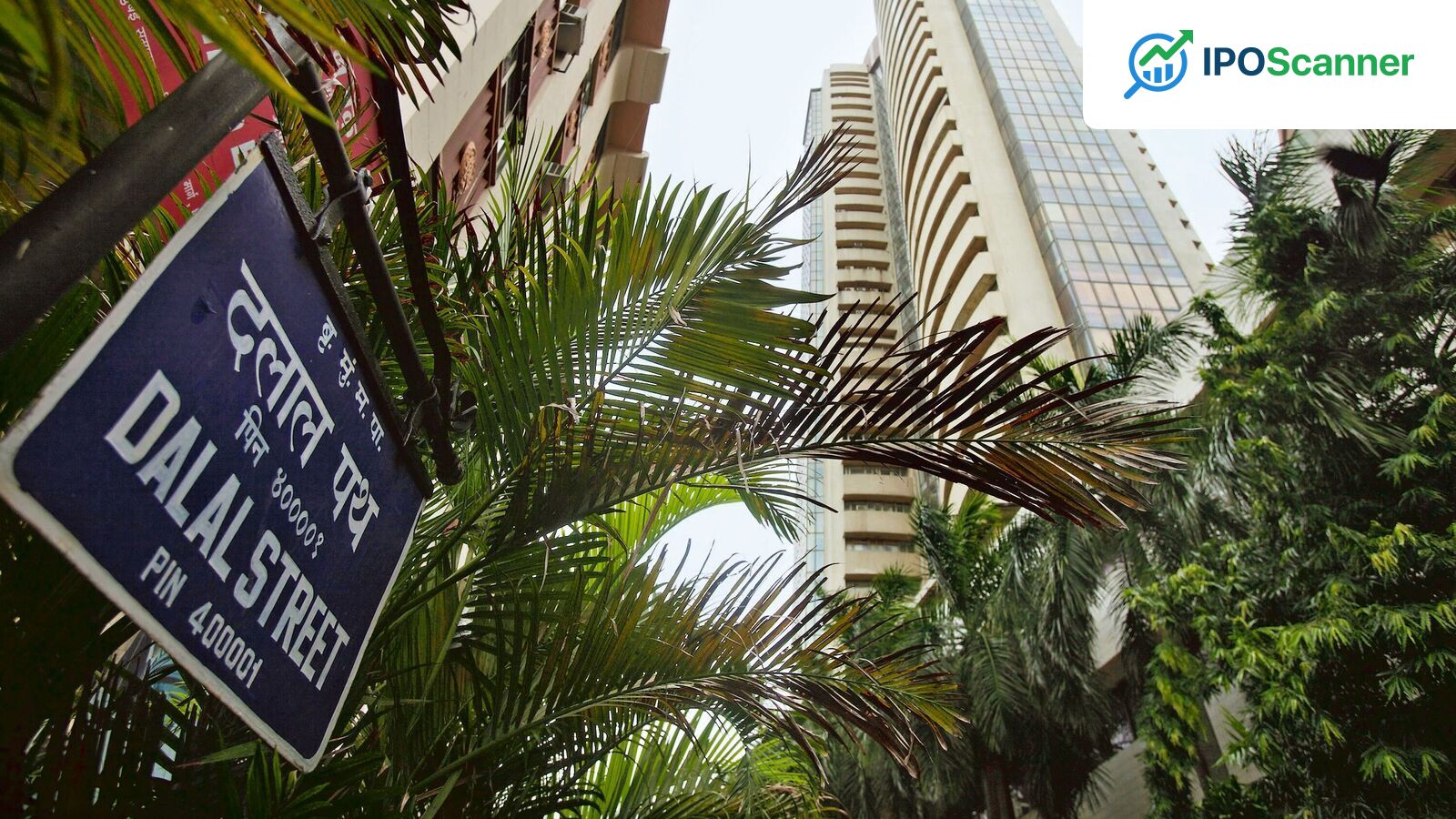
Taiwan Enters Top 5 Global Markets by Market Capitalisation, Surpassing India's Dalal Street
Global Equity Markets See Leadership Shift as Taiwan Surpasses India
The global artificial intelligence (AI) boom has powered a sharp rally in technology stocks, leading to a fresh rotation in the global leadership ranking. According to Bloomberg data, Taiwan has trumped India to become the world's fifth biggest market in terms of market capitalisation (m-cap). Taiwan's market cap climbed 3.5% to $4.95 trillion on Monday, beating the Indian stock market's valuation of $4.92 trillion.
This shift comes at a time when global equity markets are increasingly being driven by a narrow set of mega-cap technology companies. In Taiwan's case, semiconductor major Taiwan Semiconductor Manufacturing Co. (TSMC) has emerged as the dominant force, while India has seen relative underperformance amid foreign investor outflows, currency weakness, earnings slowdown, oil shock, and lack of AI-related trade.
| Market | Market Capitalisation |
|---|---|
| Taiwan | $4.95 trillion |
| India | $4.92 trillion |
Read also: Treasury Yields Experience Largest Increase in Two Weeks Following Release of Labor Market Data
Taiwan's rise in global m-cap rankings has been largely influenced by the global AI supply chain trade, where it plays a critical role through semiconductor manufacturing. In 2026 so far, Taiwan's TAIEX index has surged 48%. TSMC, the world's largest contract chipmaker, has been the primary beneficiary of surging demand for AI chips as the stock is up 43% on a year-to-date (YTD) basis.
However, this rally has also led to an unusually high level of market concentration. TSMC now accounts for 40-50% of Taiwan's market cap, making the concentration risk very high. New regulations are also in TSMC's favour, with Taiwan's financial regulator increasing the limit for investment in a single stock by domestic funds to 25% from 10% earlier.
In contrast, India's decline in global market-cap rankings is a combination of multiple factors weighing on equity performance. Foreign institutional investor (FII) flows have remained volatile, with sustained selling pressure in secondary markets. NSDL data shows the highest-ever FII selling on a YTD basis of ₹227,602 crore, above a massive ₹166,286 crore already offloaded in 2025.
| Year | FII Selling (₹ crore) |
|---|---|
| 2025 | ₹166,286 |
| 2026 YTD | ₹227,602 |
Read also: US-Iran Tensions Spark Uptick in Oil Prices Amid Global Market Decline
Currency depreciation and elevated crude oil prices have added to macroeconomic concerns, impacting sentiment. Analysts believe that the threat to India's position in the world equity ranking persists in the near term, but it is not a long-term concern. They see it as part of a cyclical rotation within global equity markets, where leadership shifts depending on macro conditions and sectoral trends.
Market participants believe that a sustained reversal in foreign flows would depend on a combination of macro stabilisation and valuation comfort. Geopolitical developments, particularly in the Middle East, remain an important variable influencing oil prices and, by extension, India's macro stability. If the conflict resolves, oil could come back to around $80, which would be a one-stop solution for India, and then India could outperform Taiwan and South Korea comfortably.
Investor Takeaway
Investors should be aware of the impact of the AI boom on global markets and the potential for Taiwan to continue its rise in market capitalization rankings.
More in Market

Treasury Yields Experience Largest Increase in Two Weeks Following Release of Labor Market Data

US-Iran Tensions Spark Uptick in Oil Prices Amid Global Market Decline

Indian Stocks to Watch: BHEL, Agarwal Industrial, JBM Auto, Rajesh Exports, Indian Energy Exchange, Lenskart Solutions in Market Focus on June 4.