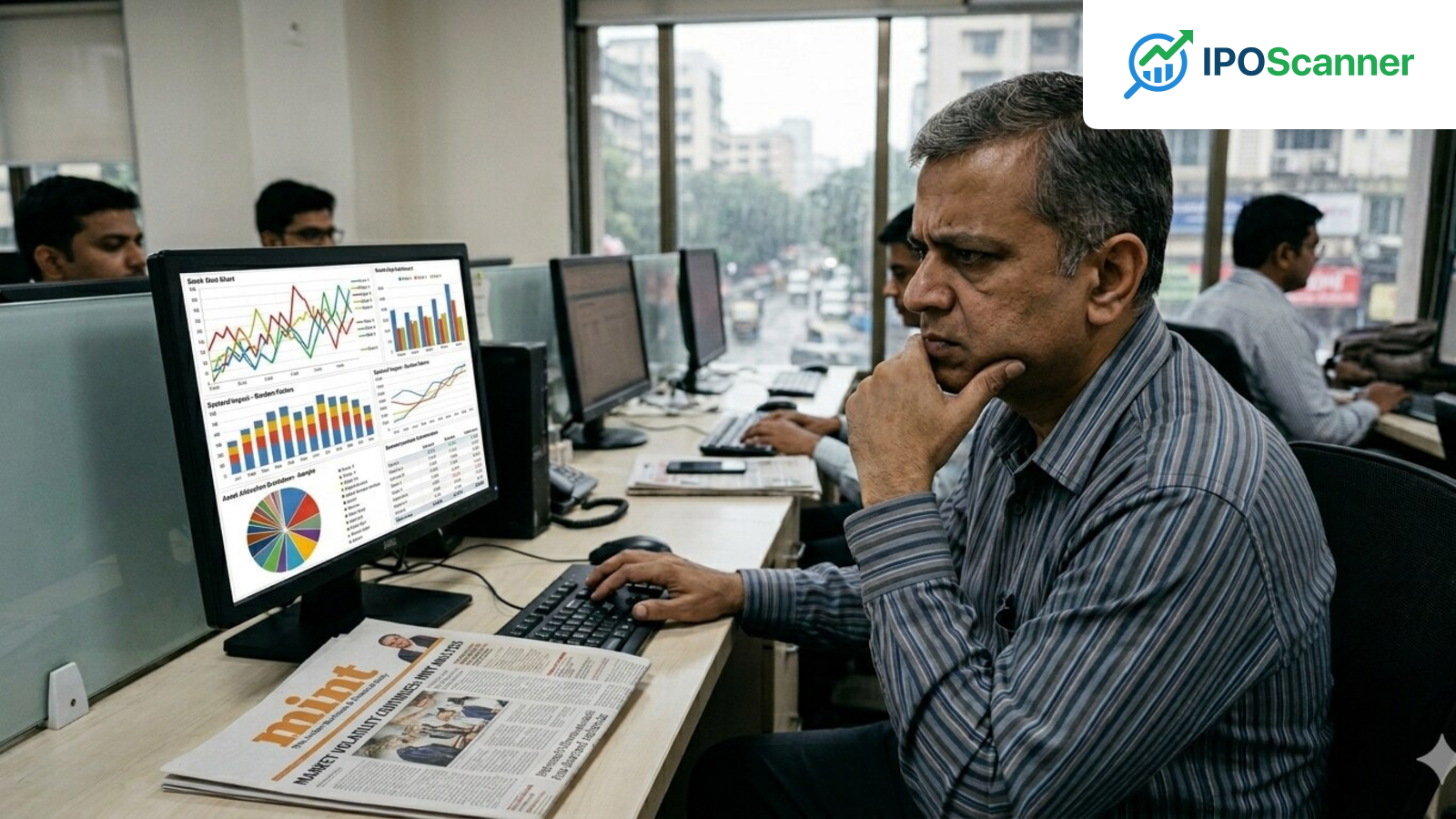
Stock Market Experiences Significant Decline: ₹11 Lakh Crore Wiped Out in Four Consecutive Sessions
Indian Stock Market Under Pressure Due to Confluence of Strong Headwinds
The Indian stock market is facing intense pressure due to a confluence of strong headwinds, including the Middle East conflict, higher crude oil prices, a weaker rupee, massive foreign capital outflows, and waning expectations of monetary easing. On Tuesday, 12 May, the Sensex and the Nifty 50 declined over 1% in intraday trade, falling for the fourth consecutive session.
| Market Index | 12 May | 6 May |
|---|---|---|
| Sensex | -1% | |
| Nifty 50 | -1% | |
| Cumulative Market Capitalisation of BSE-listed Firms (₹) | 462 lakh crore | 473 lakh crore |
| Loss to Investors (₹) | ₹11 lakh crore |
In these four days, the Sensex and the Nifty 50 have shed more than 3% each. The cumulative market capitalisation of BSE-listed firms dropped to ₹462 lakh crore during Tuesday's session from ₹473 lakh crore on Wednesday, 6 May.
Read also: Treasury Yields Experience Largest Increase in Two Weeks Following Release of Labor Market Data
The Nifty 50 has breached 23,600 on the downside, and it is heading to the next major support at 23,500. If it breaches even below this, the next support is near 23,100. Market volatility is high, and the outlook is hazy due to the potential talks between the US and Iran having failed, and signs of fresh escalations in tensions between them.
US President Donald Trump rejected Iran's proposals, terming them "totally unacceptable" and warning that the ceasefire with Iran was on a 'massive life support', hinting at its end. Tehran also issued a statement saying that it was ready for any aggression.
Rohit Srivastava, the founder and market strategist at Indiacharts.com, said that the possibility of the Nifty slipping below 23,500 cannot be ruled out. Ajit Mishra, SVP of Research at Religare Broking, also said that given the weak global cues and the impact of Prime Minister Narendra Modi's austerity call on market sentiment, the index could fall further to 23,500 or even lower.
| Potential Support Levels for Nifty 50 | |
|---|---|
| 23,100 | |
| 23,500 | |
| 23,600 |
Read also: US-Iran Tensions Spark Uptick in Oil Prices Amid Global Market Decline
The market has been consolidating within a broad range of 23,800 to 24,500 for nearly three weeks now. The next key support level comes around 23,500. If that level is breached, the market could even test the gap area visible on the weekly charts near 23,150.
Warren Buffett's Berkshire Hathaway is reportedly sitting on cash at this juncture, signalling the possibility of a prolonged downtrend in the market. As media reports suggest, Berkshire Hathaway held a cash pile of more than $397 billion in the first quarter of 2026.
The company increased its cash holdings in the first quarter. When Buffett left Berkshire Hathaway as the CEO in December last year, Berkshire's cash pile was $370 billion.
G Chokkalingam, founder and head of research at Equinomics Research, said that a lot will depend on global and domestic developments, particularly whether geopolitical tensions escalate further or the US gets drawn deeper into conflict.
"I would not advise investors to move entirely into cash. The outlook depends largely on how the Iran-US conflict evolves because oil prices are the key variable driving the market right now," said Chokkalingam.
Ajit Mishra of Religare Broking does not recommend completely staying away from the market. Instead, he suggests investors and traders should adopt a balanced strategy.
"On the index front, one can look for shorting opportunities. Investors can also hedge their long positions by buying protective puts. At the sectoral level, there are still selective opportunities on the long side. Pharma and healthcare stocks continue to show strength. There are also opportunities in select FMCG counters and certain energy stocks that are holding firm despite market weakness," said Mishra.
"At the same time, there are shorting opportunities in crude oil-sensitive sectors and also in banking and IT. So, rather than exiting the market entirely, investors should maintain positions on both sides — selectively buying strong sectors and hedging or shorting vulnerable segments," Mishra added.
Investor Takeaway
Investors should consider holding cash and staying on the sidelines due to the market's uncertain outlook.
More in Market

Treasury Yields Experience Largest Increase in Two Weeks Following Release of Labor Market Data

US-Iran Tensions Spark Uptick in Oil Prices Amid Global Market Decline

Indian Stocks to Watch: BHEL, Agarwal Industrial, JBM Auto, Rajesh Exports, Indian Energy Exchange, Lenskart Solutions in Market Focus on June 4.