Startup Founder's Unrelenting Work Ethic Raises Questions About Burnout and Resilience
Founder of AI Startup Corgi Sparks Debate with Intense Work Routine
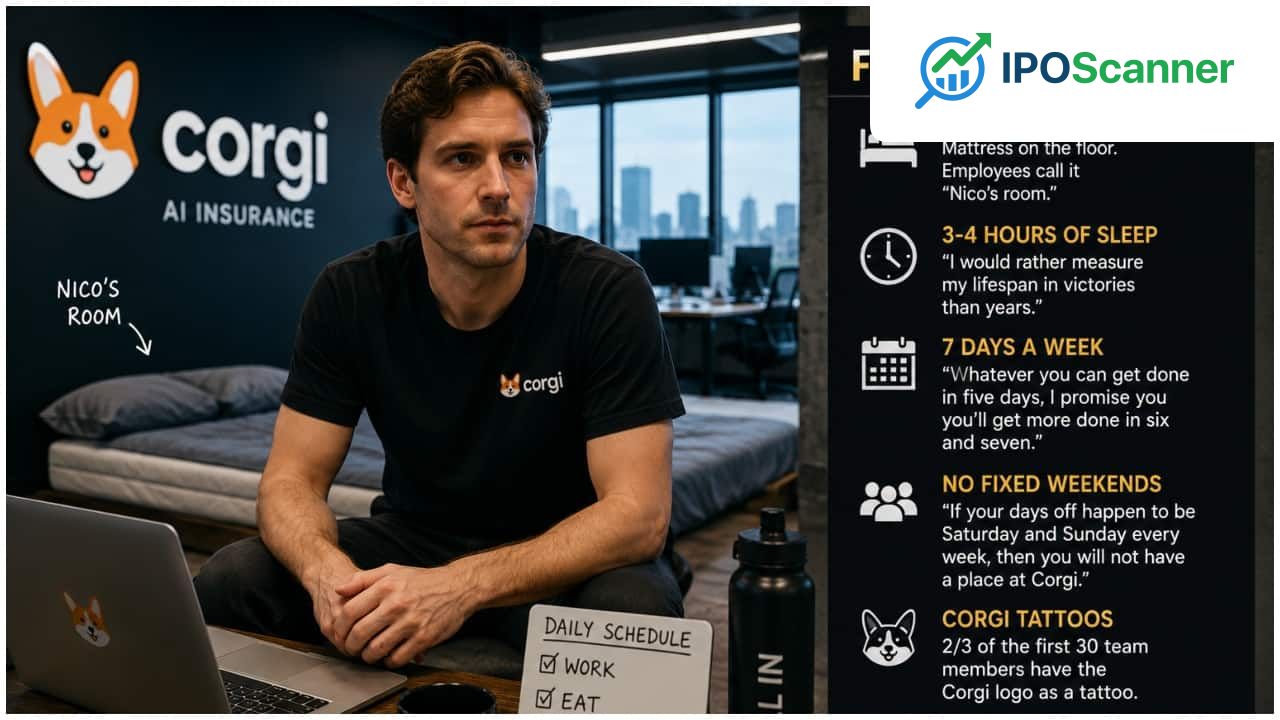
Nico Laqua, co-founder of rapidly growing AI insurance company Corgi, has triggered controversy in the technology industry after discussing his intense work routine, which includes sleeping in the office, working every day of the week, and sacrificing sleep in pursuit of company growth.
Laqua's remarks, shared during a recent appearance on the "20VC" podcast hosted by Harry Stebbings, have drawn attention as discussions around founder burnout, workplace expectations, and so-called "grind culture" continue to divide the startup world. Corgi, founded in 2024, has experienced a rapid rise in valuation, achieving unicorn status in May after raising a Series B funding round at a valuation of $1.3 billion. Just three weeks later, it secured a further Series B1 round that valued the business at $2.6 billion, according to a report in Business Insider.
During the podcast conversation, Stebbings posed a hypothetical question to Laqua, asking whether he would prefer Corgi to become a trillion-dollar company if it meant dying at 50, or see the business fail while living until 80. Laqua replied, "The answer to that is pretty easy. I'm dying either way." His comments have become a focal point in a wider conversation about the increasingly intense work habits being embraced by some startup founders and technology executives.
Read also: Treasury Yields Experience Largest Increase in Two Weeks Following Release of Labor Market Data
Laqua revealed that he keeps a mattress inside Corgi's office, where employees refer to the space as "Nico's room." He added that he typically sleeps only three to four hours each night, saying, "I would rather measure my lifespan in victories than years." His comments come amid ongoing debate among health experts and business leaders regarding the long-term effects of chronic sleep deprivation, workplace stress, and burnout.
While some companies continue experimenting with shorter working weeks and flexible schedules, Laqua argued that longer working hours remain a competitive advantage for high-growth businesses. "Whatever you can get done in five days, I promise you you'll get more done in six and seven," he said. "You should go all out." According to Laqua, the culture he observes among ambitious technology firms in San Francisco supports this view, with high-growth startups often having full offices on the weekends.
| Company | First Funding Round | Current Valuation |
|---|---|---|
| Corgi | Series B ($1.3B) | $2.6B (Series B1) |
| (May 2024) | (June 2024) |
Laqua said that employees are permitted to take time off when needed, but suggested that Corgi does not operate around a conventional weekend structure. Workers may take a day off "every now and then," but there is no fixed expectation that Saturdays and Sundays are reserved for rest. As one employee noted, "If your days off happen to be Saturday and Sunday every week, then you will not have a place at Corgi."
Read also: US-Iran Tensions Spark Uptick in Oil Prices Amid Global Market Decline
The remarks quickly attracted attention across the startup community, with some agreeing that intense commitment is often necessary in fast-growing companies, while others argued that such expectations risk creating unhealthy work environments. Among those responding was Karri Saarinen, co-founder of software company Linear, who suggested that Laqua's perspective reflects a mindset often found among younger founders whose personal identity becomes closely tied to their companies.
Laqua responded briefly, saying, "If you're obsessed with a problem, you work hard." The podcast conversation generated additional attention after Stebbings highlighted an unusual detail about Corgi's early workforce, sharing that 2/3 of the first 30 team members have the Corgi logo as a tattoo. According to PitchBook data, Corgi currently employs 177 people.
Investor Takeaway
Founder burnout and grind culture may impact startup growth and valuation.
More in Market

Treasury Yields Experience Largest Increase in Two Weeks Following Release of Labor Market Data

US-Iran Tensions Spark Uptick in Oil Prices Amid Global Market Decline

Indian Stocks to Watch: BHEL, Agarwal Industrial, JBM Auto, Rajesh Exports, Indian Energy Exchange, Lenskart Solutions in Market Focus on June 4.