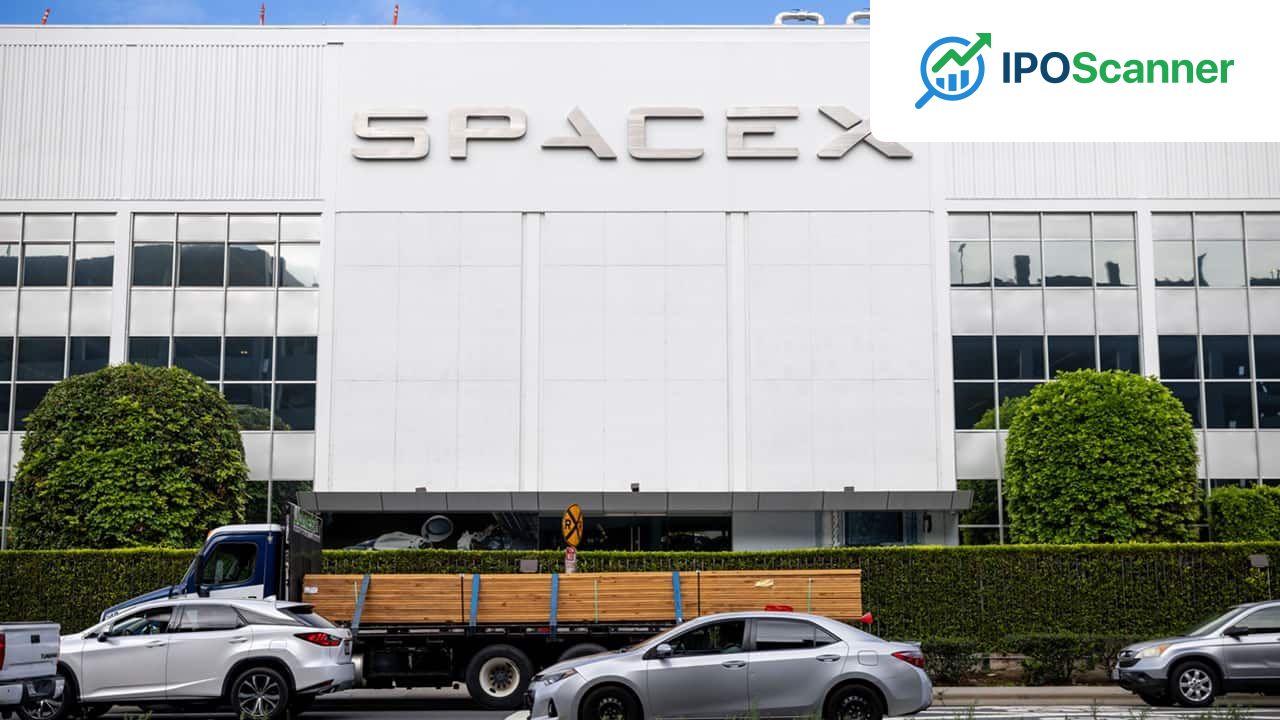
SpaceX Reports $18.7 Billion in Revenue, Boosts Starlink Profits Amid AI Development Costs
SpaceX's IPO Roadshow Presentation Reveals Company's Shift to Starlink-Driven Growth
Elon Musk's sprawling empire, SpaceX, has taken a significant step towards transparency with its long-awaited IPO roadshow presentation. The document offers investors a rare glimpse into the company's finances, highlighting a dramatic shift towards Starlink's profitability and a massive investment in artificial intelligence expansion.
According to the roadshow deck, SpaceX generated revenue of $18.7 billion in 2025, representing a 33% annual growth from $14 billion in 2024 and $10.4 billion in 2023. Adjusted EBITDA rose to $6.6 billion last year from $5.4 billion in 2024, demonstrating the company's increasing profitability.
The presentation categorizes the business into three segments: Space, Connectivity, and AI. Starlink, the satellite internet business, has emerged as the primary earnings engine, with the connectivity division generating $11.4 billion in revenue in 2025, nearly three times the $3.9 billion reported in 2023.
Read also: Indian IT Stocks Decline Amid Global Tech Selloff
| Segment | 2023 | 2025 |
|---|---|---|
| Space | $3.6 billion | $4.1 billion |
| Connectivity | $3.9 billion | $11.4 billion |
| AI | N/A | $3.2 billion |
The connectivity division's adjusted EBITDA surged to $7.2 billion from $1.6 billion over the same period, highlighting the rapid operating leverage of the satellite internet business. Starlink's subscriber base reached 10.3 million by the first quarter of 2026, up from 8.9 million at the end of 2025 and more than triple its 2023 base. The network now covers over 3.3 billion people across 164 countries and territories.
In contrast, the launch business remains strategically important but financially modest. Space revenue stood at $4.1 billion in 2025, up only slightly from $3.6 billion in 2023, while segment adjusted EBITDA declined to $0.7 billion as the company accelerated investment in Starship development. Research and development spending in the segment doubled to $3 billion in 2025.
The AI division generated $3.2 billion in revenue in 2025, up 22% year-on-year, but remained loss-making, reporting a negative adjusted EBITDA of $1.2 billion. Management stated that most AI revenue in 2023 and 2024 came from X, formerly Twitter, but the business is increasingly being built around Grok, cloud-computing services, and enterprise AI offerings.
Read also: Stocks in Focus: EMS and Creative Newtech Surge on Order Wins, ZEE Rises Ahead of Board Meeting
SpaceX has committed enormous sums to its AI vision, with capital expenditure jumping from $4.4 billion in 2023 to $20.7 billion in 2025, driven largely by AI compute infrastructure, satellite deployment, and launch infrastructure expansion. The company estimates a near-term addressable market of roughly $6 trillion across space, connectivity, and AI, while claiming the AI opportunity alone could eventually reach $26.5 trillion.
Despite reporting a net loss of $4.9 billion in 2025, SpaceX told investors that its profitability is being suppressed by heavy investment spending rather than weak operations. The company said it ultimately aims to become a "high-growth, high-margin business," targeting gross margins of roughly 70%, significantly above its 2025 level of 49%, as AI monetisation scales and Starlink margins improve.
The roadshow presentation suggests that SpaceX wants investors to view it not simply as a rocket company, but as a vertically integrated infrastructure platform spanning launch services, global connectivity, and artificial intelligence, with Starlink funding a capital-intensive push into what Musk believes could become the company's largest business yet.
Investor Takeaway
Investors should note the significant growth in SpaceX's revenue and profitability, particularly in the Starlink segment.
More in Market

Indian IT Stocks Decline Amid Global Tech Selloff

Stocks in Focus: EMS and Creative Newtech Surge on Order Wins, ZEE Rises Ahead of Board Meeting

SMID Cap Mutual Funds Deliver Superior Long-Term Returns