SpaceX Files for Initial Public Offering, Disclosing $18.7 Billion in Revenue and Artificial Intelligence Expansion Plans
SpaceX Files for Largest Initial Public Offering in Stock Market History
On Wednesday, Elon Musk's rocket, satellite, and artificial intelligence company, SpaceX, filed documents to go public on the Nasdaq stock exchange, signaling what analysts are calling the largest initial public offering (IPO) in stock market history. The listing, expected as early as June, could raise between $50 billion and $75 billion from investors and value the company at $1.25 trillion, making it the first US company to enter the public markets at a trillion-dollar valuation.
For investors, the filing represents a generational opportunity to own a stake in a company that has fundamentally rewritten the economics of space travel, dominates US rocket launches five to one over its nearest competitors, and is now pivoting aggressively towards artificial intelligence infrastructure at a scale that dwarfs most technology companies on earth. For the broader market, a successful SpaceX debut could unlock a wave of long-delayed mega-listings, including those of AI companies Anthropic and OpenAI, and signal that public markets are once again open for the most ambitious, capital-hungry businesses of the technology era.
SpaceX's Financial Picture Revealed
Read also: SMR Jewels IPO Successfully Lists with Institutional Support
For the first time in the company's 23-year history, SpaceX has disclosed its full financial picture to the public. The 277-page prospectus lays bare a business that generated $18.7 billion in revenue in 2025, a 33% increase from the prior year, yet recorded a net loss of $4.9 billion over the same period, reversing a $791 million profit in 2024.
| Year | Revenue | Net Loss |
|---|---|---|
| 2024 | $13.9 billion | -$791 million |
| 2025 | $18.7 billion | -$4.9 billion |
SpaceX plans to list its Class A shares on the Nasdaq stock exchange, as well as on the recently launched Nasdaq Texas exchange, under the ticker symbol SPCX. SpaceX is headquartered in Starbase, Texas.
Capital expenditure nearly doubled to $20.7 billion in 2025 from $11.2 billion in 2024, with $12.7 billion of that directed towards artificial intelligence infrastructure. A further $4.2 billion was allocated to Starlink operations, and $3.8 billion to rockets and other space ventures.
Read also: Zepto Nears $1 Billion Quarterly Net Order Value Milestone Before IPO
Starlink Drives Revenue While AI Ambitions Reshape the Company
Starlink, SpaceX's low-Earth-orbit satellite internet service, has become the dominant revenue engine of the business since its commercial launch in 2021, accounting for the majority of the company's $18.67 billion in annual revenue. But the bigger strategic story buried inside the prospectus is not satellites. It is artificial intelligence, and the scale at which SpaceX intends to pursue it.
Following SpaceX's February 2026 merger with xAI, the company that developed the Grok AI chatbot and owns the social media platform X, SpaceX has repositioned itself not merely as a space company that uses AI, but as an AI company that happens to operate in space. The distinction matters enormously for how investors should read the filing and how the company expects to generate returns over the next decade.
SpaceX's AI Strategy: Orbital Data Centres and the Terafab Chipmaking Facility
The most striking element of SpaceX's AI ambitions is its plan to physically launch data centres into orbit. The company has identified a $2.4 trillion market opportunity in what it calls AI infrastructure, arguing that space-based data centres offer advantages in cooling, energy generation from solar power, and latency for certain global communications applications that terrestrial facilities cannot match.
To feed those data centres, SpaceX is collaborating with Tesla on a joint advanced chip manufacturing facility, referred to internally as the Terafab. The facility is designed to produce the specialised AI chips required to run large-scale machine learning workloads, reducing SpaceX's dependence on third-party semiconductor suppliers and giving the broader Musk ecosystem greater vertical integration across the AI stack.
Elon Musk's Ownership Stake and Voting Control
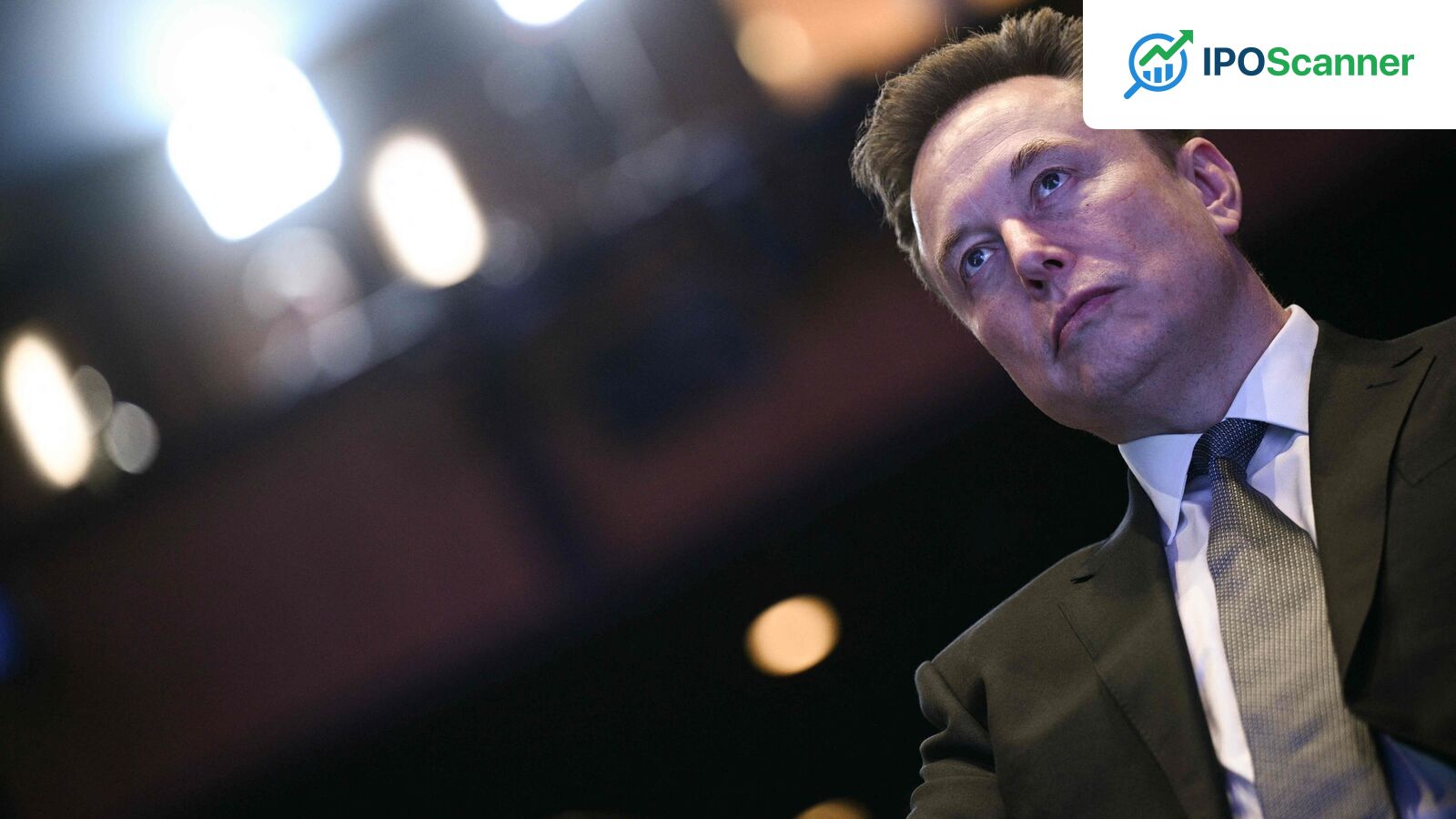
The filing confirms Musk holds more than 50% of SpaceX's shares outstanding and controls 85.1% of shareholder voting power through a dual-class structure in which Class B shares carry 10 votes each, compared to one vote per Class A share available to public investors. Based on the company's current valuation of $1.25 trillion, Musk's ownership stake is worth in excess of $635 billion.
SpaceX Board Members Disclosed for the First Time
The prospectus also marks the first public disclosure of SpaceX's full board composition. Musk serves as chairman. President and Chief Operating Officer Gwynne Shotwell sits alongside him as a director. Additional board members include Chief Financial Officer Bret Johnsen; venture capitalists Randy Glein, Steve Jurvetson, Luke Nosek, and Ira Ehrenpreis, the latter of whom also serves on Tesla's board; Antonio Gracias; and Google executive Donald Harrison.
Goldman Sachs to Lead Underwriting; IPO Timeline Takes Shape
Goldman Sachs has been selected as the lead underwriter for the offering, beating out rivals including Morgan Stanley, Bank of America, Citigroup, and JPMorgan Chase, according to people familiar with the matter. SpaceX is targeting a listing as early as 12 June, with a roadshow beginning 4 June and a share sale as soon as 11 June, according to Reuters. The company could seek to raise between $50 billion and $75 billion from the offering.
SpaceX's Bold Mission Statement and the Road to Mars
In its prospectus, SpaceX framed its objectives in sweeping terms: "to build the systems and technologies necessary to make life multiplanetary, to understand the true nature of the universe, and to extend the light of consciousness to the stars." The company added that it intends to "harness the Sun to power a truth-seeking artificial intelligence that advances scientific discovery, and ultimately to build a base on the Moon and cities on other planets."
Investor Takeaway
Investors may consider taking a stake in SpaceX, a company that has fundamentally rewritten the economics of space travel and is now pivoting aggressively towards artificial intelligence infrastructure.
More in IPO

SMR Jewels IPO Successfully Lists with Institutional Support

Zepto Nears $1 Billion Quarterly Net Order Value Milestone Before IPO

Merritronix IPO Sees Robust Subscription, Oversubscribed by 293 Times on Final Day