Silver Prices Experience Significant Decline at Week's End Following Turbulent Market Activity
Silver Prices Plummet Amid Market Volatility
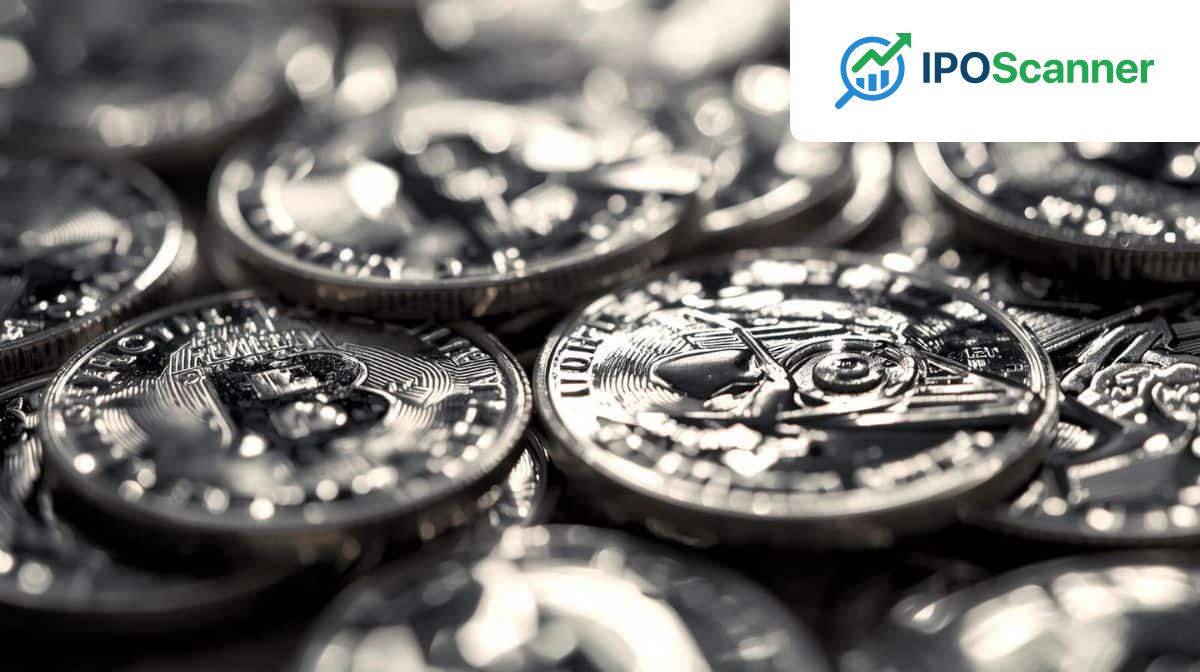
Silver collapsed to below $80 an ounce at the end of a week marked by extreme price swings, bringing a fresh bout of volatility to a market that has been one of this year's most turbulent trades.
The white metal surged as much as 11.3% in the week through Wednesday, amid a wave of investor enthusiasm for AI-related equities and the industrial metals used in data-center power systems, cabling, and cooling. Speculation around fuel availability in top miner Peru on Monday also boosted prices. However, the metal was brought back down to earth by further signs that the Iran war was fueling inflation, leading investors to demand higher yields from government bonds. Higher borrowing costs are a negative for the metal, which typically pays no interest. Silver fell as much as 9.3% to $75.78 an ounce on Friday, as investor bets linked to the AI boom also took a dive.
For silver, the sharp fluctuations hark back to the early weeks of the year when traders dubbed it effectively "untradeable," shedding as much as 36% in a single day. The question for investors now is, with silver still more than 130% higher than it was a year ago, whether the metal has fully detached itself from the speculative frenzy that pulled prices out of the range of many longer-term investors, jewelers, and manufacturers.
Read also: Gold and Silver Prices Decline Amid Strengthening Dollar and Inflation Concerns
HSBC Holdings Plc's chief precious metals analyst, James Steel, believes that silver remains fundamentally overvalued. Demand for the metal in jewelry and industry would continue to weaken in the face of high prices, he said. Higher costs have already encouraged some jewelers and manufacturers to redesign products and substitute cheaper materials. The solar industry, which chews up more than a fifth of the annual mined supply, has had some success in replacing silver, the most conductive element on the periodic table, with copper, the second-most conductive.
| Year | Silver's Share of Total Cost of a Panel |
|---|---|
| 2023 | 3.4% |
| 2024 (at $90 an ounce) | 29% |
In 2023, silver made up just 3.4% of the total cost of a panel, according to BloombergNEF. When prices nudged above $90 an ounce this year, its share had grown to 29%. Despite this, a relatively modest inflow of money from retail or professional investors could send prices higher once again. Even individual investors have prompted squeezes by buying up a large chunk of available supply before, as Warren Buffett's Berkshire Hathaway Inc. did in 1998, or the billionaire Hunt brothers in the 1980s.
More recently, the London market was gripped by a historic short squeeze in October, as tariff fears prevented metal from flowing out of packed warehouses in the US. Millions of ounces of silver later arrived in London to end that tightness, but the experience of an acute shortage has still left a lingering anxiety in the market. James Steel noted that silver still has the potential to "spike higher on tariff threats, real or imagined."
Read also: Gold and Silver Prices in India: A Review of Current Rates Across Major Cities
Bulls argue there are plenty of good reasons to own the precious metal, including as a way to bet on inflation and currency depreciation in developed economies. Silver has also long enjoyed a cult following among retail investors, some of whom adhere to a popular conspiracy theory that prices are suppressed by large banks and institutions. More and more retail speculation has migrated to more opaque trading venues, including synthetic contracts-for-difference and eFX platforms popular in Asia and the Middle East.
Those flows are difficult to track directly, but ultimately flow into futures and interbank markets as providers hedge their exposure. Coupled with leveraged silver-backed exchange-traded funds and short-dated options that helped propel the metal to its all-time high in January, silver is increasingly traded within venues popular with younger retail investors experienced in dealing with cryptocurrencies. For them, silver's volatility is neither unexpected nor unwelcome.
This moment "is an interesting inflection point, and a lot of it is price driven," said Nicky Shiels, head of metals strategy at MKS Pamp SA. "If you can break $100 an ounce, you're going to get a lot more of that retail, FOMO, fast money crowd. That would come back with a vengeance."
Strong demand from China helped put a floor under prices after the rally ran out of steam at the end of January. High domestic prices prompted traders to ship silver from all over the world to cash in on the arbitrage opportunity, with much of the metal flowing through Hong Kong. More recently, traders say that physical demand in the world's biggest consumer of the metal has been quiet. Silver premiums in Shanghai have been fluctuating around parity. A recent surge in imports in March reflected strong demand early in the year rather than recent buying, said Song Jiangzhen, a researcher at Guangdong Southern Gold Market Academy.
In the Shuibei market in Shenzhen, the center of China's retail bullion market, the mood is tepid. "There isn't real profit-making opportunity in retail sales," said Song. "The speculative money just ends up flipping back and forth."
Investor Takeaway
Investors should be cautious of the volatility in silver prices due to market fluctuations.
More in General
Gold and Silver Prices Decline Amid Strengthening Dollar and Inflation Concerns
Gold and Silver Prices in India: A Review of Current Rates Across Major Cities
Silver Price Plunge Continues Amid Strong US Job Report and Escalating Middle East Tensions