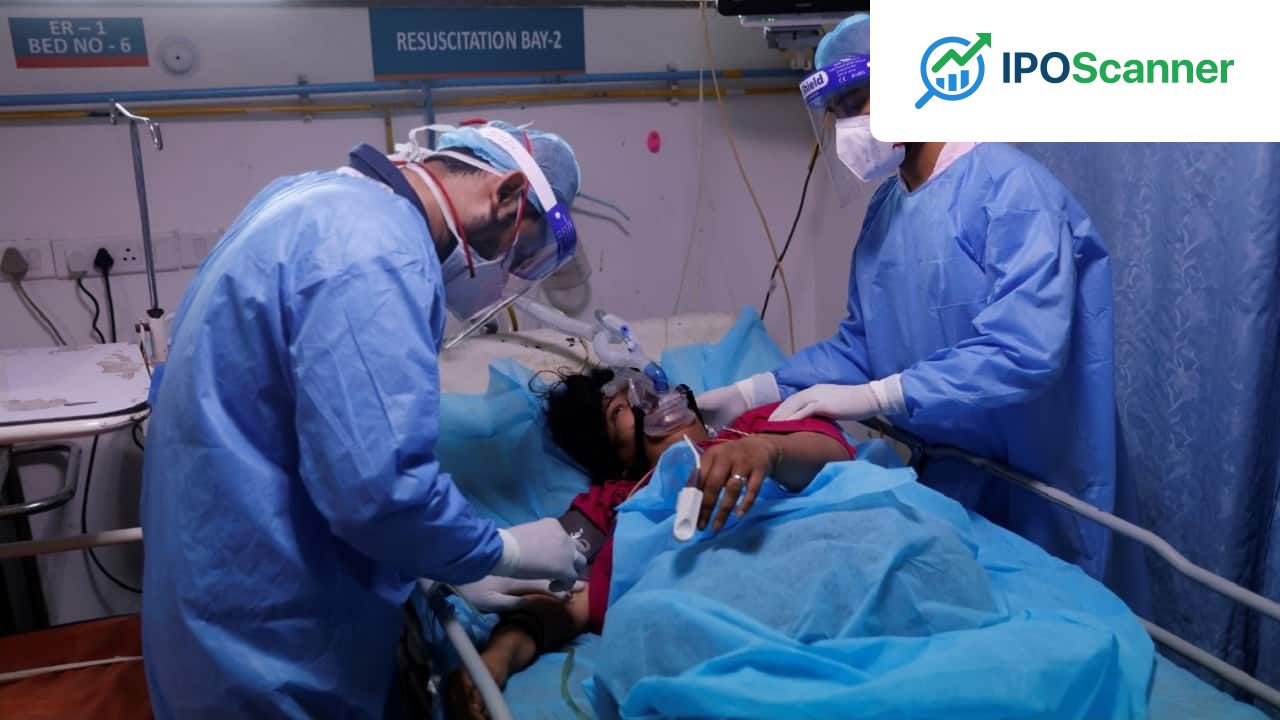
Rupee's Decline Triggers Surge in Hospital Capital Expenditure, Clouds Expansion Prospects
India's Hospital Sector Faces Rising Capital Expenditure Costs Due to Weakening Rupee
The depreciation of the Indian rupee is causing a sharp increase in capital expenditure in the country's hospital sector, with import-heavy equipment costs rising to the point where they are materially altering project budgets and investment plans.
Hospital Executives Warn of Potential Price Increases
Hospital executives say that at some point, they may have to pass on the cost increases to patients if the rupee slide continues. The rupee has depreciated around 6 percent since the start of the Iran war and is the worst performing major Asian currency. On May 27, the rupee was trading at 95.7 against the dollar after falling to new lows in recent weeks.
Read also: Treasury Yields Experience Largest Increase in Two Weeks Following Release of Labor Market Data
The hospital sector is heavily dependent on advanced medical technology, which is priced in dollars and subject to the impact of currency fluctuations. As the rupee depreciates, these capital purchases become more expensive, inflating budgets for both expansion and upgrades. With the rupee depreciating about 12 percent over the past year, the impact is now feeding directly into capex calculations.
Apollo Hospitals' CFO on the Impact of Currency Depreciation
Apollo Hospitals' chief financial officer (CFO) Krishnan Akhileswaran said that currency depreciation is directly translating into higher capex outlay, particularly for specialized equipment. "A large portion of our technology investments is dollar-linked, so any movement in the rupee has a direct bearing on capital costs," he explained.
Akhileswaran also highlighted the impact on routine capex, stating that a 12 percent depreciation can mean an increase of over Rs.50 crore in equipment costs, alone. The company is prioritizing investments more carefully to manage the impact.
Read also: US-Iran Tensions Spark Uptick in Oil Prices Amid Global Market Decline
Hospital Capacity Expansion Plans Affected by Currency Fluctuations
Indian private hospitals have cumulatively committed approximately Rs 40,000 crore for capacity expansion between FY26 and FY30. Roughly Rs 30,000 crore to Rs 32,000 crore of the sum is earmarked by major listed and unlisted players for the FY26-FY27 period. Apollo Hospitals has earmarked Rs 8,000 crore to build 4,300 new beds in two phases in Pune, Kolkata, Hyderabad, Gurugram, and other cities.
| Hospital Chain | Capacity Expansion Commitment (Rs crore) | FY26-FY27 Period Commitment (Rs crore) |
|---|---|---|
| Apollo Hospitals | Rs 8,000 crore | Rs 8,000 crore |
| Surya Hospitals | Rs 2,000 crore | Rs 1,000 crore |
Mid-Sized Hospital Chains Hit Harder
Dr Bhupendra Avasthi, Chairman and MD of Novo Holdings-backed Surya Hospitals, said a weak rupee is translating into cost escalation at the project level. "When we build a hospital, we may now have to spend another Rs 4–5 crore purely due to cost increases," he said.
Avasthi also highlighted the impact on hospital costs, stating that a hospital that earlier cost Rs 40 crore can now go up to around Rs 44 crore, driven largely by imported equipment inflation.
Industry Insiders on Mitigation Strategies
Hospitals are responding to the challenge by imposing stricter capital discipline. Apollo is prioritizing critical investments and phasing non-essential upgrades, while also undertaking broader cost rationalization. The company is trying to absorb the initial impact through efficiency measures even as costs rise.
Across the industry, mitigation strategies are taking shape. Hospitals are staggering capex, exploring leasing and managed equipment models, and negotiating better terms with suppliers. There is also a push toward local sourcing, though it has limits.
Potential Price Increases Remain a Concern
The question of passing costs on to patients remains unresolved. Apollo's stance suggests restraint for now, but executives acknowledge that sustained currency weakness could eventually affect pricing, particularly in specialized procedures where high-end equipment is critical. Industry insiders say any price increases are likely to be gradual and selective, given competitive pressures and regulatory scrutiny.
Investor Takeaway
Investors should be cautious of the potential impact of a weakening rupee on hospital capital expenditure and expansion prospects.
More in Economy

Treasury Yields Experience Largest Increase in Two Weeks Following Release of Labor Market Data

US-Iran Tensions Spark Uptick in Oil Prices Amid Global Market Decline

MoSPI Releases Uniform Norms for DDP Estimates with 2022-23 Base Year

