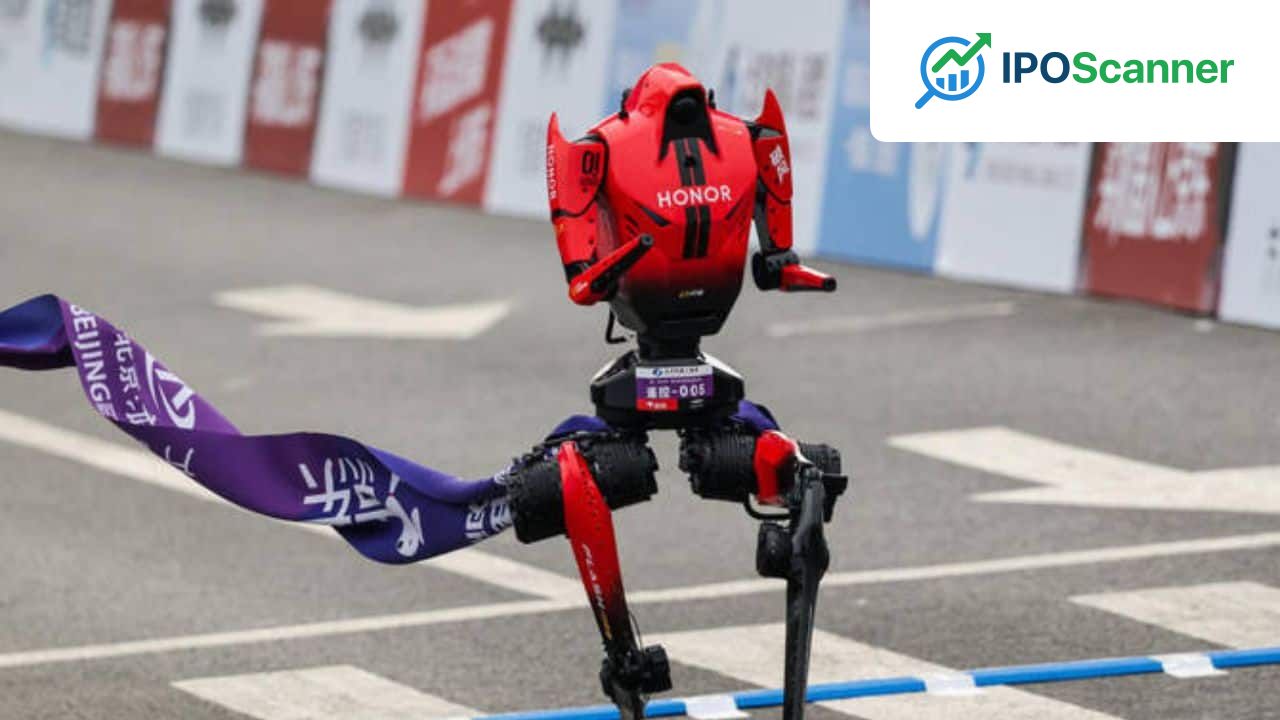
Robot 'Lightning' Breaks Half-Marathon Record in Beijing
Humanoid Robot Shatters World Record at 2026 Beijing E-Town Half-Marathon
A humanoid robot, named Shandian (Lightning), developed by Chinese tech company Honor, has completed the 2026 Beijing E-Town Half-Marathon in a remarkable 50 minutes and 26 seconds, surpassing the human world record by more than 7 minutes. This achievement showcases the rapid progress of robotics in recent years, with machines now capable of running at speeds and distances previously limited to top human athletes.
The feat was accomplished on April 19 in Beijing's technology hub, where over 100 humanoid robots competed alongside approximately 12,000 human participants. To avoid collisions, the robots ran on parallel tracks. Nearly half of the robots in the race ran autonomously, completing the course without direct human control, demonstrating advancements in AI-based navigation and movement.
The results mark a significant improvement from 2025, when many robots failed to finish and the fastest time was over two hours and 40 minutes. Engineers attribute the gains to better biomechanical design and more efficient cooling systems. Lightning, for example, utilized longer, human-inspired legs and a liquid cooling system similar to those used in smartphones.
Read also: Google Pixel Watch Leak: Diver's Discovery Sparks Speculation
| Year | Human World Record | Fastest Robot Time |
|---|---|---|
| 2026 | 57 minutes (Jacob Kiplimo) | 50 minutes 26 seconds |
| 2025 | - | 2 hours 40 minutes |
The race also highlighted technical limitations, with several robots falling soon after the start and others going off course, pointing to ongoing problems with balance and navigation. Experts note that despite improvements in speed and endurance, the technology is not yet adaptable enough for more complex real-world use.
Despite these challenges, the event is being seen as a significant moment for robotics, demonstrating how quickly machines are improving in physical performance. The scale of the event also reflects China's continued investment in robotics and artificial intelligence. As tech companies accelerate the development of humanoid systems, the gap between human and machine performance is narrowing, prompting discussion about how such AI-driven technologies can be used in the future.
Improved performance in events such as the Beijing race indicates that humanoid robots are moving closer to use beyond test environments. Experts say that current developments are already being applied in manufacturing and logistics, with wider adoption expected in the near future.
Read also: Chinese Startup Claims AI Coding Capabilities Exceed Those of GPT-5.5: A Detailed Examination
More in General
Google Pixel Watch Leak: Diver's Discovery Sparks Speculation

Chinese Startup Claims AI Coding Capabilities Exceed Those of GPT-5.5: A Detailed Examination

Google Unveils Gemini Omni: AI-Powered Video Creation from Text Input