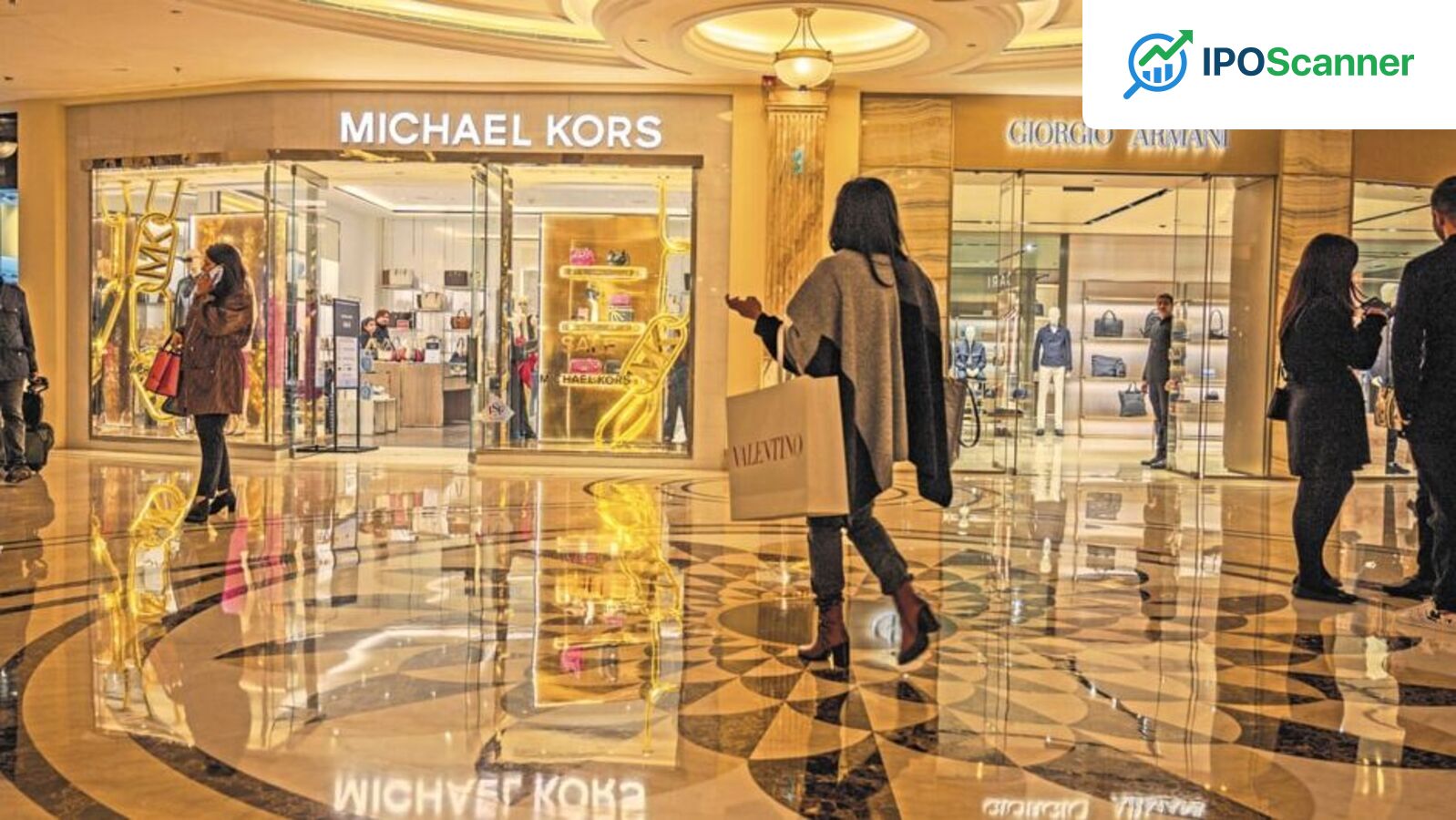
Reliance's Luxury Retail Division Reports Narrowed Losses Amid Slow Demand for High-End Fashion Brands
Reliance Industries' Luxury Retail Business Shows Signs of Operating Leverage
Reliance Industries Ltd's luxury retail business is beginning to exhibit operating leverage, driven by robust growth in premium beauty and strategic partnerships. Despite several Indian designer labels in its portfolio continuing to incur losses, Reliance Brands Ltd (RBL) has reported a significant increase in revenue for the fiscal year 2026.
According to the company's integrated annual report, RBL's revenue rose to ₹3,494 crore, a 44.6% jump from the previous year. Meanwhile, losses narrowed to ₹137 crore from ₹279 crore in the fiscal year 2025. RBL, which houses over 50 luxury fashion brands, including Burberry, Diesel, and Paul & Shark, has absorbed five subsidiaries and joint ventures, including Genesis Colors and CAA Brands Reliance, bringing several more luxury fashion, designer-label, and brand-management operations under its umbrella.
| Brand | Revenue (₹ crore) | Loss (₹ crore) |
|---|---|---|
| Sephora | ||
| Rahul Mishra | 68.6 | 13.2 |
| Anamika Khanna (AK-OK) | 21.8 | 9.9 |
| Ritu Kumar | 270.34 | 34.47 |
| Abu Jani Sandeep Khosla | 135 | 10.68 |
Read also: Treasury Yields Experience Largest Increase in Two Weeks Following Release of Labor Market Data
RBL's diversified portfolio includes luxury fashion, premium apparel, beauty-adjacent lifestyle, home, jewelry, food service, and children's retail, making it one of the most extensive premium and luxury retail platforms in India. Sephora emerged as a strong performer, with revenue growth remaining robust and profits more than tripling, highlighting the momentum in India's premium beauty market.
However, Reliance's portfolio of Indian designer labels continued to struggle with scale and profitability despite years of investment. Designer labels such as Rahul Mishra, Anamika Khanna, and Ritu Kumar reported revenue and losses, while Abu Jani Sandeep Khosla moved from profit to a loss despite maintaining revenue.
Industry executives point out that premium beauty has emerged as one of India's fastest-growing discretionary categories due to repeat purchases, gifting behavior, and lower luxury entry price points. Luxury fashion, on the other hand, remains dependent on occasion-led spending, fit, merchandising, and broader discretionary confidence.
India's Luxury Market Expected to Grow
Read also: US-Iran Tensions Spark Uptick in Oil Prices Amid Global Market Decline
India's luxury market is expected to continue growing, with the consultancy IMARC group projecting a compound annual growth rate (CAGR) of 6.17% from ₹10.6 billion in 2025 to ₹18.8 billion by 2034. Industry experts remain bullish on the long-term prospects of India's luxury market, citing continued growth in categories such as jewelry, watches, premium automobiles, beauty, and high-end real estate.
However, experts also highlight the structural constraints faced by India's fashion industry, including limited true luxury retail infrastructure, dependence on occasion dressing, and inconsistent product-market fit. To succeed in the luxury market, companies must treat India as a connoisseur market rather than a logo market, according to experts.
Investor Takeaway
Reliance's luxury retail division shows signs of improvement, with narrowed losses and revenue growth.
More in Market

Treasury Yields Experience Largest Increase in Two Weeks Following Release of Labor Market Data

US-Iran Tensions Spark Uptick in Oil Prices Amid Global Market Decline

Indian Stocks to Watch: BHEL, Agarwal Industrial, JBM Auto, Rajesh Exports, Indian Energy Exchange, Lenskart Solutions in Market Focus on June 4.