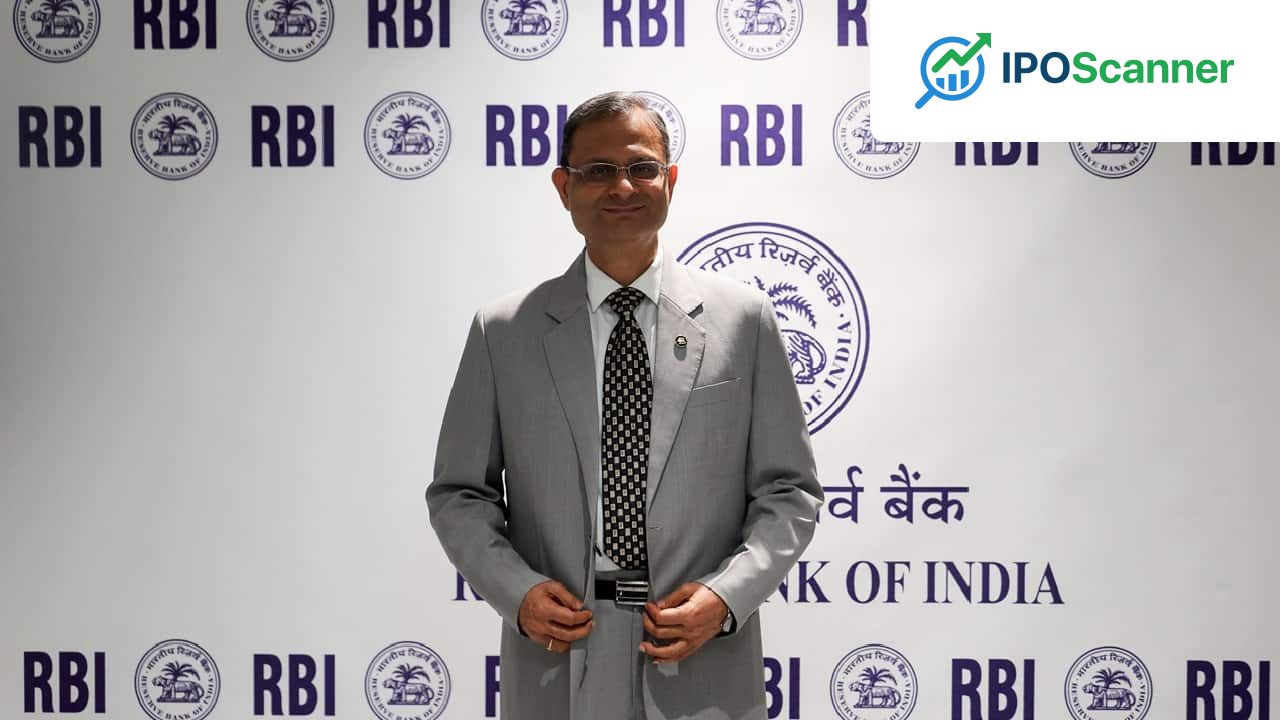
RBI's Price Stability Efforts Contribute to India's Economic Growth: Governor Sanjay Malhotra
India's Economic Growth: A Decade of Resilience
India's economic growth over the last decade has been facilitated by a combination of core drivers, including consumption, investment, and services, as well as the Reserve Bank of India's (RBI) prudent monetary policy under the leadership of Governor Sanjay Malhotra. Speaking at Princeton University on April 18, Malhotra highlighted the country's impressive growth rate of 6.1 percent per annum, outpacing the global economy's growth rate of 3.2 percent and surpassing that of its nearest peers, China at 5.6 percent and Indonesia at 4.2 percent.
A key factor behind India's economic success has been the RBI's maintenance of price stability through the adoption of the Flexible Inflation Targeting (FIT) framework since 2016. This framework has enabled the RBI to keep the average inflation rate in check at 4.7 percent during the September 2016-December 2025 period, down from 7.4 percent in the preceding years (April 2012-August 2016). The current inflation point target is set at 4 percent, with a tolerance band of 2 percent on either side of the spectrum.
The RBI's approach to managing inflation has been shaped by the relatively wide tolerance band around the target, which allows it to navigate supply shocks, both internal and external. The large weight of food and fuel in the Consumer Price Index (CPI) basket has necessitated a flexible policy stance, enabling the RBI to respond effectively to external shocks.
Read also: Treasury Yields Experience Largest Increase in Two Weeks Following Release of Labor Market Data
In the context of the ongoing West Asia conflict, Malhotra emphasized the importance of maintaining a neutral policy stance to preserve flexibility in responding to evolving inflation-growth dynamics. This approach has enabled the RBI to reassess the balance of risks and remain in a wait-and-watch mode.
The government's fiscal measures have complemented the RBI's monetary policy stance by using supply-side interventions to curb inflationary pressures. By prioritizing building resilience in agriculture, strengthening warehouse supply chains, and reducing crude price volatility, the government has contributed to a stable economic environment. This collaborative approach has been instrumental in India's economic growth over the last decade.
| Country | Growth Rate (percent) |
|---|---|
| India | 6.1 |
| Global Economy | 3.2 |
| China | 5.6 |
| Indonesia | 4.2 |
Investor Takeaway
India's economic growth is driven by consumption, investment, services, and the RBI's price stability efforts.
More in Economy

Treasury Yields Experience Largest Increase in Two Weeks Following Release of Labor Market Data

US-Iran Tensions Spark Uptick in Oil Prices Amid Global Market Decline

MoSPI Releases Uniform Norms for DDP Estimates with 2022-23 Base Year

