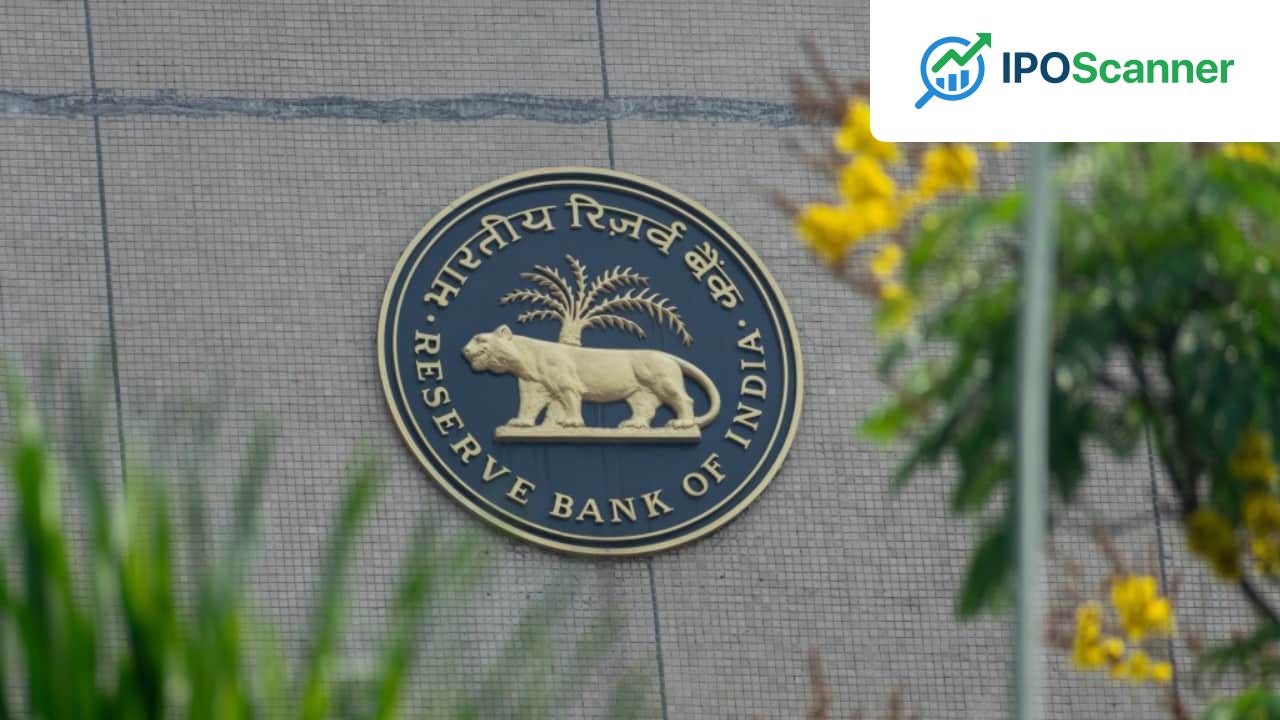
RBI Policy Suggests Possibility of Interest Rate Hike in August
RBI Monetary Policy Takes Cautious Stance on Economy
The Reserve Bank of India (RBI) has taken a cautious stance on the economy by raising inflation forecasts while lowering growth forecasts in its latest monetary policy. However, this policy focused more on financial stability and getting the external sector dynamics right, rather than adjusting policy rates.
The RBI's cautious stance is largely driven by the need to address external imbalances, particularly the Current Account Deficit (CAD), which has been a sore point for the Indian economy. The West Asia crisis-led increase in crude oil prices has led to a reassessment of the CAD, and capital flows have been lagging for quite some time. To address this, the government recently announced duty hikes on gold imports to reduce the CAD.
Government and RBI Coordinate to Boost Capital Flows
Read also: Indian Entities Gain Access to Anthropic's Mythos AI Platform
The RBI's policy represents a close coordination between the government and the central bank to boost capital flows. The government has relaxed restrictions on Foreign Portfolio Investors (FPIs) for investment via the General Route and allowed them to invest in long bonds of tenors of 15, 30, and 40 years under the Fully Accessible Route (FAR) route.
| Route | Tenor | Changes |
|---|---|---|
| General Route | - | FPI investment allowed |
| Fully Accessible Route (FAR) | 15, 30, 40 years | FPI investment allowed |
Additionally, the government has done away with the withholding tax and the Long-Term Capital Gains Tax (LTCG Tax) to benefit FPIs. The RBI has also announced major steps to boost flows through the Foreign Currency Non-Resident (B) window, including absorbing hedging costs and making these deposit flows cash reserve ratio (CRR) and statutory liquidity ratio (SLR) free.
| Window | Changes |
|---|---|
| FCNR (B) | Hedging costs absorbed, CRR and SLR free |
Read also: GE Vernova Secures Wind Turbine Supply Deal with Powerica in Gujarat
However, the interest differential between India and the US is low at around 225-250 bps, which may limit the effectiveness of the FCNR (B) window in attracting NRI deposits.
RBI's Focus on Financial Stability
The RBI's policy aims to boost domestic deposits and help correct for the high cash-deposit ratio (C/D ratio) by incentivizing Public Sector Undertakings (PSUs) to raise External Commercial Borrowings (ECBs) and swap them with the RBI at a concessional rate.
Limited Scope for Monetary Policy
The RBI has limited scope to address supply-led price shocks and may not react to price signals and projections on inflation immediately. The central bank has tweaked its Q3FY27 inflation forecast to 5.9 percent, which is close to the upper end of the corridor. However, core inflation is low, implying absence of any demand-side pressures on prices.
Future Rate Hikes
The RBI's decision to pause rate hikes may buy time for itself to understand the second-round implications of supply shocks on prices. However, we assign a high probability for rate hikes to start in August, unless there is a resolution to the West Asia crisis that cools crude oil prices and reduces inflationary pressures. Assuming a real gap of 1 percent over expected inflation, the rate cycle can extend by around 75-100 bps.
More in Economy

Indian Entities Gain Access to Anthropic's Mythos AI Platform

GE Vernova Secures Wind Turbine Supply Deal with Powerica in Gujarat

Government Mandates Standardized Packaging for Cooking Oils to Enhance Price Transparency