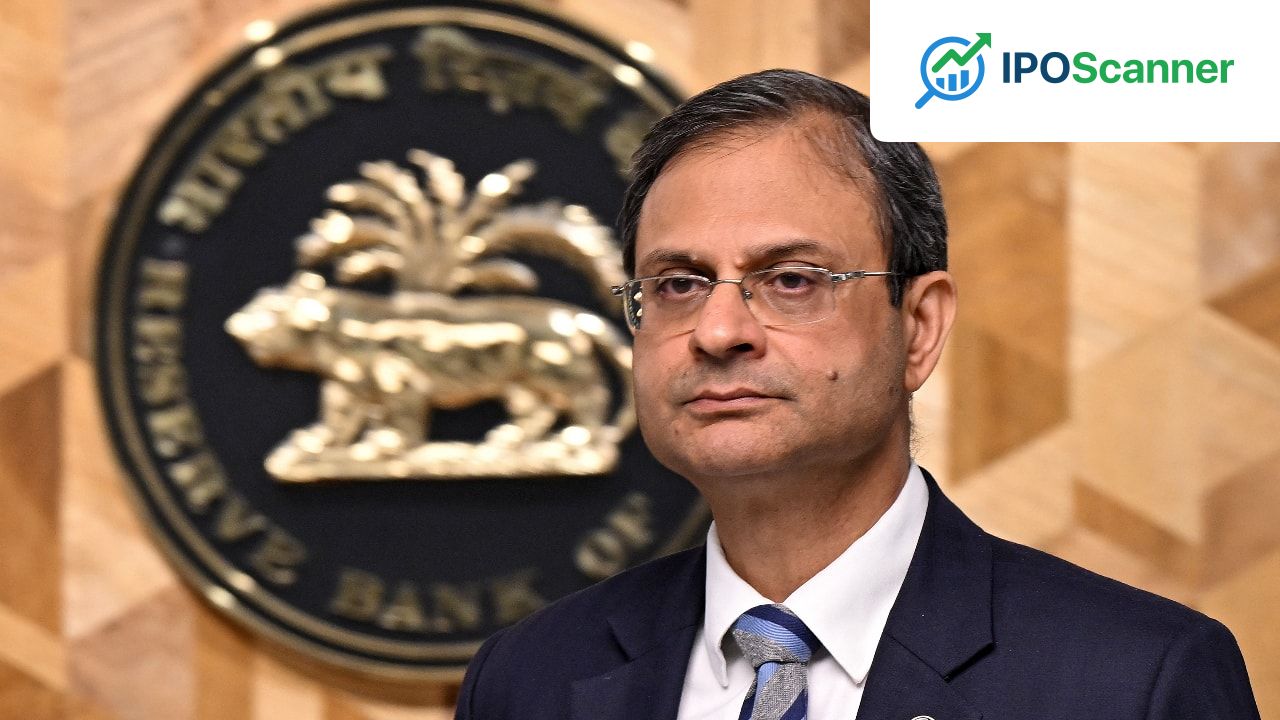
RBI Must Adopt a Measured Hawkish Monetary Policy Stance
RBI Faces Critical Juncture as Global Economic Volatility Persists
The Reserve Bank of India's (RBI) Monetary Policy Committee (MPC) is set to conclude its meeting on Friday, June 5, 2026, amidst a complex web of global headwinds and domestic pressures. Market observers widely expect the central bank to maintain the benchmark repo rate at 5.25 percent, relying on macroprudential tools, foreign exchange interventions, targeted liquidity tools, and rigorous rhetoric to manage rupee volatility.
However, a closer examination of India's macroeconomic indicators suggests that a purely defensive posture may be insufficient. The widening Current Account Deficit (CAD), capital flight dynamics, and fiscal realities have triggered inflationary expectations, necessitating a mildly hawkish shift by the RBI to anchor inflation expectations and protect India's hard-won macroeconomic buffers.
The global economic landscape in mid-2026 is characterized by fragmentation and fragile growth, projected by the International Monetary Fund (IMF) at just 3.1 percent for the year. Escalating geopolitical tensions in the Middle East have disrupted key trade corridors and injected renewed volatility into energy markets, translating directly into domestic vulnerabilities for a major commodity importer like India.
Capital Flight and Rupee Volatility
The interest rate differential favoring emerging markets has compressed, triggered by advanced economy central banks maintaining higher-for-longer interest rate stances. This has led to persistent capital outflows from India's portfolio markets. While the RBI's robust foreign exchange reserves provide a strong cushion, utilizing reserves to defend a currency against structural global shifts is a finite strategy. India has seen that capital controls and high-frequency interventions in the forex market have not gained results.
The primary mandate of the RBI is price stability, and given the rising inflationary expectations and capital flight, a little-by-little rate rise is crucial to stabilize prices than a panic rise in interest rates later, which can trigger a wage-price spiral.
The Fiscal Interlock
Read also: Indian Defence Stocks Show Resilience Amid Market Weakness
The arguments against monetary tightening often center on the need to preserve domestic growth momentum and keep government borrowing costs manageable. However, India's fiscal consolidation path has been commendable, with the government actively working to lower the fiscal deficit toward sustainable medium-term targets. The RBI dividends were a windfall towards keeping the threshold fiscal deficit GDP pegged at 4.4 percent, when tax revenues plummeted.
The fiscal prudence and monetary policy indeed must act as complementary pillars. However, if the fiscal consolidation is not through revenue buoyancy, growth may suffer. A Friday MPC decision, if holding the repo rate stable at 5.25 percent, could introduce the risk of falling behind the inflation curve if external shocks persist.
| Indicator | 2026 (Projected) | 2025 (Actual) |
|---|---|---|
| GDP Growth Rate | 3.1% | 6.9% |
| Inflation Rate | 5.5% | 4.5% |
| Current Account Deficit | 2.5% | 1.8% |
| Foreign Exchange Reserves | $550 billion | $500 billion |
Preemptive Calibration vs. Reactive Firefighting
The core principle of credible inflation targeting is to act before expectations become unanchored. Waiting for capital flight to accelerate or for the rupee to breach critical psychological thresholds before executing an aggressive, panic-driven rate hike risks damaging investor confidence. A calibrated, hawkish tilt on Friday offers several distinct advantages, including:
- Demonstrating to international markets that the RBI is willing to prioritize macroeconomic and currency stability, reassuring foreign institutional investors.
- Anchoring domestic expectations, as it preempts a wage-price spiral by signaling to domestic manufacturers and consumers that the central bank will not tolerate the second-round effects of imported inflation.
- Price stability is the prime mandate of RBI, and waiting for CPI to overshoot the inflation anchor is rich. A little-by-little hawkish stance can also help the rupee by using the interest rate tool to deter speculative shorting of the rupee, conserving its foreign exchange reserves for true liquidity crises rather than routine market interventions.
The policy inference from the analysis of macroeconomic variables is clear. In an environment characterized by deep geopolitical uncertainty and high global public debt approaching 100 percent of GDP globally, emerging market policymakers have a very thin margin for error. Relying exclusively on exchange rate flexibility as a shock absorber is effective only if it does not trigger a domestic financial stability or inflation crisis.
A bold communication strategy for changing times is crucial. The global economy in 2026 demands that central banks reject predictable formulas and do not "err on the side of caution". While the consensus baseline predicts a status quo hold by the RBI this Friday, the macroeconomic reality of mounting inflationary expectations coupled with capital flight, a pressured current account, and persistent external commodity shocks warrants a more assertive response.
If the MPC chooses to maintain the repo rate at 5.25 percent, it must compensate with an exceptionally bold, hawkish communication strategy. It must signal that it stands ready to do whatever it takes to defend macroeconomic stability, including tightening monetary policy in upcoming sessions if inflationary pressures worsen and external imbalances worsen. In these turbulent economic waters, clear, proactive, and resolute policy alignment is the most reliable path to securing long-term sustainable growth and shielding India from the global shadow of volatility protecting India's hard-won macroeconomic buffers.
(Views are personal, and do not represent the stand of this publication.)
Investor Takeaway
Investors should be cautious of potential inflationary pressures and rupee volatility.
More in Economy

Rajesh Exports Plummets to Lower Circuit as SEBI Discovers ₹15.15 Lakh Crore in Misrepresented Financial Figures

Indian Defence Stocks Show Resilience Amid Market Weakness

Bond Yields Fall Amid Speculation of Tax Repeal for Foreign Government Securities Investments