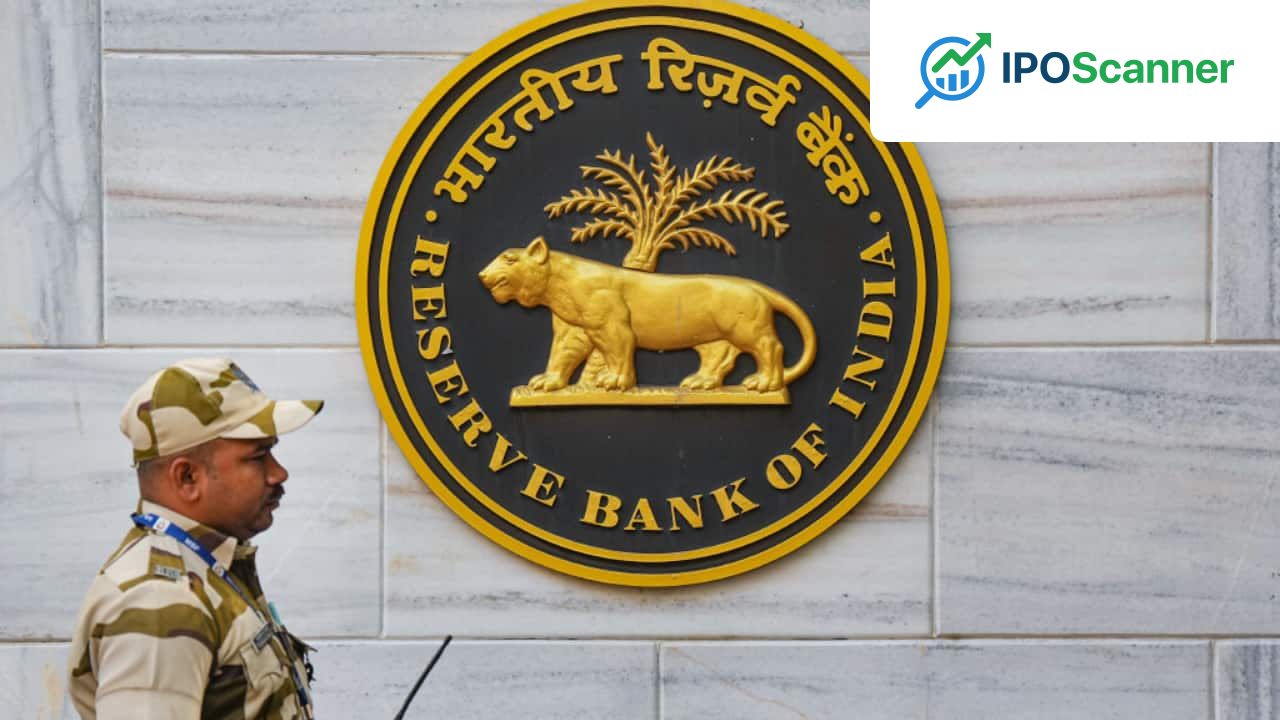
RBI Faces Double-Edged Sword in Upcoming Monetary Policy Review
RBI Faces Test as Rupee Depreciates Sharply Ahead of April Policy Review
The Reserve Bank of India's (RBI) monetary policy framework is currently facing a significant test, one that has not been seen in years. Rising crude prices and a depreciating currency have turned into active constraints ahead of the April Monetary Policy Committee (MPC) review. The rupee has lost nearly 10 percent in FY2026, in what could be one of the worst years for the currency in over a decade.
The rupee's sharp depreciation occurred largely in the latter half of the fiscal year, following the outbreak of the war in West Asia. This led to a surge in crude oil prices, which reached at least $100 per barrel. Prior to the war, the rupee had been holding steady at around Rs 92 per dollar for nearly a month. However, after the conflict began, the rupee breached new record lows almost daily, with a notable low of Rs 95 per dollar on March 30. Since then, the rupee has staged a partial recovery following the RBI's introduction of stringent measures to curb speculative trades in the offshore market.
Key Events
Read also: Treasury Yields Experience Largest Increase in Two Weeks Following Release of Labor Market Data
| Date | Event | Impact |
|---|---|---|
| February 28 | US and Israel jointly attack Iran, closing the Strait of Hormuz | Sharp depreciation of the rupee, spike in crude oil prices |
| March 30 | Rupee touches record low of Rs 95 per dollar | Further depreciation of the rupee |
| April (MPC review) | RBI to review monetary policy framework | Potential changes to underlying assumptions, impact on growth and inflation |
The upcoming policy review will be a test for the RBI to reassess its assumptions for both the rupee and crude oil prices. The war in West Asia has had a significant impact on global financial markets, with Brent crude prices consistently hovering around $100 per barrel and reaching as high as $115 per barrel. This has weighed heavily on India's currency and fixed-income markets, with bond yields spiking to beyond the psychological 7 percent mark.
The RBI has been actively intervening in the spot and offshore non-deliverable forwards (NDF) markets to stymie the rupee's free-fall. However, despite these efforts, the rupee has continued to be pressured. Market participants remain concerned that the RBI's measures may not be enough to withstand the impact of elevated oil prices.
Economists have revised their forecasts for oil prices, with some predicting that Brent crude could trade between $85 and $90 per barrel in the near term. This has led to an upward revision in projections for India's CPI inflation, which is now expected to average between 4.5 and 4.7 percent in FY27, up from the earlier estimate of 4.3 percent. The RBI may not make changes to the repo rate immediately, but a shift in the underlying assumptions may signal a more cautious road ahead for the central bank.
Read also: US-Iran Tensions Spark Uptick in Oil Prices Amid Global Market Decline
More in Economy

Treasury Yields Experience Largest Increase in Two Weeks Following Release of Labor Market Data

US-Iran Tensions Spark Uptick in Oil Prices Amid Global Market Decline

MoSPI Releases Uniform Norms for DDP Estimates with 2022-23 Base Year

