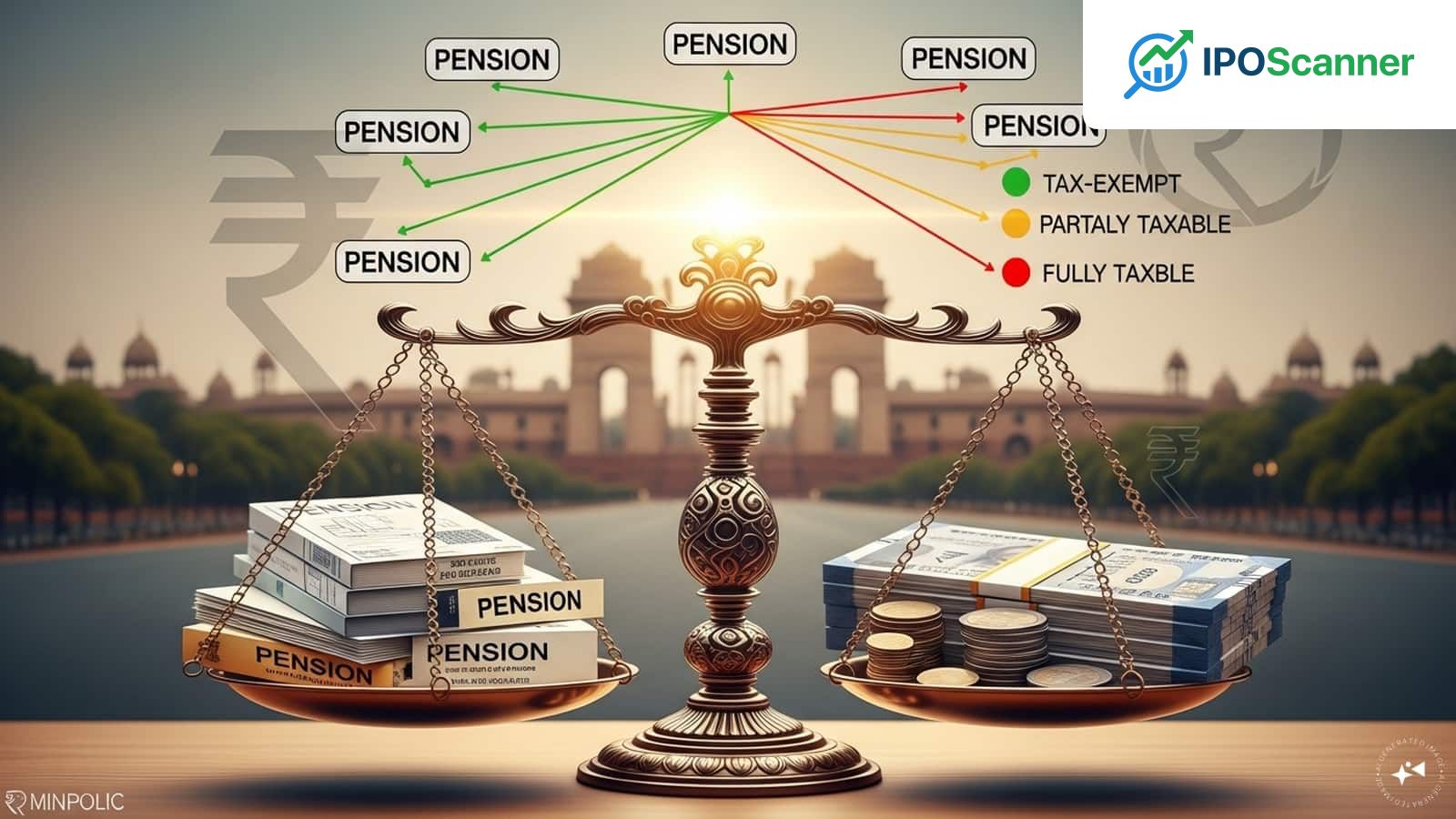
Pension Taxation in India: A Guide to Understanding Tax Liability on Various Pensions
Pension Taxation in India: Understanding the Different Rules
Retirement income in India may seem straightforward, but pension taxation follows different rules depending on the source and structure of the payout. The Income Tax Act classifies each pension stream differently, making it essential for accurate tax filing and better tax planning.
Regular Pension: Taxed as Salary Income
A regular or uncommuted pension received periodically by retired government or private sector employees is treated as ‘Income from Salary’ and taxed according to the applicable income tax slab rates. Pensioners can claim a standard deduction of INR 50,000 under the old regime of taxation or INR 75,000 under the new regime of taxation.
Read also: Treasury Yields Experience Largest Increase in Two Weeks Following Release of Labor Market Data
Commuted Pension: Exemption and Taxation
Commuted pension refers to a pension received as a lump sum instead of periodic payments. For government employees, the entire commuted pension amount is exempt from tax. For non-government employees, the exemption depends on whether gratuity is received:
| Gratuity Received | Exemption |
|---|---|
| Yes | One-third of the commuted pension is exempt |
| No | One-half of the commuted pension is exempt |
Any balance amount beyond the exempt portion becomes taxable.
Read also: US-Iran Tensions Spark Uptick in Oil Prices Amid Global Market Decline
Family Pension: Taxed under ‘Income from Other Sources’
Family pension received by a spouse or legal heir after the death of the employee is not treated as salary income. Instead, it is taxed under the head ‘Income from Other Sources.’ Family pensioners cannot claim the standard deduction available to salaried taxpayers but are eligible for a specific deduction under Section 57(iia), which is one-third of the family pension amount received, subject to a maximum limit of:
| Tax Regime | Maximum Limit |
|---|---|
| New Regime | INR 25,000 |
| Old Regime | INR 15,000 |
EPS Pension: Fully Taxable
Pension received under the Employees’ Pension Scheme (EPS) administered by the EPFO is treated like regular pension income and is fully taxable according to the individual’s slab rates.
NPS Withdrawals and Annuity Taxation
Taxation under the National Pension System (NPS) differs between lump sum withdrawals and annuity payouts. Up to 60 percent of the retirement corpus withdrawn as a lump sum at maturity is tax-free, subject to prescribed conditions. The remaining portion is generally used to purchase an annuity. Income received from such annuity plans is fully taxable at applicable slab rates in the year of receipt.
Common Mistakes Taxpayers Make
Tax experts say pensioners frequently make errors while reporting pension income in their tax returns. One of the most common mistakes is reporting family pension under the salary head instead of ‘Income from Other Sources,’ which can result in incorrect deduction claims and assessment mismatches. To avoid notices or excess tax liability, taxpayers should reconcile pension income and TDS details with Form 26AS and the Annual Information Statement (AIS), choose the correct ITR form, and properly disclose exempt pension amounts in the exempt income schedule.
More in Economy

Treasury Yields Experience Largest Increase in Two Weeks Following Release of Labor Market Data

US-Iran Tensions Spark Uptick in Oil Prices Amid Global Market Decline

MoSPI Releases Uniform Norms for DDP Estimates with 2022-23 Base Year

