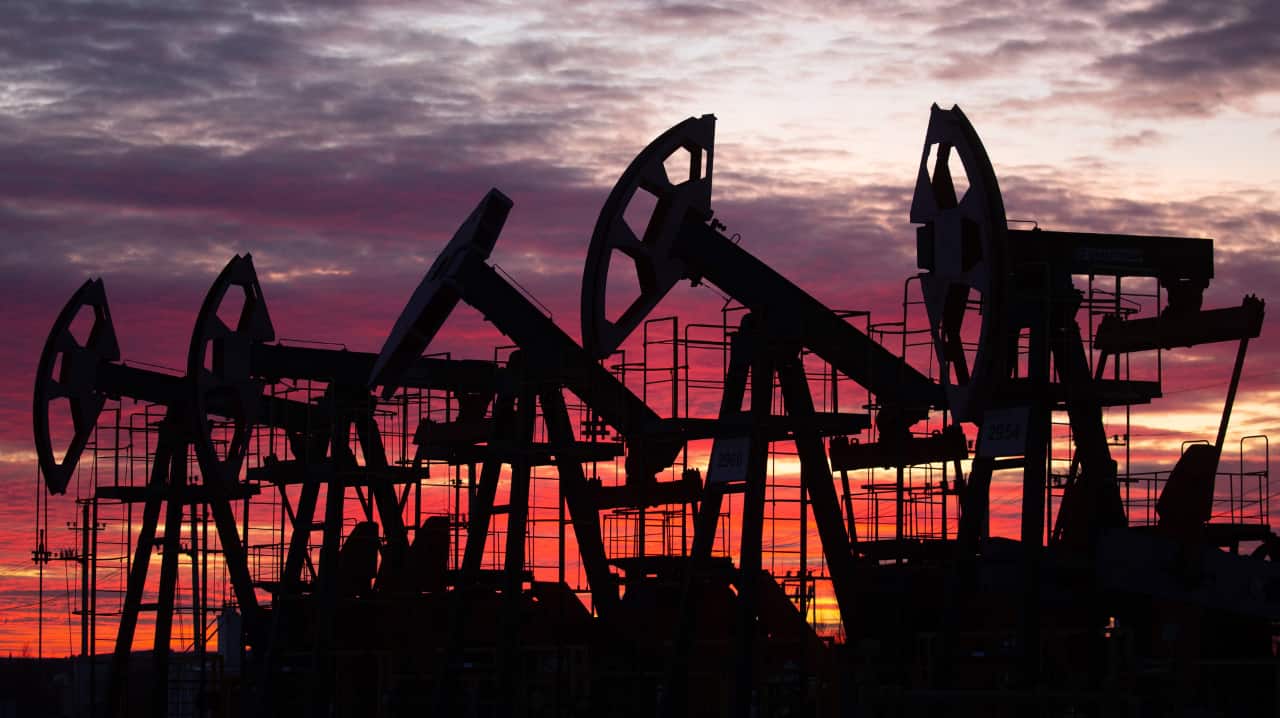
Oil Output Cuts by Gulf Producers to Intensify Market Volatility
Global Oil Market in Turmoil as Strait of Hormuz Remains Closed
The oil market is facing a significant crisis, with the ongoing conflict in Iran and the closure of the Strait of Hormuz exacerbating the situation. The waterway, which normally handles a fifth of the world's oil, has been impassable for commercial ships for nine days, with no sign of an imminent resolution.
Regional Production Reductions
The United Arab Emirates and Kuwait have already started reducing their oil production, joining Iraq, as storage runs down. With oil tankers avoiding the Strait of Hormuz, the number of empty tankers available for loading is rapidly decreasing. Once all tankers are loaded, the region's remaining on-land storage will fill quickly.
Read also: Treasury Yields Experience Largest Increase in Two Weeks Following Release of Labor Market Data
Brent Crude Surpasses $100 a Barrel
Brent crude has climbed 30% in the last week, its biggest jump in six years, and is now just dollars away from the psychological $100-a-barrel threshold. Other markers tied to the region, such as Abu Dhabi's Murban crude and Oman crude futures, have already soared above $100 a barrel.
Growing Threats to Oil Infrastructure
The risk of disruptions to oil infrastructure is increasing, with Saudi Arabia intercepting drones heading toward the 1-million-barrel-a-day Shaybah oil field over the weekend. Strikes in Bahrain and Qatar have also continued.
Read also: US-Iran Tensions Spark Uptick in Oil Prices Amid Global Market Decline
US Offers Financial Protection and Maritime Reinsurance
The US has promised to bolster financial protection and potentially provide military escorts for tankers in the region. The government has also announced a maritime reinsurance facility, which will cover losses up to $20 billion on a rolling basis.
Regional Economies Feel the Pain
Import-dependent Asia, which relies heavily on the Middle East for oil, is feeling the most immediate pain. Japan, which takes over 90% of its crude from the region, is asking for the option of drawing on national oil reserves. China has curbed fuel exports to preserve supply and keep domestic prices controlled.
Jet Fuel Prices Soar
The price of jet fuel has soared to an all-time high of $1,528 a ton in northwest Europe, with half of the European Union's imports typically passing through the Strait of Hormuz.
Base Case Scenario
Analysts at ING Groep NV are predicting four weeks of disruption, with two weeks of full upheaval and two weeks of 50% disruption. This scenario does not necessarily mean a full end to the conflict, but rather a prolonged period of instability in the oil market.
Investor Takeaway
Investors should be prepared for increased market volatility in the oil sector due to ongoing production cuts and geopolitical tensions.
More in Economy

Treasury Yields Experience Largest Increase in Two Weeks Following Release of Labor Market Data

US-Iran Tensions Spark Uptick in Oil Prices Amid Global Market Decline

MoSPI Releases Uniform Norms for DDP Estimates with 2022-23 Base Year

