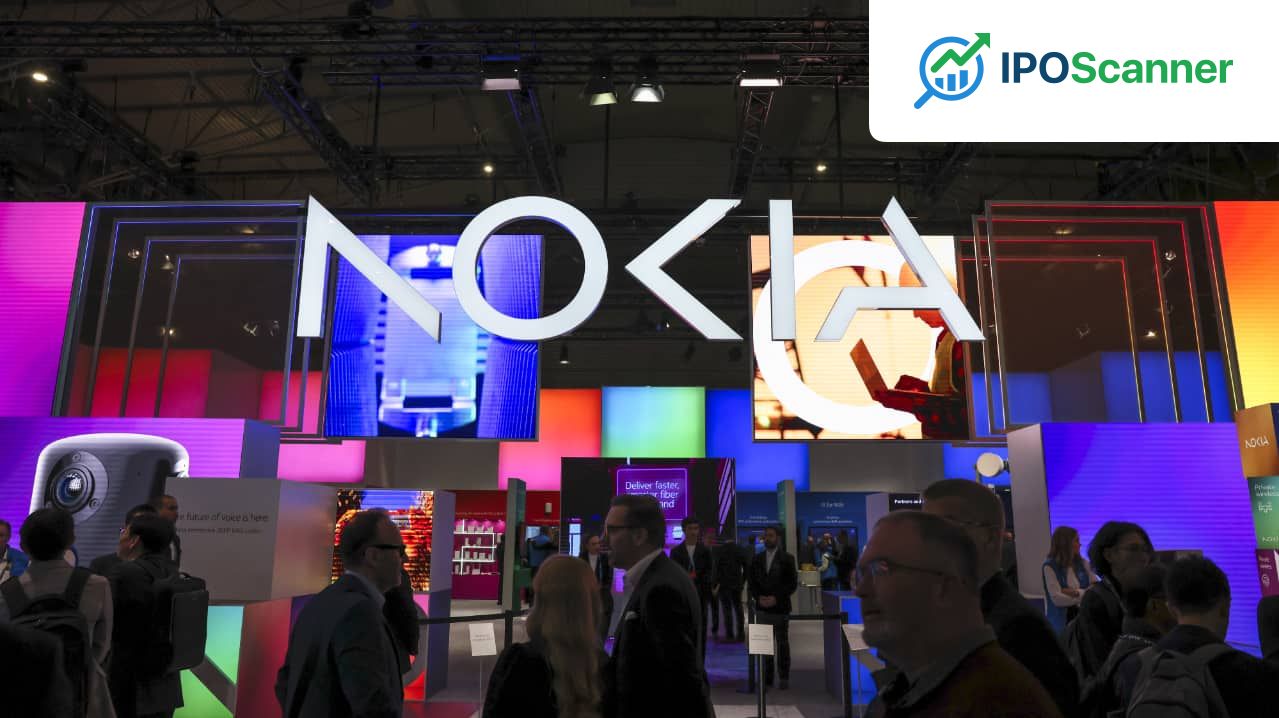
Nokia Forecasts Increase in Telecom Equipment Costs, Predicts Artificial Intelligence to Impact India's Network Traffic Patterns
Nokia Flags Rising Supply Chain Disruptions Amid West Asia Conflict and AI Build-Outs
Finnish telecom major Nokia has highlighted growing supply chain disruptions linked to the West Asia conflict and AI build-outs, with shortages of key components such as memory chips driving up costs for wireless telecom and network infrastructure equipment, including 4G and 5G radio access network (RAN) products.
The company noted that artificial intelligence has started to reshape telecom traffic patterns, with a sharp rise in uplink demand expected over time, prompting operators in India to begin recalibrating their networks despite being at an early stage of readiness.
Nokia is currently undergoing organisational changes to make operations faster and more agile in terms of decision-making and execution. Country manager-designate for India at Nokia, Vibha Mehra, stated that the organisational changes are aimed at increasing efficiency and agility.
Read also: Treasury Yields Experience Largest Increase in Two Weeks Following Release of Labor Market Data
While Mehra declined to comment on layoffs in India, it was reported on March 27 that Nokia is preparing another round of job cuts in its India operations as part of a broader global restructuring announced in November 2025. The overhaul has also triggered leadership changes, including the elevation of Samar Mittal as India Country Business Leader and Mehra as India Country Manager effective April 1, 2026, alongside the exit of Tarun Chhabra from the role of India country head.
Nokia has already initiated discussions with telecom operators around the ongoing increase in costs. Mehra stated that the company started seeing cost creeps happening due to supply shortages, with the first impact being on costs.
Even before the conflict, memory chip prices had been rising as manufacturing capacity shifted away from consumer electronics toward higher-margin AI-focused memory solutions, a trend that had already pushed smartphone makers in India to increase device prices. After the war, the impact has been more significant.
As a key supplier of telecom equipment supporting India's 4G and 5G rollouts, Nokia continues to see strong growth in the market. It provides 4G and 5G equipment to Reliance Jio, Bharti Airtel, and Vodafone Idea.
Read also: US-Iran Tensions Spark Uptick in Oil Prices Amid Global Market Decline
| Company | India Revenue (2025) | Global Revenue Contribution (2025) |
|---|---|---|
| Nokia | Rs 16,250 crore | 7.7% |
Higher equipment costs are expected to translate into increased capital expenditure for telecom operators, particularly in network expansion.
Artificial intelligence is emerging as a structural driver of change in telecom networks. While current mobile networks remain heavily skewed toward downloads (accounting for nearly 90% of traffic), this balance is expected to evolve as AI-led applications generate more upstream data.
According to Mehra, this shift will lead to significantly higher uplink usage as devices increasingly send data to the cloud for processing. "AI traffic behaviour is still very difficult to predict," the executive noted, adding that internal testing of AI use cases shows wide variation in uplink and downlink requirements.
For now, Indian telecom operators are not undertaking large-scale network expansions specifically to accommodate AI-driven traffic. Instead, they are focusing on incremental upgrades and optimisation of existing infrastructure, particularly through 5G advancements.
Efforts underway include improving uplink spectral efficiency, leveraging carrier aggregation and dual-band devices, and deploying software-led enhancements across networks. "Operators are not in a wait-and-watch mode, but they are also not aggressively expanding uplink capacity yet," the executive said. "They are analysing trends and preparing gradually."
At present, networks continue to be dominated by downlink-heavy use cases such as video streaming and content consumption, but this is expected to shift over time as AI adoption deepens.
Investor Takeaway
Investors should be cautious of potential supply chain disruptions and rising costs in the telecom equipment sector.
More in Market

Treasury Yields Experience Largest Increase in Two Weeks Following Release of Labor Market Data

US-Iran Tensions Spark Uptick in Oil Prices Amid Global Market Decline

Indian Stocks to Watch: BHEL, Agarwal Industrial, JBM Auto, Rajesh Exports, Indian Energy Exchange, Lenskart Solutions in Market Focus on June 4.