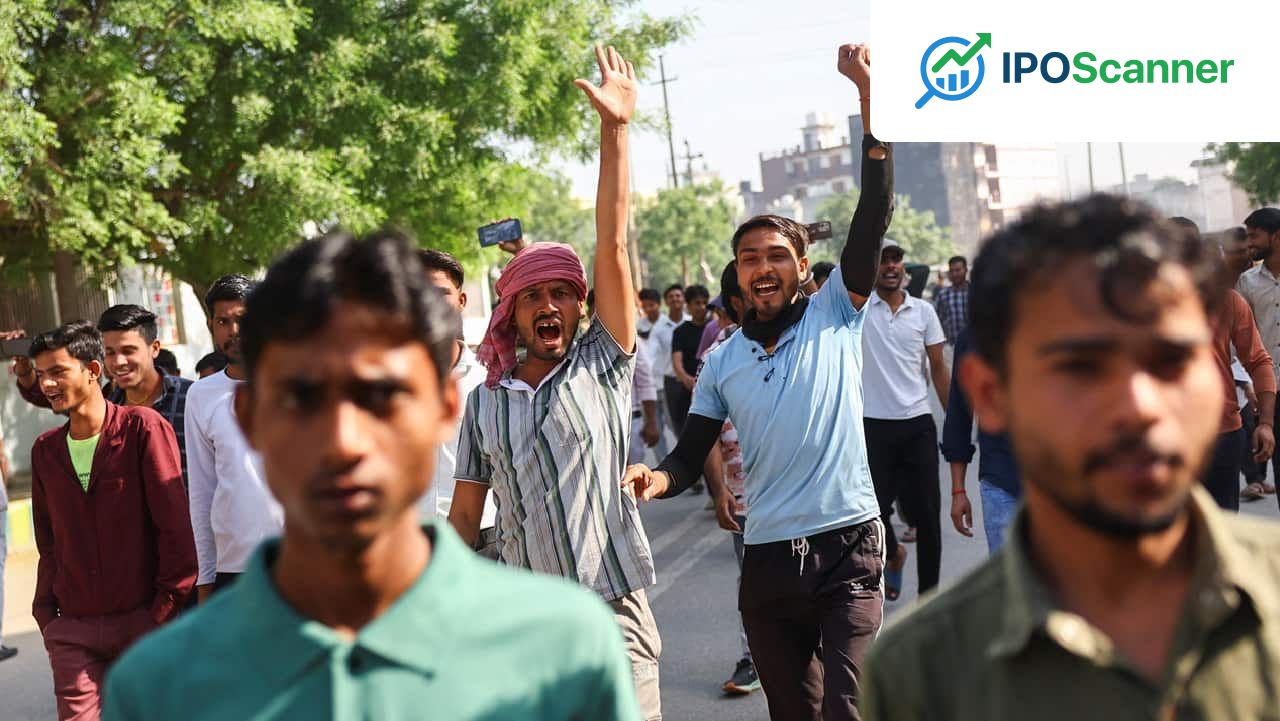
Noida Wage Protests Tied to Politics, Official Blames Anti-Labour Trade Unions
Violence Erupts in Noida Wage Protests, Official Says Motivated by Politics
Protests in Noida's industrial areas have been largely politically motivated, according to a senior government official. The official attributed the unrest to trade unions opposed to the implementation of central labour laws. As a result, over 100 arrests of instigators have been made by the Uttar Pradesh government, which may have a negative impact on India's reputation among foreign investors.
The Union Labour Ministry is aware of the situation, but the state government is responsible for taking the necessary actions. The official noted that the state government is taking the necessary steps, which is evident from the arrests made so far. The official also stated that the protests are being investigated and that the details will soon be revealed.
Nine trade unions have opposed the implementation of central labour laws. These unions include the All India Trade Union Congress (AITUC), Indian National Trade Union Congress, Centre of Indian Trade Unions, All India United Trade Union Centre, Hind Mazdoor Sabha, All India Central Council of Trade Unions, Self-employed Women's Association, Labour Progressive Federation, and United Trade Union Congress.
Read also: Treasury Yields Experience Largest Increase in Two Weeks Following Release of Labor Market Data
Wage Protest Turns Violent
A wage protest by industrial workers in Noida turned violent on Monday, revealing a complex mix of economic grievances, administrative gaps, and possible political interference. The protests began after workers in Noida's industrial areas learned of a recent decision by the Haryana government to increase minimum wages by 35 percent.
The news quickly spread through factory networks, prompting workers to demand a similar revision in Uttar Pradesh. Minimum wages in Haryana are now Rs 16,870 per month for semi-skilled workforce and Rs 18,500 per month for skilled ones. Earlier, these wages were Rs 12,430 per month and Rs 13,704 per month, respectively.
| State | Semi-skilled Wages (Previous) | Semi-skilled Wages (Current) | Skilled Wages (Previous) | Skilled Wages (Current) |
|---|---|---|---|---|
| Haryana | Rs 12,430 | Rs 16,870 | Rs 13,704 | Rs 18,500 |
Read also: US-Iran Tensions Spark Uptick in Oil Prices Amid Global Market Decline
Sit-ins and demonstrations began, largely without formal union backing or identifiable leadership. Workers gathered outside factories, raised slogans, and waited for a response from employers and the administration. For three days, the agitation remained orderly, despite growing frustration. However, the situation changed abruptly on Monday morning.
Minimum Wages Increased
A high-level committee constituted by Uttar Pradesh Chief Minister Yogi Adityanath increased interim minimum wages on Tuesday by about 21 percent for workers in Gautam Buddha Nagar and Ghaziabad. Semi-skilled labourers' minimum wage in Noida and Ghaziabad now stands at Rs 15,059 per month, while skilled labourers' wage is at Rs 16,868 per month.
The state government officials stated that prior to the escalation, police were trying to brief workers about a proposed pay revision. Protesters, however, insisted that their monthly salaries should be at least Rs 20,000.
Labour Laws and Floor Wage
The official noted that once the labour codes are notified, the floor wage will be introduced. This will ensure that no state pays their workers below that level. The minimum wages will be revised periodically to avoid situations like the present one in the future. The labour laws are expected to be notified by the end of April.
Under the Code on Wages, 2019, the Floor Wage is a concept designed to create a national "safety net" for workers across India. The Floor Wage is a minimum threshold set by the Centre considering the minimum living standards of workers across different geographical areas. As per the law, state governments can fix their own minimum wages, but they cannot set them lower than the floor wage fixed by the Centre.
The official also stated that the UP government will implement its state labour legislations, which are in line with the central labour codes, in the next 6-8 months.
Investor Takeaway
Investors should be cautious of the impact of labor unrest on the Indian economy and potential foreign investments.
More in Economy

Treasury Yields Experience Largest Increase in Two Weeks Following Release of Labor Market Data

US-Iran Tensions Spark Uptick in Oil Prices Amid Global Market Decline

MoSPI Releases Uniform Norms for DDP Estimates with 2022-23 Base Year

