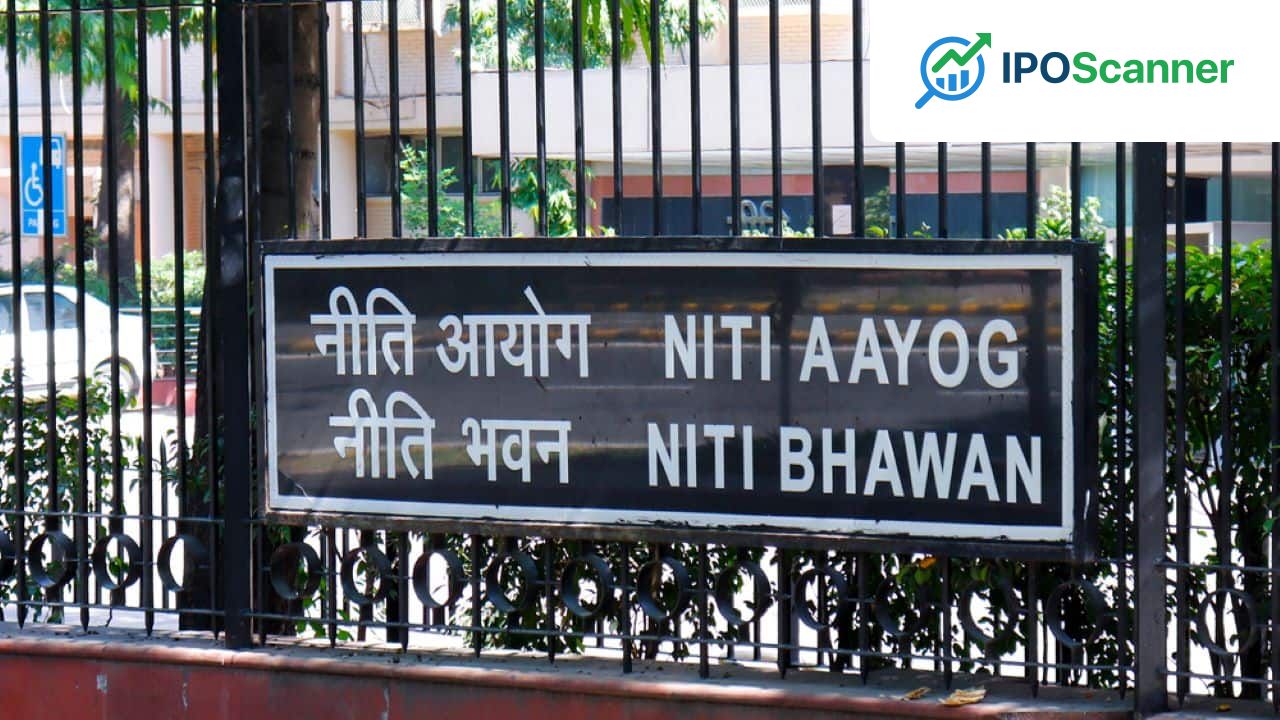
NITI Aayog Unveils DPI 2.0 Framework to Boost MSME and Agricultural Growth
India Unveils Roadmap for Digital Public Infrastructure 2.0
On April 27, Niti Aayog released a report detailing the roadmap for the adoption of Digital Public Infrastructure (DPI) 2.0, aiming to transform India into a high-income, high-opportunity, and high-capability society by 2047.
The DPI 2.0 scope consists of eight sectoral transformations, designed to remove structural bottlenecks constraining the growth of lower- and middle-income groups. These sectoral transformations include scaling market expansion for Micro, Small, and Medium Enterprises (MSMEs), improving livelihoods for smallholder farmers, decentralizing energy markets, making credit accessible for a billion Indians, providing universal health coverage, and finding local talent for jobs at MSMEs.
The report recommends executing DPI 2.0 through decentralized state-led initiatives, with the Government of India and NITI Aayog acting as catalysts.
Sectoral Transformations Comparison
| Sector | DPI 2.0 Goals |
|---|---|
| MSMEs | Scale market expansion |
| Smallholder Farmers | Improve livelihoods |
| Energy Markets | Decentralize markets |
| Credit Access | Make credit accessible for 1 billion Indians |
| Health Coverage | Provide universal health coverage |
| Local Talent | Find local talent for MSME jobs |
At the launch of the report, Chief Economic Adviser V Anantha Nageswaran emphasized the importance of compensating for the significant economic ill-effect of energy price shocks with productivity and competitive gains elsewhere in the economy.
MeitY Secretary S Krishnan highlighted the need to expand DPI portfolios from foundation DPIs to functional DPIs in areas such as healthcare, urban planning, education, and agriculture. He also emphasized the importance of incorporating technologies like AI and Quantum Computing to make public services easier and more secure.
Read also: RBI Policy Preview: A Cautionary Wait Ahead
Call to Action
The report emphasizes the need to create momentum iteratively, figure out exemplar pathways, and build ecosystem capacity before scaling them across states. For the initial cycle (2026-2027), the report suggests focusing on three sectoral transformations in MSME and Agriculture with six champion States/UTs implementing lighthouse pilots in the first year and at least five additional States/UTs rollouts in the second year for each of the proven transformations.
DPI 1.0
India's journey of the DPI approach began with the launch of the Aadhaar program in 2011, which provided a unique digital identity to over 1.39 billion residents. This innovation drastically reduced the cost of customer acquisition, laying the groundwork for unprecedented financial inclusion and mobile penetration. By 2023, over 50 crore PMJDY accounts were opened, a 3.4-fold increase since 2015, achieving 80% bank account penetration in just eight years.
The report notes that households' ownership of mobiles in India surged to 85% by May 2025, following the Department of Telecommunications' approval of Aadhaar-based e-KYC in 2016. This move catalyzed a revolution in the telecom sector, enabling rapid, low-cost customer onboarding.
Achieving Viksit Bharat by 2047 is more than an aspiration; it is a strategic imperative that rests on India's ability to transform the economy into a high-productivity engine. The report emphasizes the need to leverage the exponential growth advantage of the DPI approach to achieve a truly inclusive, resilient, and globally competitive society.
More in Economy

FirstClub Secures $55 Million in Funding from Peak XV, Sofina, and Other Investors 9 Months After $22 Million Series A Round

RBI Policy Preview: A Cautionary Wait Ahead

RBI Rate Cuts May Come to an End Amid Rising Oil Prices and Weakening Rupee: Expert Analysis