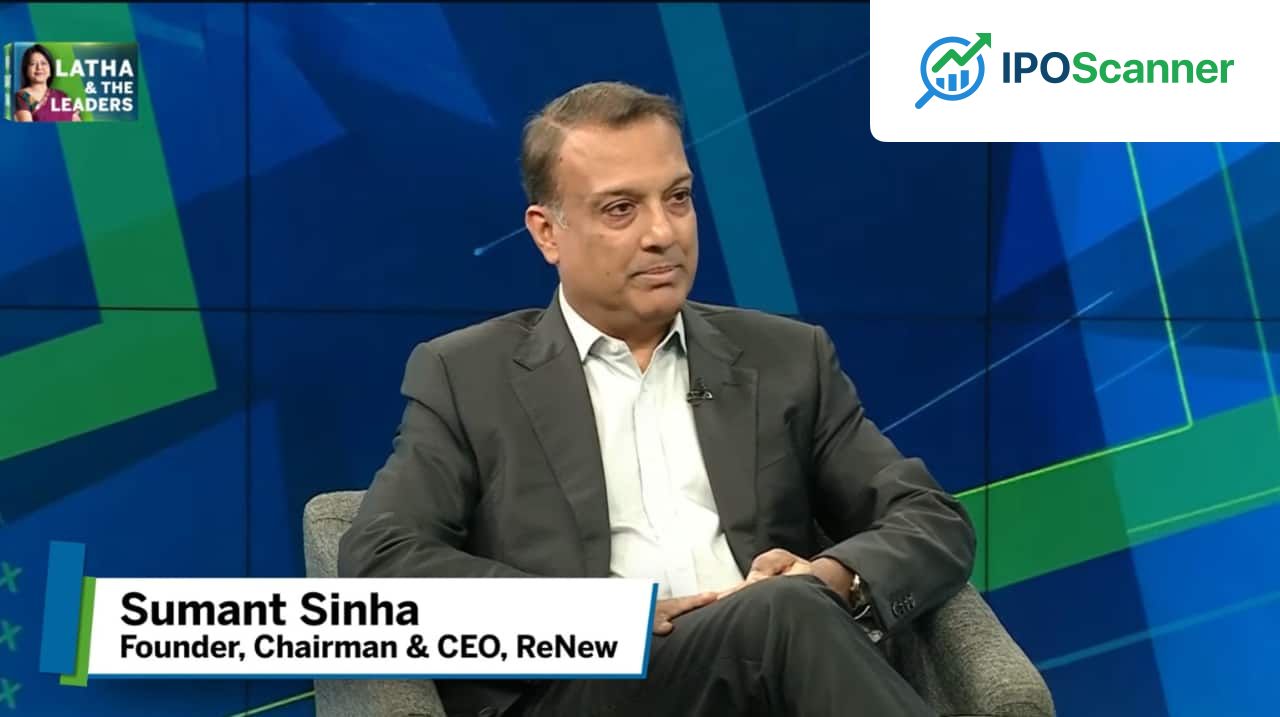
MC Exclusive: Sumant Sinha's Agenda at Renew Focused on Backward Integration and Potential India Listing of Key Businesses
Renew Power Takes Giant Leap into Backward Integration
Renew, India's second-largest renewable power company, is embarking on a significant expansion of its solar manufacturing capacity. This week, the company is set to break ground on a solar wafer plant in Andhra Pradesh, which will be ready for sale in two years. This move coincides with the Indian government's plan to stop all imports of solar inputs, including cells, modules, and wafers, by the proposed deadline.
Sumant Sinha, the Founder, Chairman, and CEO of Renew, has expressed his intention to list some of the company's subsidiary or associate businesses in India in the future. Sinha, a pioneer in the renewable energy sector, set up Renew Power in 2011 and listed it on the Nasdaq in 2021. Despite having more renewable installed capacity than peers like NTPC Green, Renew's market cap is significantly lower, at $1.84 billion or around Rs 18,000 crore, compared to NTPC Green's market cap of Rs 95,000 crore.
| Company | Renewable Installed Capacity | Market Cap |
|---|---|---|
| Renew | 11 GW+ | $1.84 billion (Rs 18,000 crore) |
| NTPC Green | 10 GW | Rs 95,000 crore |
| Premier Energies | - | Rs 44,000 crore |
Read also: Treasury Yields Experience Largest Increase in Two Weeks Following Release of Labor Market Data
Renew's solar manufacturing capacity is almost as large as that of Premier Energies, but Premier's market cap is significantly higher. Sinha has indicated that he is eyeing an India listing at some point, citing the company's expansion into solar manufacturing as a reason.
Sinha has also praised the Indian government's prescient policy decision to start manufacturing solar equipment in the country. Since then, Renew has invested heavily in capacity to build 2.5 GW of solar modules and cells, with another 4 GW on the way. The company is also focusing on selling solar-plus-storage solutions, or "round-the-clock" power, which Sinha claims is a pioneer in the sector.
Renew has installed capacity of 1.1 GW of BESS (battery energy storage system) with another 3 GW on the way. However, the rise of renewables has thrown up challenges for grid management, and storage solutions have become increasingly important. Sinha has welcomed the government's VGA scheme, which provides discounts to companies building battery systems.
Sinha sees a big jump in storage solutions capacity as well as in solar ancillaries like glass and capsules. He also believes that solar ancillary clusters will grow, with existing clusters already in Gujarat, Nagpur, and Andhra Pradesh. These clusters will allow Renew to bring its costs down and make Indian manufacturing competitive with China's.
Read also: US-Iran Tensions Spark Uptick in Oil Prices Amid Global Market Decline
Sinha hopes that India will eventually start exporting solar ancillaries, reducing the country's dependence on China. He believes that having an alternate supplier beyond China is crucial in today's geopolitically complex world.
As for Renew's future, Sinha is non-committal, citing the uncertainty of technology and market developments. However, he has highlighted some interesting opportunities, including selling renewable energy certificates to clients, virtual power purchase agreements, and data centre supply contracts. Renew already has contracts to supply power to companies like Microsoft and hopes to do more forward integration on the data centre front.
Investor Takeaway
Renew Power's backward integration and potential India listing may have a positive impact on the company's growth and valuation.
More in Economy

Treasury Yields Experience Largest Increase in Two Weeks Following Release of Labor Market Data

US-Iran Tensions Spark Uptick in Oil Prices Amid Global Market Decline

MoSPI Releases Uniform Norms for DDP Estimates with 2022-23 Base Year

