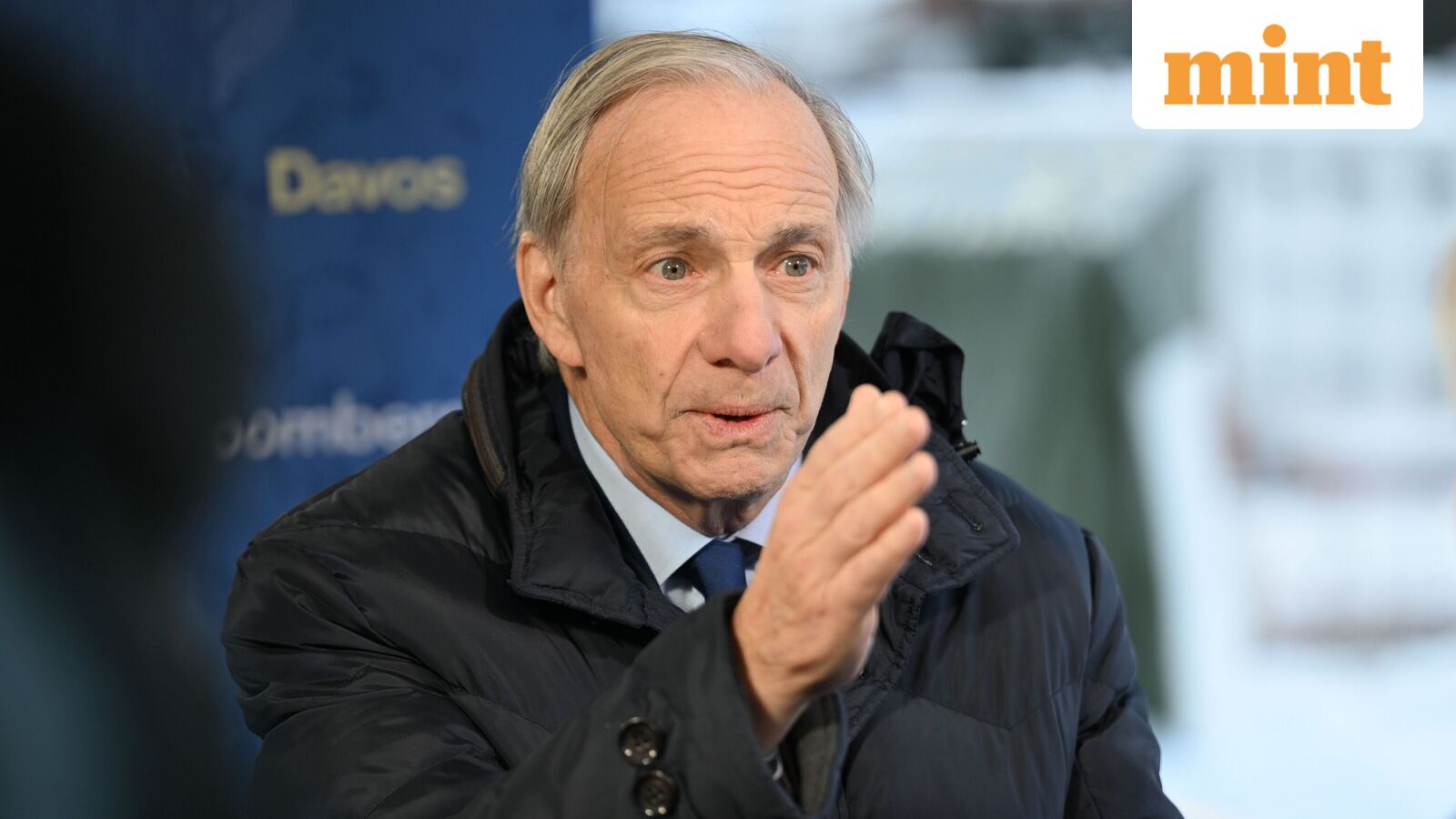
Low Interest Rates Fuel Debt Cycles, Says Ray Dalio
Economic Cycles and Monetary Policy: A Dynamic Relationship
Bridgewater Associates founder Ray Dalio has provided insights into the structural forces that shape economies and financial markets over long periods of time. In a recent discussion, Dalio explained the concept of economic cycles and their relationship with monetary policy.
Interest Rates and Debt
Interest rates in an economy cannot be too high or too low if it needs to function smoothly. If rates are high for too long, borrowers get squeezed, leading to increased debt servicing costs, defaults, and slowed growth. Conversely, if interest rates are kept too low, creditors suffer, resulting in negative real returns, capital misallocation, and excessive borrowing that fuels asset bubbles.
Read also: Treasury Yields Experience Largest Increase in Two Weeks Following Release of Labor Market Data
The Cycle
Dalio argues that this push and pull naturally creates cycles. When interest rates are very low or during negative real interest rates periods, borrowing increases sharply, and there is massive credit creation. Cheap money drives borrowing, inflates asset prices, and overall debt in the system grows. However, the growth period does not last forever, and with piling debt and risks building, the system becomes fragile.
Monetary Cycles and Politics
Dalio connects monetary cycles with politics, stating that during periods of financial stress, differences between central banks and elected governments tend to diminish. In a severe downturn or monetary emergency, a public fight between the government and the central bank can deepen instability, and governments often take greater control or influence over central banks.
Read also: US-Iran Tensions Spark Uptick in Oil Prices Amid Global Market Decline
Understanding the Cycle
Understanding the underlying mechanics driving these patterns can help predict what is likely to happen next. The relationship between debt, interest rates, money creation, and political power follows a pattern that repeats over time. When borrowing rises quickly because rates are low, it often increases the chances of a future correction. When losses mount, policy coordination tightens, and control centralises.
Implications for Investors and Policymakers
Understanding where the economy stands in this cycle is more important than focusing only on the next set of data numbers. If one person's debt is another person's asset, then long-term stability depends on maintaining balance. When that balance is lost, the cycle eventually shifts. Anticipating what may come next requires understanding the rhythm of these cycles.
Key Takeaways
- Economic cycles are driven by the relationship between debt, interest rates, money creation, and political power.
- The cycle is characterized by periods of growth, followed by periods of correction and fragility.
- Understanding the underlying mechanics of these patterns can help predict what is likely to happen next.
- Maintaining balance between debt and interest rates is crucial for long-term stability.
Investor Takeaway
Interest rates must be balanced to avoid debt cycles and maintain economic stability.
More in Economy

Treasury Yields Experience Largest Increase in Two Weeks Following Release of Labor Market Data

US-Iran Tensions Spark Uptick in Oil Prices Amid Global Market Decline

MoSPI Releases Uniform Norms for DDP Estimates with 2022-23 Base Year

