India's New Labour Code: Implications for Basic Pay and Take-Home Salary
New Labour Code: Companies to Restructure Salary Components, Not Raise Basic Pay
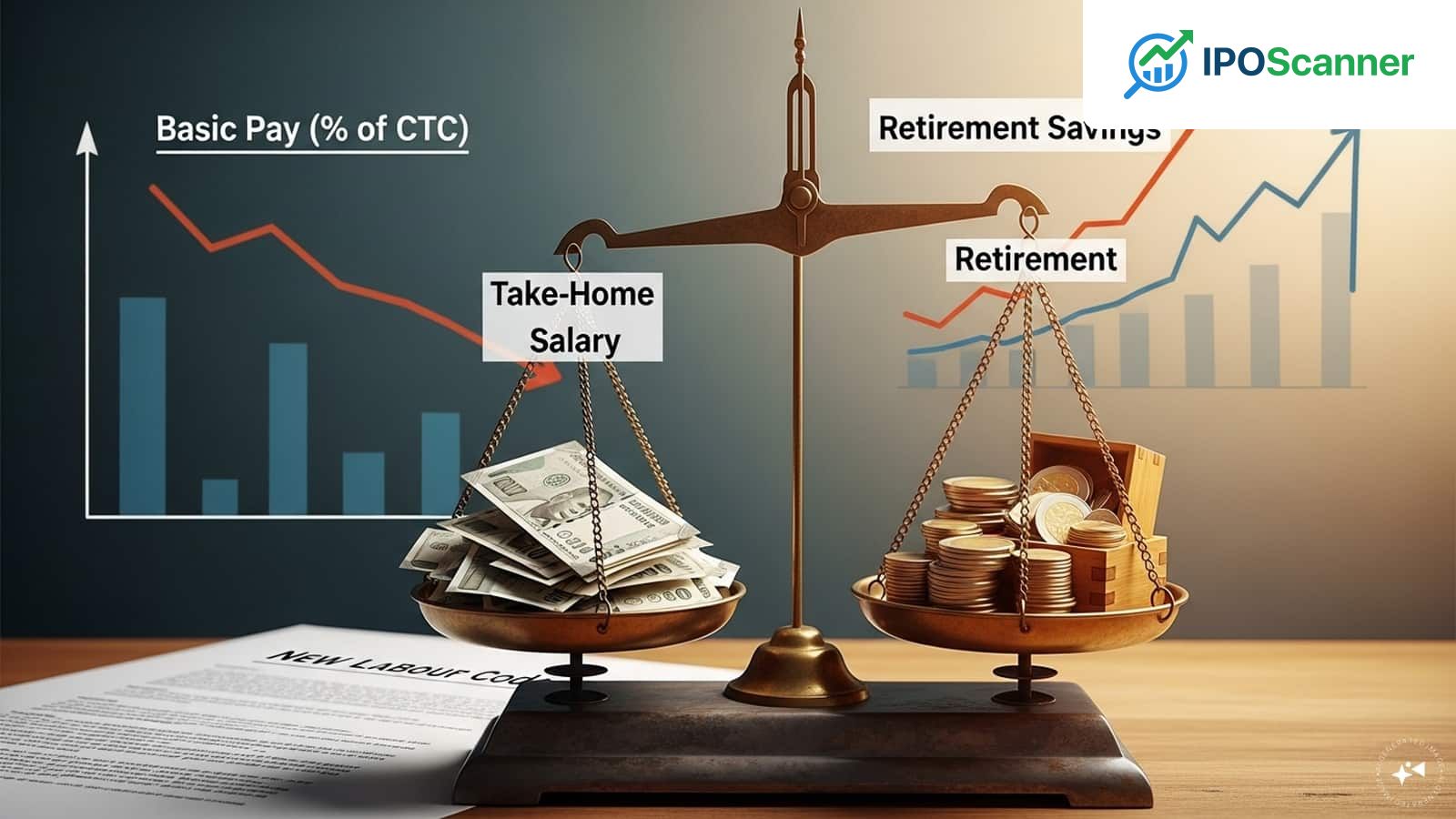
The Indian government's new labour code, which mandates that wages must be at least 50 percent of total compensation (CTC), is likely to lead companies to restructure salary components rather than simply raising basic pay. This means that while employees' CTC and basic pay may remain unchanged, the balance between allowances and statutory contributions will shift, potentially reducing take-home salary.
According to the new labour code, wages are defined as the total CTC minus exclusions such as House Rent Allowance, Conveyance Allowance, Performance Incentive, Leave Travel Allowance, Overtime Allowance, and Employers' Contribution to Provident Fund. If the total exclusions exceed 50 percent of the CTC, any amount above this threshold must be included under basic pay and dearness/special allowance.
Tax experts argue that the rule is about defining wages, not forcing basic pay to become 50 percent of CTC. Employers can reclassify some allowances to bridge the gap between basic pay and dearness allowance. In practice, only the excess of allowances above the 50 percent mark is added back to wages for calculating benefits like Provident Fund (PF) and gratuity.
Read also: Treasury Yields Experience Largest Increase in Two Weeks Following Release of Labor Market Data
As a result, companies are likely to take a calibrated approach rather than mechanically raising basic pay. They will rebalance components rather than increase fixed pay upfront, keeping overall salary structures similar while making backend adjustments to comply with the rule.
| Company | CTC | Basic Pay | PF and Gratuity Contributions |
|---|---|---|---|
| XYZ Inc. | ₹15 lakh | ₹4.5 lakh | ₹1.5 lakh (previously ₹1 lakh) |
| ABC Ltd. | ₹20 lakh | ₹6 lakh | ₹4 lakh (previously ₹2.5 lakh) |
The risks of increasing basic salary upfront are significant. Since the wage definition is dynamic, any future inclusion or reclassification of allowances may further increase the wage base, resulting in higher statutory outflows such as provident fund and gratuity. This can increase employer costs and reduce employee take-home pay beyond what is required for compliance.
For instance, if an employee earns ₹15 lakh CTC, their basic pay might be around ₹4.5 lakh. If the company increases it to ₹7.5 lakh upfront, contributions to provident fund, NPS, and superannuation will rise sharply, reducing monthly take-home salary.
Read also: US-Iran Tensions Spark Uptick in Oil Prices Amid Global Market Decline
Tax experts caution that any change to basic salary could impact retirement contributions linked to basic salary. Thus, employers may not necessarily look at enhancing the basic salary as this could majorly impact the net take-home salary for employees.
Under the new labour code, employees' PF and gratuity will change. Companies will adjust salary components in the background to meet the rule. In the example above, the basic salary stays at ₹4.5 lakh, but special allowances fall sharply. At the same time, PF and gratuity contributions rise because they are linked to the revised definition of wages.
The impact will differ between tax regimes. The fall in take-home salary will differ across tax regimes because tax calculations and deductions vary. Under the old regime, employees can claim a deduction for PF contributions. This slightly reduces taxable income, but not enough to fully offset the higher contributions.
Under the new tax regime, there are fewer deductions, but a higher standard deduction of ₹75,000 will help soften the impact.
Employees should not focus only on CTC when evaluating job offers or salary revisions. The new labour code makes it more important to look at one's PF and gratuity contributions. The split between fixed pay and allowances and net take-home salary after tax.
For employees, this shift means a trade-off. "This shift may result in a slight reduction in take-home pay due to higher employee-side PF contributions. However, this should be seen as a reallocation towards long-term social security benefits such as retirement savings and gratuity, rather than a direct reduction in overall compensation," said CA Chandni Anandan, tax expert at ClearTax.
More in Economy

Treasury Yields Experience Largest Increase in Two Weeks Following Release of Labor Market Data

US-Iran Tensions Spark Uptick in Oil Prices Amid Global Market Decline

MoSPI Releases Uniform Norms for DDP Estimates with 2022-23 Base Year

