India's Market Share in Global Market Capitalization Falls to 3% in March, Amid Middle East Conflict Concerns
Indian Stock Market's Global Share Hits Multi-Year Low
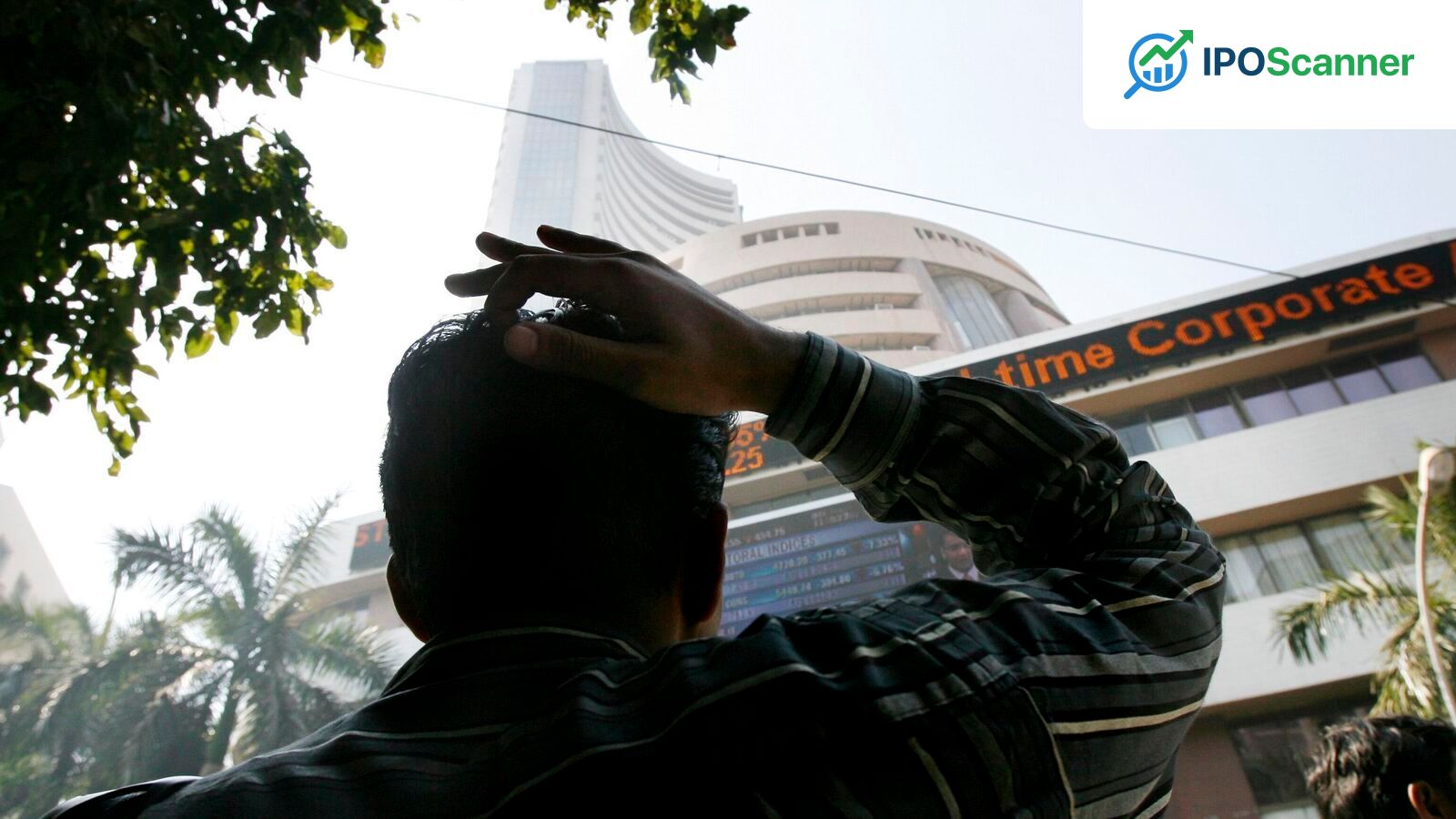
The Indian stock market has witnessed its worst monthly performance in six years in March, with the country's share of global market capitalization slipping to a multi-year low. According to a report by domestic brokerage firm Motilal Oswal, India's share of global market capitalization dropped to 3% in March 2026, marking a three-year low and a decline from 3.3% in February 2026.
Despite remaining among the top 10 contributors to global market capitalization, India's share has declined significantly from its peak in September 2024, when it reached 4.6%. The US continues to hold the largest share of global market capitalization at 47% in March, followed by China at 9.3%. Japan and Hong Kong ranked next with 5.3% and 4.9%, respectively. With a market capitalization of $4.4 trillion, India stood in fifth position.
The global market capitalization has risen by 20.2% ($24.4 trillion) in the last 12 months, while India's market cap has declined by 10%. The report highlights that Korea recorded the highest increase in market cap at 93%, followed by Taiwan (59%), Brazil (33%), China (32%), Japan (21%), and the US (18%). Except for India, all major global markets have seen an increase in market capitalization over the past year.
Read also: Treasury Yields Experience Largest Increase in Two Weeks Following Release of Labor Market Data
| Market | 12-Month Increase |
|---|---|
| Korea | 93% |
| Taiwan | 59% |
| Brazil | 33% |
| China | 32% |
| Japan | 21% |
| US | 18% |
The MSCI India Index has declined by 13% in the last one year, underperforming the MSCI Emerging Markets (EM) Index, which gained 27% during the same period. However, over the long term, the MSCI India Index has outperformed the MSCI EM Index by 27% over the last 10 years.
The sustained rise in crude oil prices throughout March, triggered by escalating tensions in the Middle East, has heightened fears of prolonged inflation and possibly higher interest rates. This has triggered a wave of selling across sectors, causing the Nifty 50 to plunge 11.3%, marking the biggest monthly drop since March 2020 and extending its losing streak to a fourth straight month.
The decline is not limited to India but has been felt across global markets, with Korea (-19%), Indonesia (-14%), Taiwan (-10%), Germany (-10%), the UK (-7%), China (-7%), the US (-5%), and Brazil (-1%) all ending lower. War-related concerns have also prompted overseas investors to turn net sellers in March, withdrawing a record ₹1.17 lakh crore, as per NSDL data. These outflows have not only impacted equities but have also put pressure on the rupee, which slipped to an all-time low of 95 against the US dollar.
Read also: US-Iran Tensions Spark Uptick in Oil Prices Amid Global Market Decline
India remains highly vulnerable to rising crude oil prices, as it imports nearly 85% of its oil requirements. A sharp spike in prices could fuel inflation and dent the earnings of companies that rely heavily on crude oil as a key raw material, while also potentially prompting the RBI to hike interest rates.
While the recent crash pushed equities to multi-month lows, it has helped ease valuation concerns. The MSCI India Index is now trading at a 27% premium to the MSCI Emerging Markets (EM) Index, below its historical average premium of 73%, according to Motilal Oswal. The Nifty 50 is currently trading at a 12-month forward P/E of 17.7x, below its long-period average (LPA) of 20.9x, implying a 15% discount. Further, its price-to-book (P/B) ratio of 2.6x represents an 8% discount to its historical average of 2.9x. Given these relative valuations, the brokerage finds greater value in large caps compared to midcaps.
Although markets typically recover over the long term, ongoing structural disruptions to supply chains and persistent inflation concerns are raising fears of prolonged market instability and delayed monetary easing.
Investor Takeaway
Investors should be cautious of the decline in India's market share and potential long-term implications.
More in Economy

Treasury Yields Experience Largest Increase in Two Weeks Following Release of Labor Market Data

US-Iran Tensions Spark Uptick in Oil Prices Amid Global Market Decline

MoSPI Releases Uniform Norms for DDP Estimates with 2022-23 Base Year

