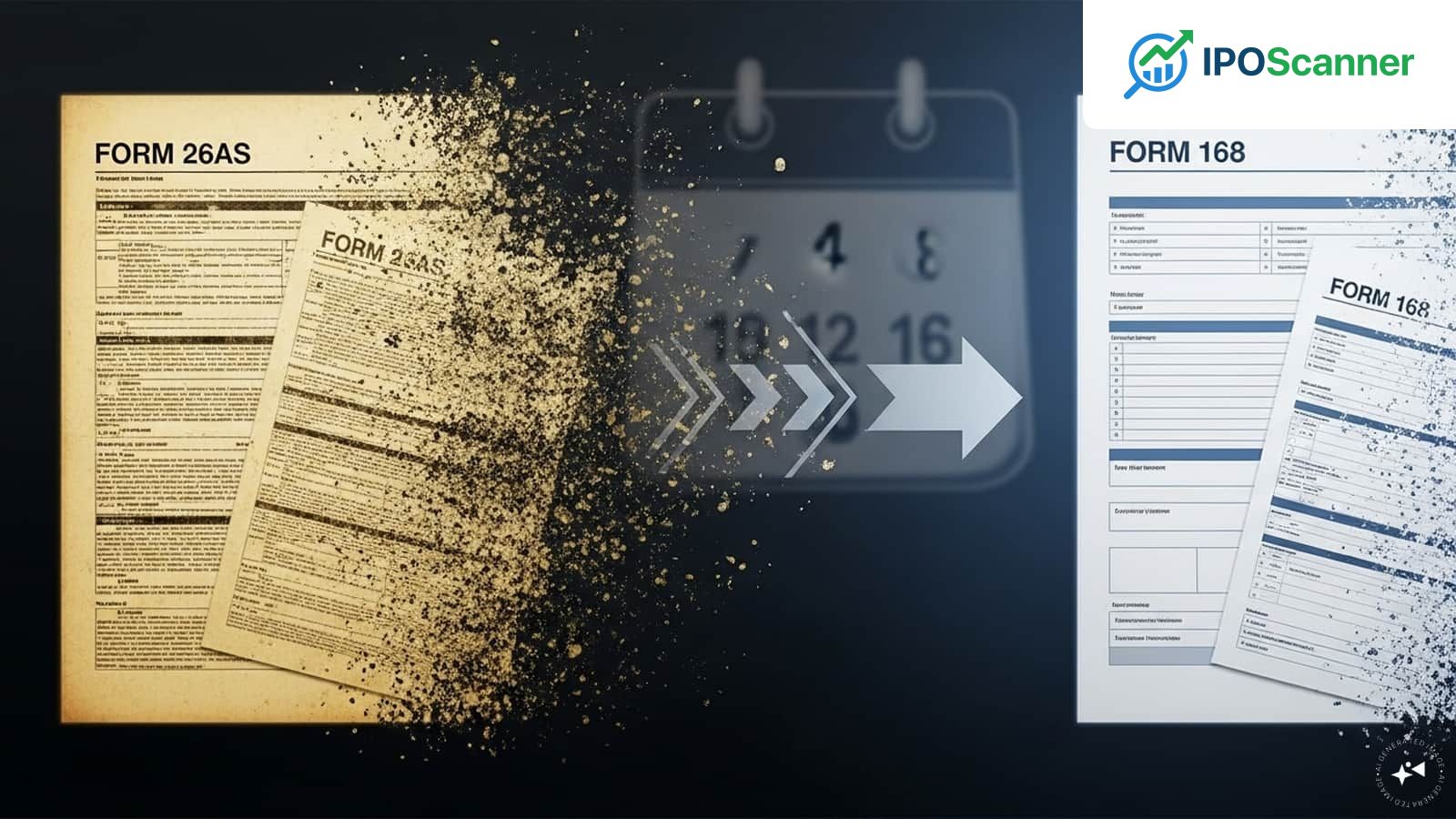
India's Income Tax Department Introduces Reforms to Form 26AS, Now Form 168: Understanding Key Changes and Implementation Timeline
New Income Tax Rules 2026: Form 26AS to be Replaced by Form 168
The Income Tax Department is set to introduce a new tax credit statement, Form 168, to replace the existing Form 26AS. This change is part of the new Income Tax Rules, 2026, designed to provide taxpayers and the Income Tax Department with a more comprehensive view of financial transactions and tax-related information.
Form 26AS, a tax credit statement reflecting taxes deducted or collected against a taxpayer's PAN, has long been the go-to document for taxpayers to verify TDS, tax payments, and refunds before filing their income tax returns. However, the new Form 168 will include a wider range of financial information, including salary income, bank interest, dividend earnings, mutual fund investments, share market transactions, property purchases and sales, foreign remittances, credit card transactions, GST turnover details, income tax refunds, and interest received.
The expanded statement will be in two parts: Part A will contain the taxpayer's general profile and identification details, including their Permanent Account Number (PAN), masked Aadhaar number, name, date of birth/incorporation/formation, registered mobile number, email address, and address particulars. Part B will provide a consolidated overview of tax-related information, financial transactions, and compliance records available with the Income Tax Department for the relevant financial year.
Read also: Treasury Yields Experience Largest Increase in Two Weeks Following Release of Labor Market Data
According to the Income Tax Rules, 2026, Part B of Form 168 will include details relating to:
| Information | Description |
|---|---|
| Tax Deducted at Source (TDS) and Tax Collected at Source (TCS) | Details of taxes deducted or collected against a taxpayer's PAN |
| Specified Financial Transactions (SFTs) | Information relating to reportable financial transactions |
| Taxes Paid | Details of taxes paid, including advance tax, self-assessment tax, and regular tax |
| Tax Demands and Refunds | Information relating to tax demands and refunds |
| Pending Proceedings | Details of pending tax proceedings |
| Completed Proceedings | Details of completed tax proceedings |
| Other Information | Any other information as prescribed under Rule 245(2) of the Income-tax Rules, 2026 |
Taxpayers should verify Form 26AS and Form 168 before filing their income tax returns to ensure accuracy and avoid potential issues. This includes verifying reported income, reconciling tax credits, identifying omissions or discrepancies, validating high-value financial transactions, and avoiding notices and scrutiny.
By reviewing Form 168, taxpayers can detect any unreported or incorrectly reported transactions, duplicate entries, or mismatches between taxpayer records and information available with the Income-tax Department. This can reduce the likelihood of receiving notices, defective return intimations, or reassessment proceedings on account of mismatch or under-reporting.
Read also: US-Iran Tensions Spark Uptick in Oil Prices Amid Global Market Decline
More in Economy

Treasury Yields Experience Largest Increase in Two Weeks Following Release of Labor Market Data

US-Iran Tensions Spark Uptick in Oil Prices Amid Global Market Decline

MoSPI Releases Uniform Norms for DDP Estimates with 2022-23 Base Year

