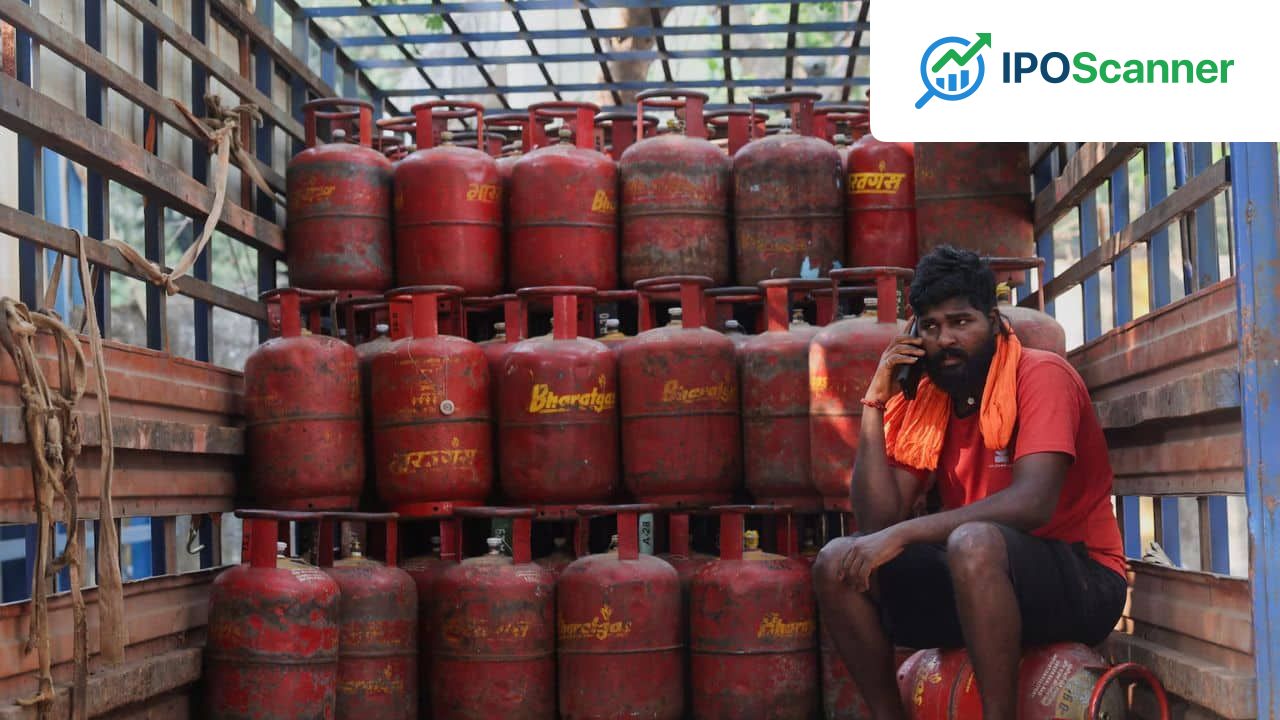
India's Former Ambassador Praises Government Response Amid LPG Price Disruption and Regional Tensions
India's Energy Security at Crossroads Amid West Asia Crisis
India, the world's third-largest energy consumer and importer, is navigating a critical energy crisis as the conflict in West Asia enters its second month. The effective closure of the Strait of Hormuz has placed one-sixth of humanity at a critical economic crossroads, according to Sanjay Sudhir, former Indian Ambassador to the UAE.
Sudhir highlighted that Liquefied Petroleum Gas (LPG) is facing the most severe crisis, with LPG fuels over 340 million Indian households, making it a matter of national survival rather than just industrial necessity. India relies on imports for 62% of its LPG needs, with 90% of those imports originating from the Gulf countries currently embroiled in or affected by the war.
The crisis has impacted India's energy security, with Sudhir noting that "proactive government measures" are currently keeping a total collapse at bay. The Centre has prioritized domestic cooking gas over industrial use and maximized refining, with domestic refineries ordered to push LPG production to absolute capacity.
Read also: Treasury Yields Experience Largest Increase in Two Weeks Following Release of Labor Market Data
India's situation becomes critically important because it has to sustain one-sixth of humanity. Sudhir pointed out that India is 89% import-reliant, with 45% of its crude imports coming from the Gulf. LPG imports are 62% reliant on the Gulf, with 90% of those imports originating from the region.
| Import Category | Import Reliance | Gulf Origin |
|---|---|---|
| Crude | 89% | 45% |
| LPG | 62% | 90% |
| LNG | 50% | 60% (from Qatar) |
Sudhir further added that India is looking toward Mozambique and new long-term contracts with the UAE (expected by late 2026) to decouple from current hotspots. The former diplomat also noted that the crisis has created a problem for India, with the Ras Laffan LNG facility of Qatar badly damaged and Qatar itself declaring force majeure.
In response to the crisis, the Ministry of Petroleum and Natural Gas issued a public advisory on Friday, acknowledging the closure of the Strait of Hormuz and assuring citizens that "necessary measures" are in place to maintain an uninterrupted supply. Citizens were urged to avoid panic purchasing of petrol and diesel and to refrain from "unnecessary" advance bookings of LPG cylinders to prevent artificial shortages.
Read also: US-Iran Tensions Spark Uptick in Oil Prices Amid Global Market Decline
Investor Takeaway
Investors should monitor the impact of geopolitical tensions on India's energy security.
More in Economy

Treasury Yields Experience Largest Increase in Two Weeks Following Release of Labor Market Data

US-Iran Tensions Spark Uptick in Oil Prices Amid Global Market Decline

MoSPI Releases Uniform Norms for DDP Estimates with 2022-23 Base Year

