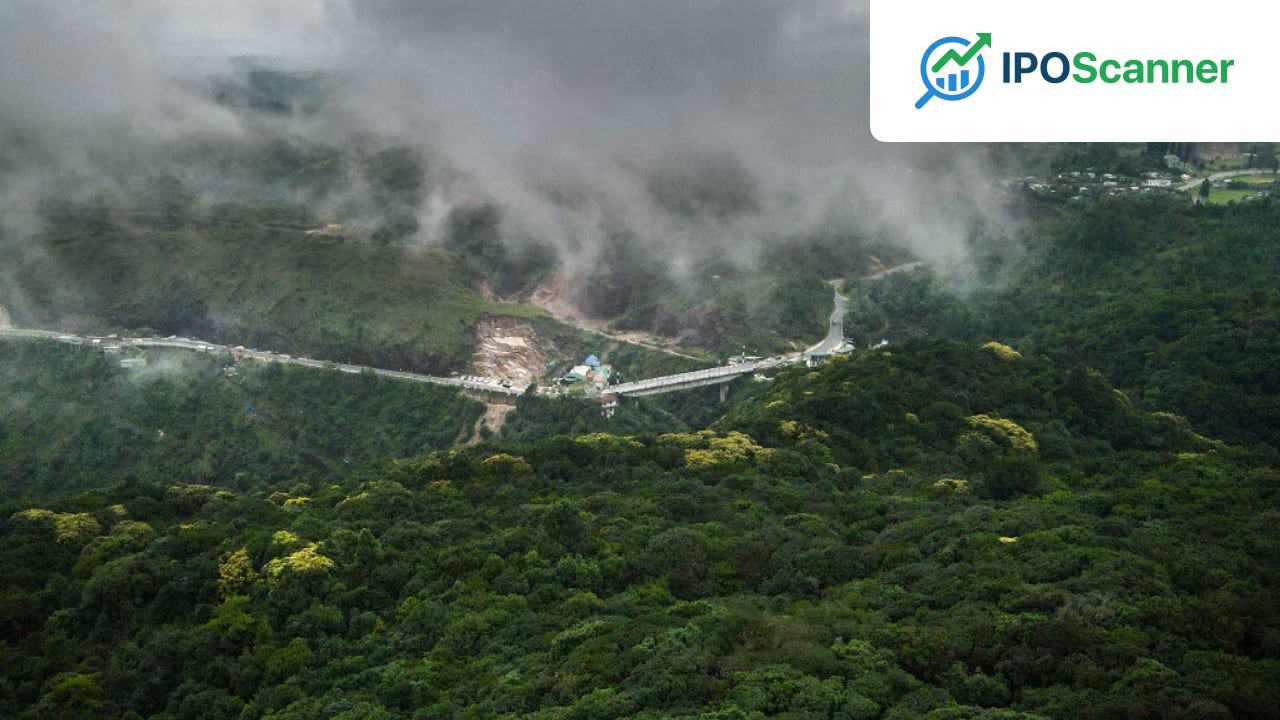
India's Forest Carbon Storage Projected to Rise Across Major Regions, but Inequality Exposed in New Study
Climate Change to Boost Carbon Storage in India's Forests, but Not Uniformly
A recent study conducted by researchers from the Pune-based Indian Institute of Tropical Meteorology (IITM) has shed light on the impact of climate change on carbon storage in India's forests. The study, led by Fitha Fathima, Mareena Mathew, and Roxy Mathew Koll, has found that the carbon stored in India's living forest vegetation is projected to increase across all major forest regions, but not evenly.
According to the study, published in Environmental Research: Climate, the largest gains in carbon storage are projected in the desert and semi-arid zones, followed by the Trans-Himalaya, Indo-Gangetic Plain, and Deccan Peninsula. The Western Ghats, Northeast, and Himalayan forests will also experience increases, but more modestly.
The researchers used the LPJ-GUESS vegetation model and climate projections from CMIP6 to examine how living carbon changes from the recent past to the near, mid, and late 21st century under low, medium, and high emissions pathways. The study found that the carbon stored in living forest vegetation is projected to rise from 7.74 kilograms of carbon per square meter in the historical period to 10.24 under low emissions, 11.76 under medium emissions, and 13.67 under high emissions by the late 21st century.
Read also: Treasury Yields Experience Largest Increase in Two Weeks Following Release of Labor Market Data
The following table summarizes the projected increases in carbon stock across different emissions pathways:
| Emissions Pathway | Projected Carbon Stock (kg/m²) | Percentage Increase by 2100 |
|---|---|---|
| Low | 10.24 | 35% |
| Medium | 11.76 | 62% |
| High | 13.67 | 97% |
The study highlights the importance of understanding regional climate patterns, especially rainfall, for future forest planning, carbon sink strategies, and climate adaptation. Rainfall variability plays a stronger national-scale role than temperature in shaping changes in forest carbon, with precipitation effects often unfolding over several years rather than instantly.
The research focuses on the carbon stored in living forest vegetation, also known as vegetation carbon biomass (VCB). This is the living biomass part of forest carbon, not the carbon in dead wood, litter, or soils. The study does not project an overall decline in living forest carbon in any of the eight ecological regions it analyzes.
Read also: US-Iran Tensions Spark Uptick in Oil Prices Amid Global Market Decline
However, higher-emissions futures may produce larger modelled gains in living biomass in some regions, but they also bring more warming, stronger extremes, and greater risks from drought, wildfire, pests, and other disturbances. Forest responses to climate and carbon dioxide are complex, and gains in one part of the system do not cancel the wider risks of a hotter world.
More in Economy

Treasury Yields Experience Largest Increase in Two Weeks Following Release of Labor Market Data

US-Iran Tensions Spark Uptick in Oil Prices Amid Global Market Decline

MoSPI Releases Uniform Norms for DDP Estimates with 2022-23 Base Year

