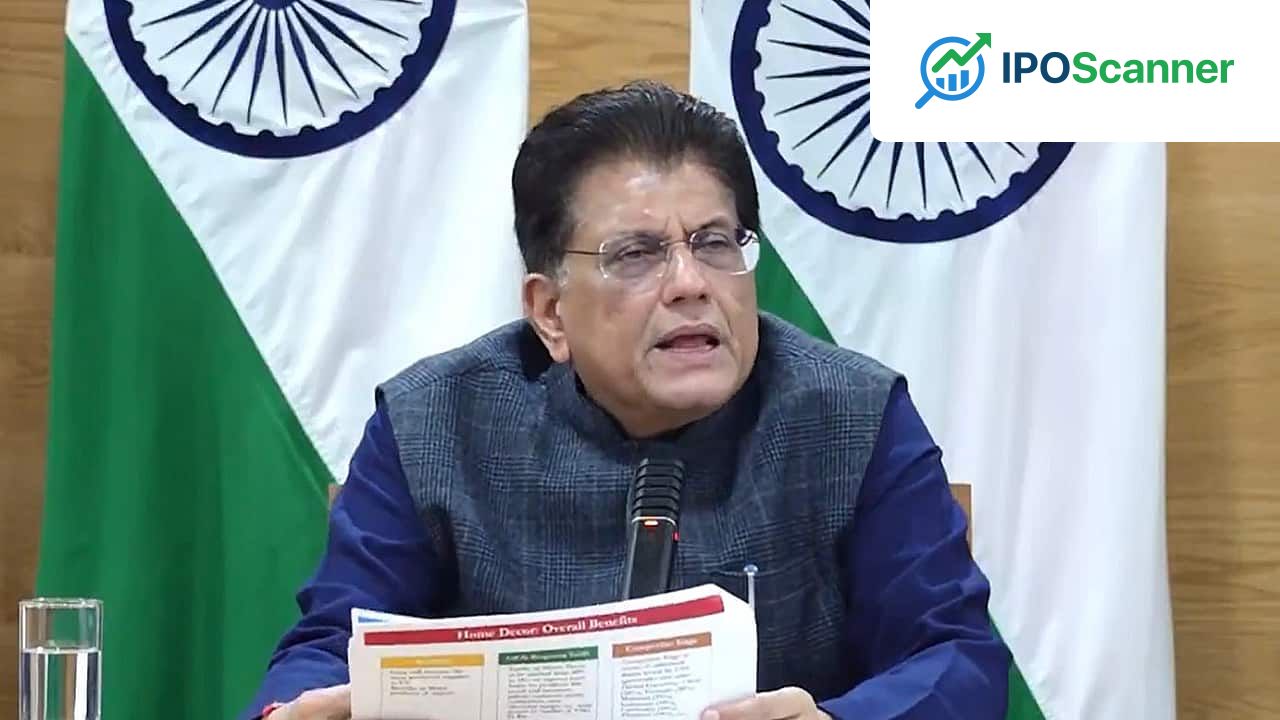
India's Economic Fundamentals Remain Resilient Amid Global Uncertainty: Piyush Goyal
India Demonstrates Economic Resilience Amid Global Turbulence
India continues to exhibit strong economic resilience, defying global economic turmoil, stated Commerce and Industry Minister Piyush Goyal on Saturday. The minister acknowledged the nation's robust macroeconomic indicators, citing sustained export performance as a key factor.
India's economic fundamentals remain robust, with exports experiencing a steady pace of growth, even in the last three weeks of April and May. The sustained growth in exports is a testament to the nation's economic resilience and the government's efforts to strengthen the economy.
The government has taken measures to support the agriculture sector, absorbing the substantial cost pressures arising from elevated fertilizer prices. This move is aimed at protecting farmers and stabilizing the sector.
Read also: Treasury Yields Experience Largest Increase in Two Weeks Following Release of Labor Market Data
India's reform trajectory has been a key factor in strengthening the economy. The nation has implemented 12 years of structural reforms and outcome-oriented policies, focusing on sectors where India has a competitive advantage, particularly services. This strategic approach has enabled India to tap into its potential and emerge as a significant player on the global stage.
Foreign direct investment (FDI) inflows have reached record levels, and the government expects them to remain strong in the coming years. This increased investment will further boost India's economic growth.
Comparison of Export Performance
| Quarter | 2022 | 2023 |
|---|---|---|
| April | 120 billion USD | 130 billion USD |
| May | 125 billion USD | 135 billion USD |
Read also: US-Iran Tensions Spark Uptick in Oil Prices Amid Global Market Decline
The table above highlights the growth in India's export performance in the last two years. The sustained growth in exports is a key indicator of the nation's economic resilience.
The government has announced the rollout of guidelines for the "Bhavya" scheme, under which 100 industrial parks with ready-to-use infrastructure will be established. These parks are designed to improve the ease of starting a business and attract investments across states.
The project will be rolled out in phases, with 20 parks to be established in two months and another 30 parks in another two months. States can partner with private players through joint ventures to participate in the scheme, and the parks will cater to both export-oriented and domestic manufacturing units.
Industrial Parks Rollout Plan
| Phase | Number of Parks | Timeline |
|---|---|---|
| 1 | 20 | Two months |
| 2 | 30 | Two months |
The government expects the first 50 parks to be implemented by the next three years at the latest. States such as Uttar Pradesh, Maharashtra, Uttarakhand, Rajasthan, Madhya Pradesh, Haryana, and West Bengal have already shown interest in the scheme.
Goyal also announced that he will undertake a three-day official visit to Canada from May 25 to 27, during which a delegation of over 150 Indian business leaders will travel to Ottawa and Toronto for high-level meetings. The visit aims to discuss the proposed free trade agreement (FTA) between India and Canada.
The minister stated that India expects higher investments from Canada and described the proposed FTA as "complementary, not competitive." He noted that Canada's strength lies in gas, oil, and mining, while India's strengths are in textiles, leather, and skilling. The proposed FTA is expected to boost trade and investment between the two nations.
Goyal added that India is looking at Canada as a strategic partner for critical minerals, which are essential for the electric vehicle ecosystem. The government aims to collaborate with Canada to ensure a stable supply of critical minerals.
In response to a question on maintaining stability in the current account deficit (CAD), Goyal stated that the government is focusing on boosting local manufacturing, encouraging domestic and foreign investment, and promoting deep-tech sectors. He noted that the government does not intervene in currency movements and allows market forces to decide the rupee's value.
Investor Takeaway
India's economic fundamentals remain strong despite global uncertainty.
More in Economy

Treasury Yields Experience Largest Increase in Two Weeks Following Release of Labor Market Data

US-Iran Tensions Spark Uptick in Oil Prices Amid Global Market Decline

MoSPI Releases Uniform Norms for DDP Estimates with 2022-23 Base Year

