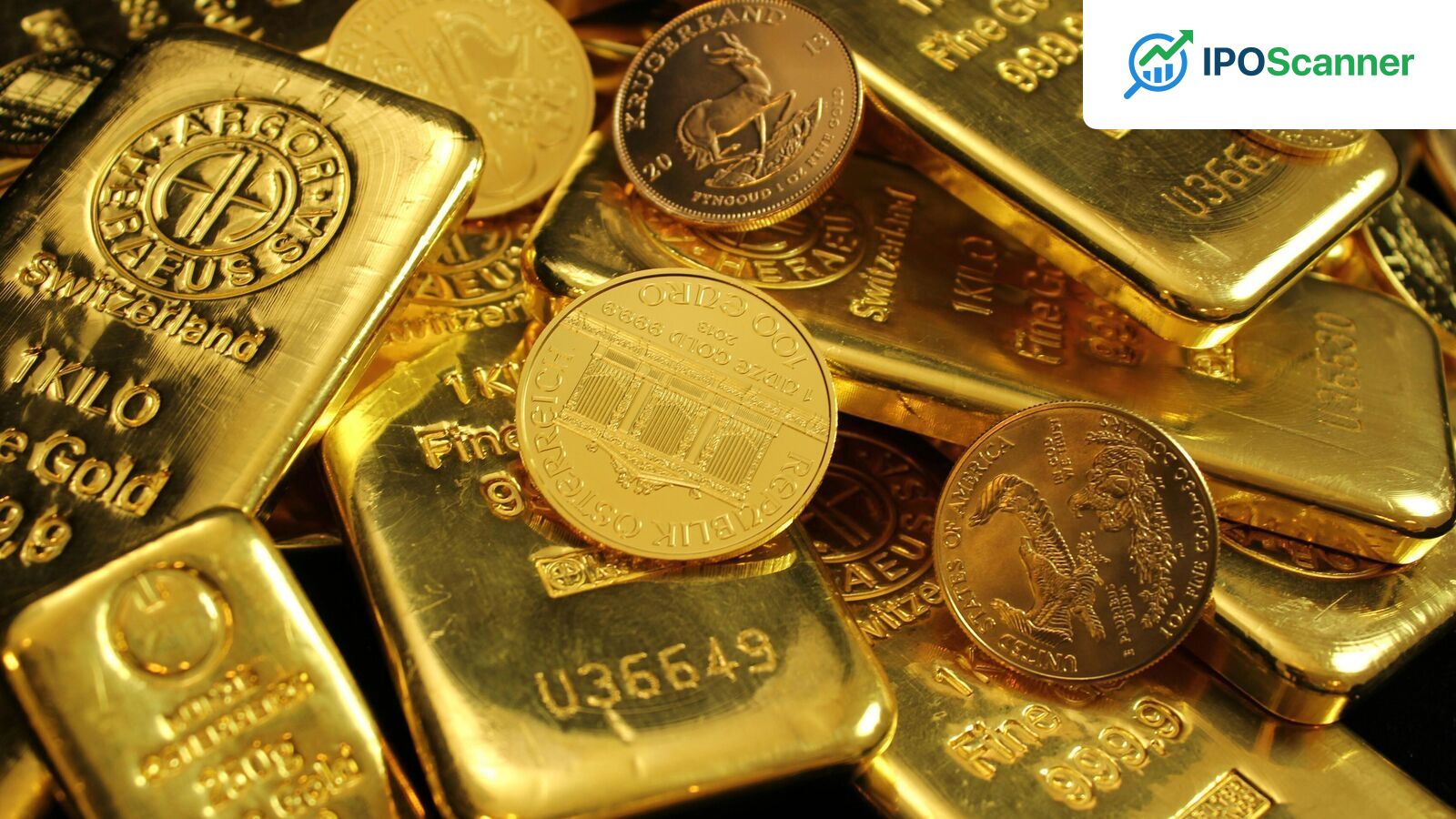
Indians Abandon Jewelry for Gold ETFs and Bars Amid Rising Prices, WGC Reports
India's Gold Market Sees Sharpest Behavioural Shift in First Quarter of 2026
India's gold market experienced a significant behavioural shift in the first quarter of 2026, with jewellery consumption taking a hit due to soaring prices. According to the World Gold Council, jewellery demand in India fell 19% year-on-year to 66.1 tonnes, reflecting the pressure of significantly higher prices. Domestic gold prices during the quarter were 81% higher compared to the same period last year, making traditional jewellery purchases less affordable.
Despite the decline in jewellery demand, overall gold demand in India still grew 10.2% to 151 tonnes, indicating that investment buying more than compensated for the decline in jewellery purchases. Investment demand surged 52% year-on-year to 82 tonnes, overtaking jewellery consumption, which dropped 19.5% to 66 tonnes.
Comparison of Gold Demand in India (Q1 2026 vs. Q1 2025)
Read also: Treasury Yields Experience Largest Increase in Two Weeks Following Release of Labor Market Data
| Category | Q1 2026 | Q1 2025 | % Change |
|---|---|---|---|
| Jewellery Demand (tonnes) | 66.1 | 81.4 | -19% |
| Investment Demand (tonnes) | 82 | 54.1 | 52% |
| Total Gold Demand (tonnes) | 151 | 137.2 | 10.2% |
The World Gold Council noted that this change was driven by subdued equity market returns and rising uncertainty, prompting investors to seek safety in gold-backed assets. Bar and coin demand jumped 34% year-on-year to 62.3 tonnes, marking the highest first-quarter level since 2013. Notably, this nearly matched jewellery consumption in volume terms — a rare occurrence in India's gold market.
Investment demand accounted for 54.3% of total consumption during the quarter, compared to jewellery's lower share. Traditionally, investment demand contributes only about one-fourth of India's total gold consumption, underlining the scale of this shift. Gold ETF inflows also remained strong, supported by dip-buying during price corrections in February and March.
The report highlighted that some consumers who would typically buy jewellery instead opted for bars and coins due to their lower premiums. Loans surge sharply, with outstanding retail bank loans secured against gold jewellery reaching INR 4.3 trillion by the end of February, marking a steep 124% year-on-year increase.
Read also: US-Iran Tensions Spark Uptick in Oil Prices Amid Global Market Decline
This reflects gold's expanding role not just as a store of value but also as a financial asset that supports liquidity for households. For investors, this trend underscores gold's dual utility — both as an investment and as collateral in times of need.
India's trend mirrors a broader global pattern. Worldwide jewellery consumption declined 23% year-on-year to 299.7 tonnes, the lowest level since the pandemic-hit Q2 2020. However, total spending rose 31% to a record $47 billion, again indicating higher prices driving value despite lower volumes.
Total global gold demand, including OTC transactions, stood at 1,231 tonnes, up 2% year-on-year. In value terms, demand surged 74% to a record $193 billion. The LBMA PM gold price averaged $4,873 per ounce during the quarter, after touching an all-time high of $5,405 per ounce in January.
The global rally was largely driven by investment demand, with bar and coin buying reaching 474 tonnes — the second-highest quarter on record — and value soaring to $74 billion, far above the five-year quarterly average of $23 billion. China led the surge, with bar and coin demand hitting a record 207 tonnes, driven by safe-haven buying, weak equity markets, a depreciating yuan, and regulatory changes that pushed investors toward lower-premium gold products.
Jewellery demand weakened across most major markets. China saw a 32% drop to 85.2 tonnes, while the United States recorded a steep 44% decline as tariffs and high prices impacted affordability. Middle Eastern markets also reported double-digit declines in volume, although total value rose 30% to $5 billion due to festive demand during Ramadan and Eid.
Meanwhile, central banks continued to accumulate gold, with net purchases rising 3% year-on-year to 244 tonnes. Poland led buying with 31 tonnes, followed by Uzbekistan with 25 tonnes. China added 7 tonnes, taking its reserves to 2,313 tonnes. Selling by Turkey and Russia was noted, though the World Gold Council described Turkey's sales as tactical, with holdings stabilising by April.
For investors, the key takeaway is clear: India's gold market is undergoing a structural shift. While jewellery demand remains sensitive to price surges, investment demand is becoming a dominant force, supported by macro uncertainty, financialisation of gold, and evolving consumer preferences.
Investor Takeaway
Investors should be cautious of the impact of rising gold prices on the Indian economy.
More in Economy

Treasury Yields Experience Largest Increase in Two Weeks Following Release of Labor Market Data

US-Iran Tensions Spark Uptick in Oil Prices Amid Global Market Decline

MoSPI Releases Uniform Norms for DDP Estimates with 2022-23 Base Year

