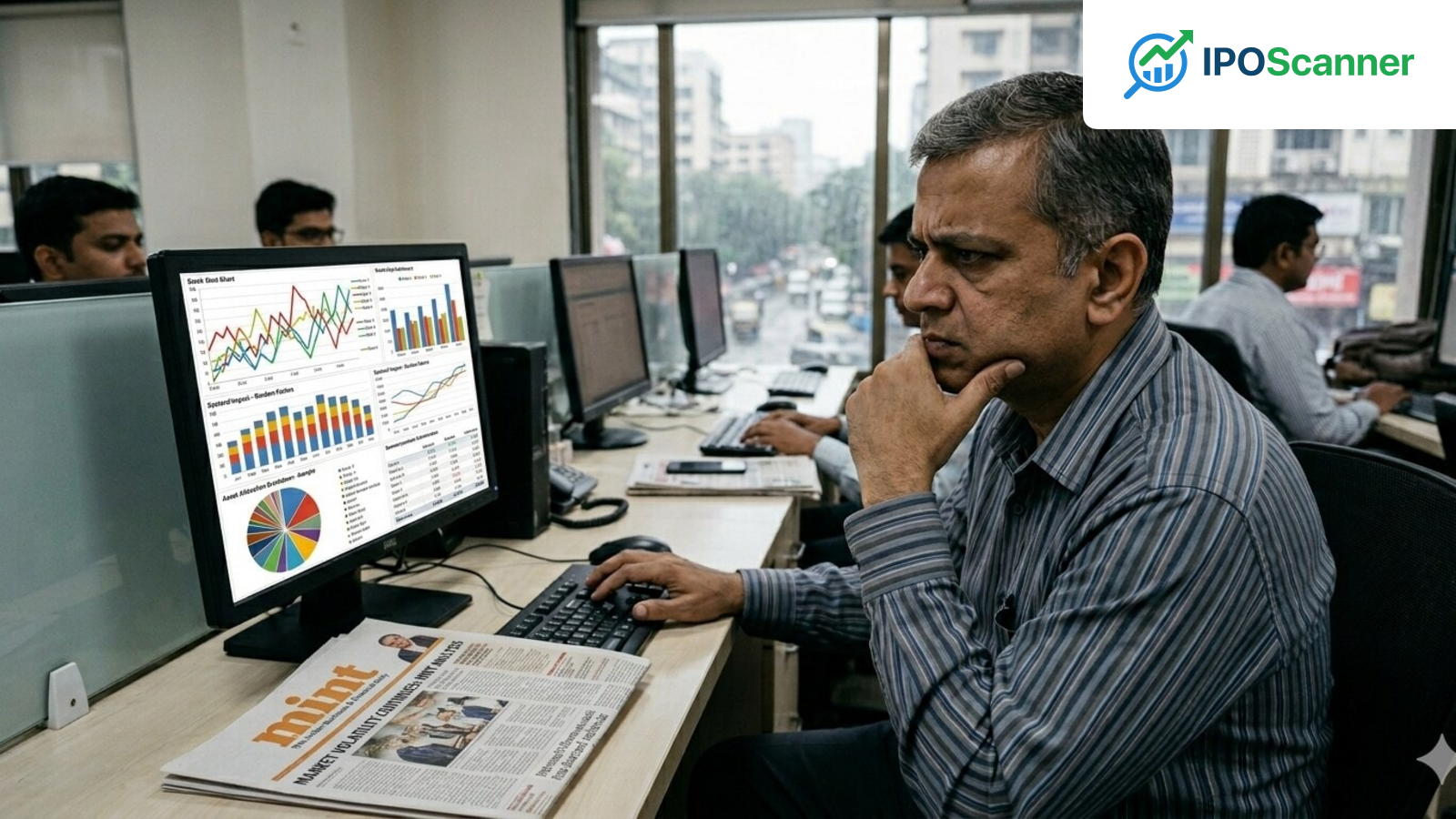
Indian Stock Market Sees Continued Volatility Amid Mixed Signals on US-Iran Conflict
Indian Stock Market Faces Challenging Phase Amid Geopolitical Tensions
The Indian stock market has been experiencing a turbulent phase in the first five months of 2026, with foreign capital outflows, geopolitical unrest in West Asia, and the depreciation of the Indian rupee contributing to the volatility. Despite a 7% increase seen in April, the Sensex and Nifty 50 have declined 10.83% and 8.54%, respectively, on a year-to-date basis.
| Index | Year-to-Date Decline |
|---|---|
| Sensex | 10.83% |
| Nifty 50 | 8.54% |
The Nifty 50 has largely consolidated in a tight but volatile range, attempting to hold on to the 24,000 psychological support level. Market experts believe that while the sentiment has improved, investors remain cautious and highly sensitive to geopolitical headlines. The near-term market direction is likely to be driven by developments surrounding the US-Iran negotiations, movements in crude oil prices, rupee trends, and institutional flow dynamics.
Read also: Treasury Yields Experience Largest Increase in Two Weeks Following Release of Labor Market Data
On Wednesday, the benchmark equity indices Sensex and Nifty turned negative after opening higher, as investors remained cautious due to geopolitical tensions and persistent foreign fund outflows. The 30-share BSE Sensex initially gained 127.83 points to reach 76,137.53, while the NSE Nifty advanced 36.45 points to 23,950.15 in early trade. However, the indices later lost momentum and slipped into the red. The Sensex was trading 77.80 points lower at 75,935.11, while the Nifty declined 29.15 points to 23,897.80.
Market experts believe that the hopes of a resolution to the US-Iran conflict are improving investor confidence, with recent comments from the US administration strengthening this belief. The US Secretary Marco Rubio stated that either a good deal or no deal will be reached, while also indicating that the US is trying to push for broader regional stability and normalisation instead of a deeper conflict.
Abhinav Tiwari, Research Analyst at Bonanza, noted that for Indian markets, the biggest risk was never only the war itself, but the economic impact that could come from it. India remains heavily dependent on West Asia for crude oil, LNG, and trade routes. During the peak of tensions, crude oil prices surged sharply, freight and insurance costs increased, and fears around disruptions in the Strait of Hormuz created panic across global markets.
Devarsh Vakil, Head of Prime Research, HDFC Securities, stated that near-term direction will depend on how geopolitical tensions evolve, crude oil stays contained, and whether foreign fund flows remain stable. He believes that while markets may remain volatile in the near term, the worst part of the correction appears to be behind us for now. The earnings season so far has been broadly better than feared, with companies delivering largely in line or modestly better-than-expected results and no major negative surprises at the broader market level.
Read also: US-Iran Tensions Spark Uptick in Oil Prices Amid Global Market Decline
Nikhil Gangil, CIO at Instrinsic Value, believes that the market has recently formed what appears to be a long-term bottom after nearly 18-20 months of correction. Given that backdrop, he doesn't see a strong reason for the market to undergo another major correction. However, Tiwari of Bonanza believes that it is still too early to conclude that all risks are over, as the situation remains sensitive and geopolitical tensions in West Asia can change quickly.
Investor Takeaway
Investors should remain cautious and sensitive to geopolitical headlines.
More in Market

Treasury Yields Experience Largest Increase in Two Weeks Following Release of Labor Market Data

US-Iran Tensions Spark Uptick in Oil Prices Amid Global Market Decline

Indian Stocks to Watch: BHEL, Agarwal Industrial, JBM Auto, Rajesh Exports, Indian Energy Exchange, Lenskart Solutions in Market Focus on June 4.