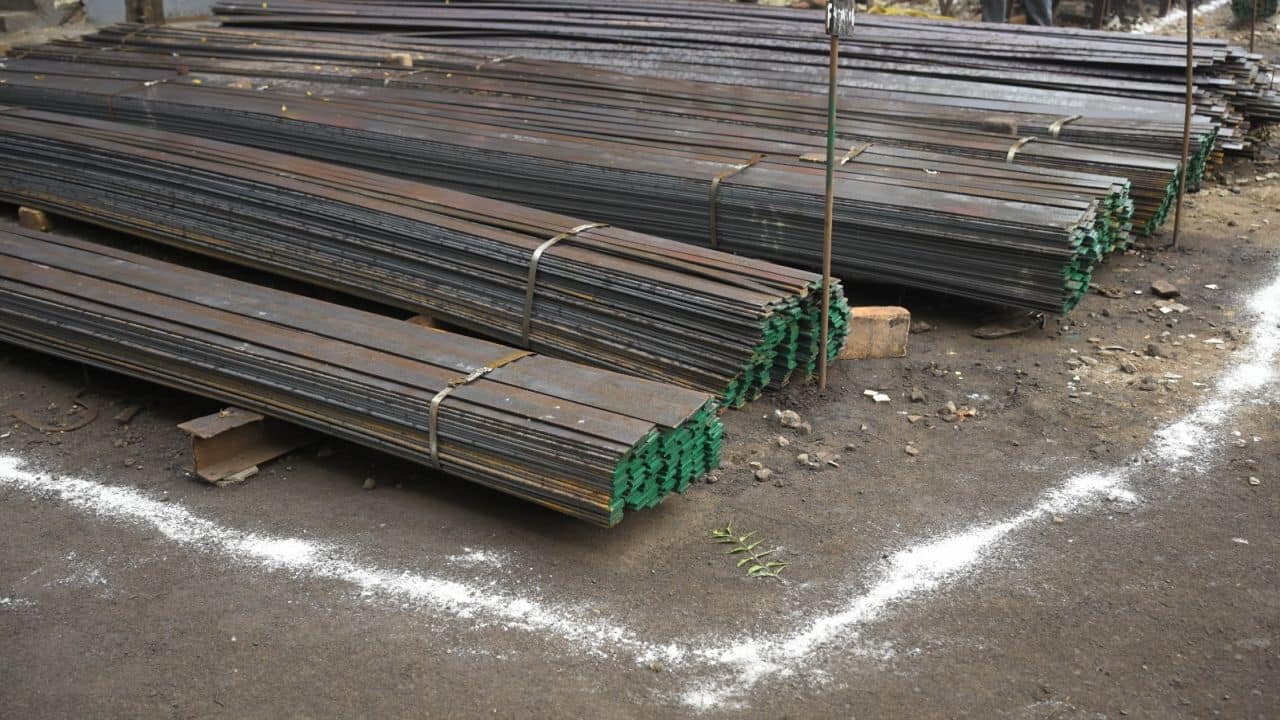
Indian Steel and Cement Firms Face Supply Chain Risks Amid Escalation in Iran Tensions
Indian Steel and Cement Players Face Supply Chain Disruptions
As a direct military escalation between the US, Israel, and Iran severely compromises the Strait of Hormuz, India's steel and cement players are staring at a potential supply chain squeeze of key raw materials, limestone and gypsum.
The Strait of Hormuz is the primary artery for Gulf mineral exports, and Ras Al Khaimah's (RAK) Mina Saqr Port is the primary exit point for the UAE's massive limestone reserves, accounting for 79% of India's limestone flux imports in 2023. India produces a significant volume of limestone, but it also imports the raw material for high-grade requirements, particularly for steel companies.
Alternative Sources
Read also: Treasury Yields Experience Largest Increase in Two Weeks Following Release of Labor Market Data
Steel companies may pivot to Oman for supplies and utilize domestic sources, such as Rajasthan's low silica reserves. They are also exploring imports from Malaysia or Indonesia. However, these alternatives will be expensive, and steel makers will have minimum limestone reserves for 1.5 months.
Import Data
According to government data, imports of limestone flux grew by 13.98% in 2024-2025, reaching a value of $324.80 million. Limestone is a critical input in steel manufacturing, and large Indian steel producers, including companies within the Jindal Group, routinely import bulk quantities to meet production requirements.
Gypsum Disruption
Read also: US-Iran Tensions Spark Uptick in Oil Prices Amid Global Market Decline
Beyond limestone, gypsum is a critical additive for controlling the setting time of cement. Much of the high-quality gypsum used by Indian players is sourced from the same region; a blockade would force plants to scramble for domestic synthetic or mineral alternatives. According to commerce ministry data, India's imports of Natural Gypsum and Anhydrite grew by 8.32%, rising from an import value of $142.41 million to $154.26 million.
Impact on Bottom Lines
However, analysts say that gypsum disruption may not cause a huge impact on the bottom lines as it comprises a small portion of the total cost. The rise in petcoke and coal costs could hurt margins for companies. Spot pet coke prices jumped by 11% to $135 per tonne due to ongoing geopolitical tensions in the Middle East.
Mitigating Pressures
To mitigate these pressures, leading cement companies are focusing on improving logistics efficiency, optimizing energy usage, and increasing the use of domestic alternatives such as phosphogypsum and fly ash.
Investor Takeaway
Investors should be cautious of potential supply chain disruptions in the metals and mining sector due to escalating tensions in the Middle East.
More in Economy

Treasury Yields Experience Largest Increase in Two Weeks Following Release of Labor Market Data

US-Iran Tensions Spark Uptick in Oil Prices Amid Global Market Decline

MoSPI Releases Uniform Norms for DDP Estimates with 2022-23 Base Year

