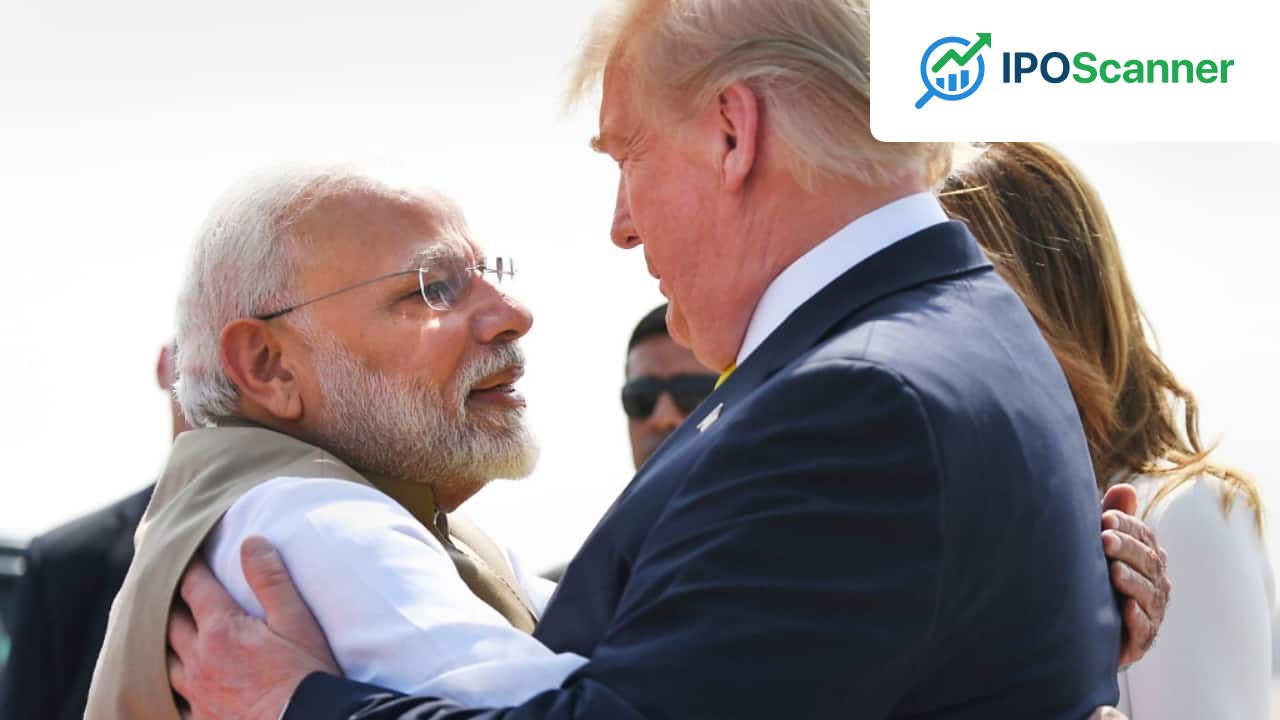
India-US Trade Tensions Rise After US Court Decision, Bilateral Pact Remains on Course
US-India Trade Talks Remain Divided on Tariffs
India and the United States remain divided on tariffs despite ongoing trade talks, with New Delhi seeking lower rates and Washington resisting renegotiation. The interim trade pact remains on track, according to people familiar with the discussions.
The timing of a final deal could hinge on the outcome of an ongoing probe under Section 301, with both sides likely to wait for clarity before formally signing the interim agreement. The US Supreme Court's ruling striking down reciprocal duties has created uncertainty. Discussions are almost concluded, but the timing of signing the deal could align with the Section 301 outcome.
India is seeking a reduction of the earlier-discussed tariff level of around 18 percent, arguing that the effective rate has since dropped to 10 percent following the US court ruling. However, US officials have signalled that the current tariff level may not hold, with the ongoing Section 301 probe seen as a basis for potentially revising duties once its findings are finalised.
Read also: Treasury Yields Experience Largest Increase in Two Weeks Following Release of Labor Market Data
The Section 301 probe, conducted under the Trade Act of 1974 by the Office of the United States Trade Representative, allows Washington to investigate and respond to what it considers unfair trade practices. The process can result in the imposition of tariffs or other trade restrictions, often covering a wide range of products through targeted lists.
The investigation, launched on March 12, covers 16 economies, including India, China, Japan, South Korea, and the European Union, spanning sectors such as steel, aluminium, automobiles, batteries, electronics, chemicals, machinery, semiconductors, and solar modules.
After the Supreme Court of the United States in February struck down President Donald Trump's administration's reciprocal tariff regime, Washington turned to Section 122 as an interim measure to maintain trade pressure. The shift toward Section 301 reflects the limitations of Section 122, under which tariffs are currently applied at a uniform 10 percent but remain temporary and legally constrained.
| Tariff Reduction Proposals | India | US | Current Rate |
|---|---|---|---|
| Initial Proposal | 18% | ||
| Effective Rate (After US Court Ruling) | 10% | ||
| Section 301 Probe Target |
Read also: US-Iran Tensions Spark Uptick in Oil Prices Amid Global Market Decline
A joint statement issued by India and the US on February 7 outlined plans to reduce tariffs on Indian goods from 50 percent to 18 percent under an interim trade deal framework. On the same day, the 25 percent additional ad valorem tariffs previously imposed by the US on certain Indian exports, citing India's imports of Russian oil, were removed, leaving the duty at 25 percent pending an order to bring it down to the agreed rate.
However, following the US Supreme Court's February 20 ruling invalidating reciprocal tariffs, these duties are no longer in effect. The last round of in-person negotiations between Indian and US officials took place from April 20 to 23, with both sides making progress on narrowing differences, though tariff-related issues remain unresolved.
More in Economy

Treasury Yields Experience Largest Increase in Two Weeks Following Release of Labor Market Data

US-Iran Tensions Spark Uptick in Oil Prices Amid Global Market Decline

MoSPI Releases Uniform Norms for DDP Estimates with 2022-23 Base Year

