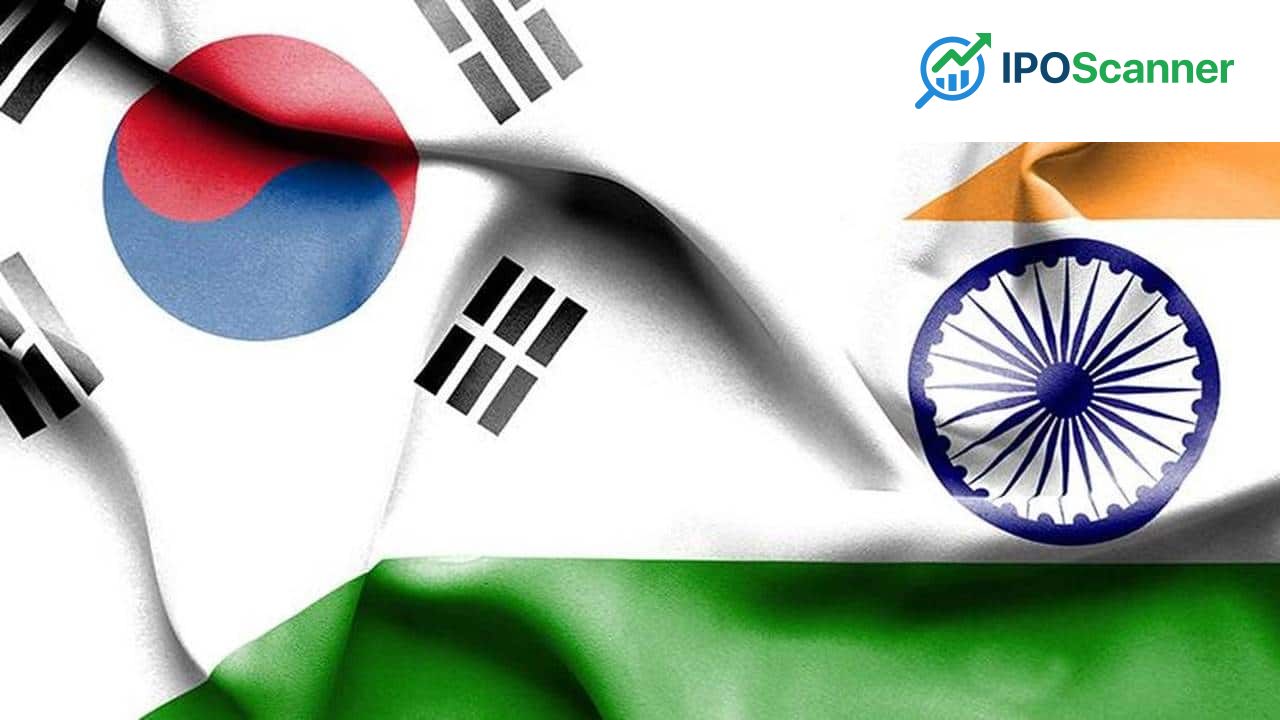
India-South Korea Ties Gain Momentum Amid Strategic Realignment
South Korean President's Visit Breathes New Life into India-South Korea Ties
On 19th April, South Korean President Lee Jae Myung made history by visiting India for the first time, marking the first state visit by a South Korean leader to India in seven years. This timely visit comes at a moment when both countries are navigating shifting geopolitical dynamics, including a changing US foreign and economic policy posture, and seeking new avenues for strong partnerships.
A Partnership in Need of Revitalization
India-South Korea ties stand out for their unique complementarity, with India's market, scale, and demographics complementing South Korea's innovation, technological advancement, and manufacturing know-how. Despite this, the partnership has fallen short of reaching its full potential. The bilateral relations began with the establishment of diplomatic ties in 1973 and have endured a difficult period during the Cold War. However, they only prospered in the 1990s, as major Korean companies entered the Indian market following the opening of the Indian economy to foreign investment.
| Year | Trade Volume (USD billion) |
|---|---|
| 2010 | $25-28 billion |
| 2014 (target) | $30 billion |
Trade has stagnated at around $25-28 billion for the last few years, while both sides have attempted to elevate the partnership beyond trade and commerce. Structural limitations have constrained the scope for expansion, resulting in the partnership being called out for "overpromising but underdelivering."
A New Era of Cooperation
To overcome existing challenges, policymakers have been advocating broadening the scope of cooperation and identifying new areas to reignite ties. The shipbuilding and steel sectors have been identified as crucial from an Indian perspective. Global uncertainty, along with a third wave of outward investment from South Korea, particularly in the shipbuilding and steel sectors, has brought new vigour to India-Korea ties. This was also possible due to the transformation in the Indian political landscape, which has made India's case more positive for Korean investors.
Read also: RBI Policy Preview: A Cautionary Wait Ahead
President Lee Jae Myung's Visit: A Turning Point
President Lee Jae Myung's visit has given the much-needed political backing, elevating the ties to one of Korea's most important relations. The bandwidth of issues covered during his short visit has highlighted the importance of India for South Korea, particularly in strategic areas such as shipbuilding, semiconductors, and the electronics supply chain. The first-time release of four joint statements on shipbuilding, energy security, sustainability, and strategic partnership showcases the deepening of strategic cooperation between the two countries.
| Area of Cooperation | Number of MoUs Signed |
|---|---|
| Shipbuilding | 5 |
| Energy Security | 3 |
| Sustainability | 3 |
| Strategic Partnership | 4 |
| Total | 15 |
Additionally, the fifteen Memorandum of Understanding (MoUs) signed point to a deepening of bilateral relations, moving beyond expressions of intent to strategic convergence. The presence of these two factors – political intent and strategic convergence – has put the ties back on a positive track.
A Bright Future Ahead
These joint statements and MoUs are taking place against the backdrop of a series of substantial investment announcements across strategic sectors such as shipbuilding and steel. Some of these include the POSCO-JSW 6 MTPA deal, the Reliance-Samsung C&T Green Ammonia deal, and the Hyundai Greenfield Shipyard. Besides, there is greater cooperation between the two countries in establishing a complete industrial supply chain. For instance, Korean institutions, companies, and agencies have signed bilateral MoUs and framework agreements to provide skills training and share technology know-how in the shipbuilding sector.
Challenges Ahead
However, all is not well. Bureaucratic hurdles, a challenging business environment, cultural and language barriers, power constraints, and high logistics costs are some critical problems Korean companies face in India. For India-South Korea ties to reach new levels, both sides will need to make additional efforts. India, in particular, will have to realise that it cannot rely on its demography and market as attractive criteria; it will have to work on improving its ease of doing business for foreign companies, which remains more challenging than in Southeast Asian markets like Vietnam and Thailand.
More in Economy

FirstClub Secures $55 Million in Funding from Peak XV, Sofina, and Other Investors 9 Months After $22 Million Series A Round
RBI Policy Preview: A Cautionary Wait Ahead
RBI Rate Cuts May Come to an End Amid Rising Oil Prices and Weakening Rupee: Expert Analysis