India-South Korea Partnership Expansion Beyond Military Cooperation
South Korea's Defence Export Diversification Bodes Well for India Partnership
South Korea has undergone a significant transformation in its defence export landscape over the past two decades, shifting from a focus on artillery to a more diversified portfolio of warships, armoured vehicles, and missiles. This evolution could have a profound impact on its expanding defence partnership with India.
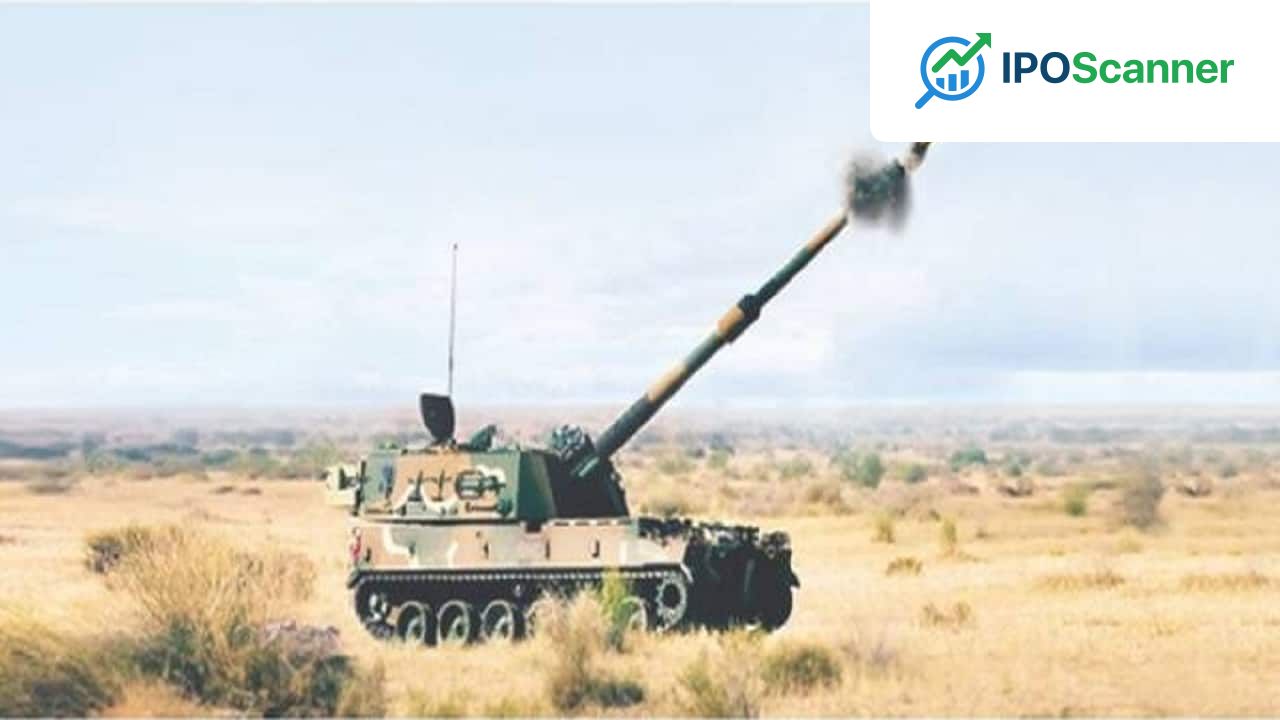
The development assumes significance in the wake of India and South Korea agreeing to broaden defence cooperation during bilateral talks between Prime Minister Narendra Modi and South Korean President Lee Jae Myung earlier this week. The two countries have already co-manufactured the K9 Vajra-T, a 155 mm, 52-calibre tracked self-propelled howitzer, and are now expected to explore deeper cooperation.
India's defence imports from South Korea have so far remained relatively limited in scale and concentrated in artillery systems. According to available data, South Korea accounted for 1.3 percent of India's total arms imports in 2014-19, rising marginally to 1.4 percent in 2020-25. Within India's artillery imports, however, South Korea has played a dominant role, accounting for 91.9 percent in 2014-19, before moderating to 63.3 percent in 2020-25 as India diversified its procurement.
Read also: Treasury Yields Experience Largest Increase in Two Weeks Following Release of Labor Market Data
Defence Imports Comparison between India and South Korea
| Year | Total Arms Imports | South Korea's Share |
|---|---|---|
| 2014-19 | 100% | 1.3% |
| 2020-25 | 100% | 1.4% |
South Korea's own export mix has undergone a significant transformation. Between 2008-13, artillery made up 63 percent of its arms exports, while aircraft accounted for 23 percent and ships 14 percent. By 2014-19, ships had become the dominant category at 58 percent, while aircraft rose to 30 percent and artillery dropped sharply to 7.9 percent. In 2020-25, South Korea's export basket became even broader, with ships at 28 percent, artillery at 32 percent, armoured vehicles at 19 percent, missiles at 13 percent, and air-defence systems at 2.2 percent.
South Korea's share of Asia's total arms exports has climbed from 12 percent in 2008-13 to 21 percent in 2014-19, and further to 32 percent in 2020-25. Globally, it improved from the 14th-largest exporter in 2008-13 with a 0.9 percent global share, to ninth place in 2020-25 with a 3 percent share.
Read also: US-Iran Tensions Spark Uptick in Oil Prices Amid Global Market Decline
The customer base has also shifted sharply over time. Between 2020 and 2025, Poland accounted for 49 percent of South Korea's arms exports, followed by the Philippines (20 percent), UAE (8 percent), and India (4 percent). Earlier, countries such as Türkiye, Indonesia, Iraq, and the UK had been among key buyers.
For India, South Korea offers an increasingly credible alternative supplier as New Delhi seeks to diversify away from legacy dependence on Russia and reduce overreliance on Western platforms. Beyond artillery, potential areas of cooperation could include armoured vehicles, missile systems, naval platforms, air defence systems, and defence electronics.
More in Economy

Treasury Yields Experience Largest Increase in Two Weeks Following Release of Labor Market Data

US-Iran Tensions Spark Uptick in Oil Prices Amid Global Market Decline

MoSPI Releases Uniform Norms for DDP Estimates with 2022-23 Base Year

