India Set to Implement 2-3 New Substantive Free Trade Agreements Within Six Months, Goyal Indicates
India to Operationalise Multiple Free Trade Agreements in Coming Months
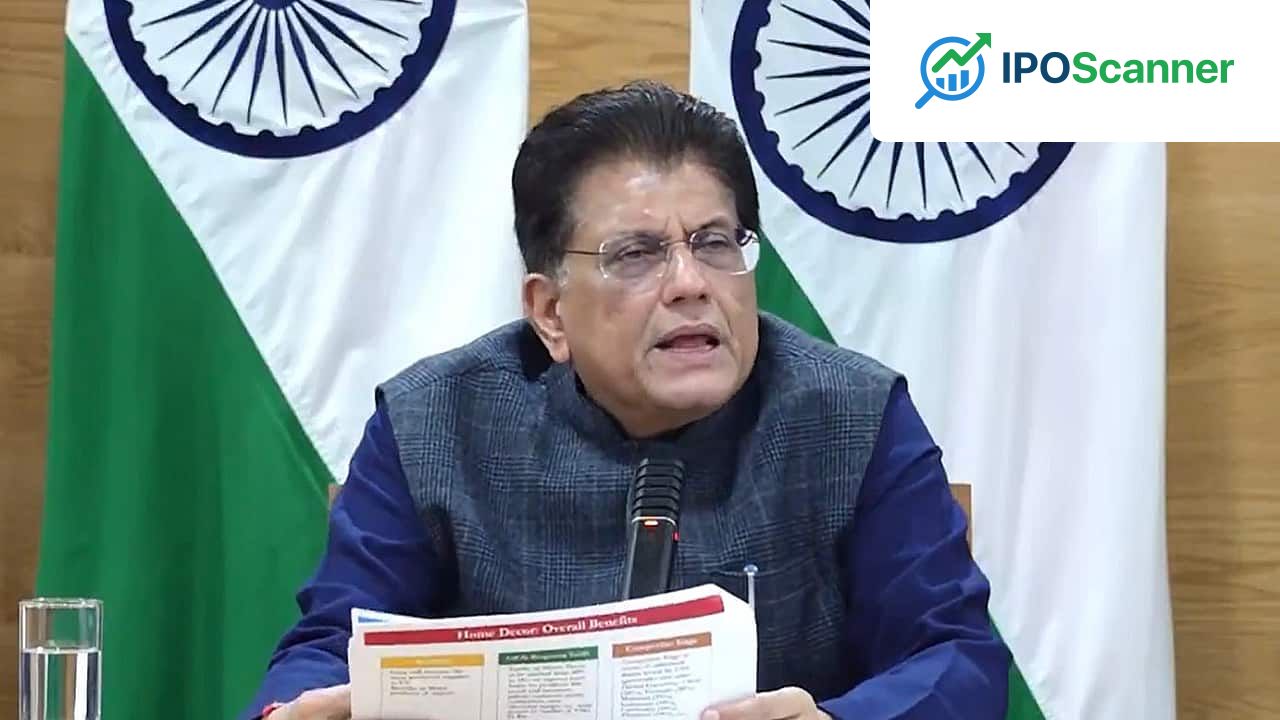
India's Commerce and Industry Minister Piyush Goyal announced on June 4 that the country is on track to operationalise at least two to three "very substantive" free trade agreements (FTAs) over the next six months, with another three to four significant pacts likely to be executed over the following year.
Addressing the Citi India conference virtually, Goyal stated that all nine FTAs currently under discussion or concluded in the last three-and-a-half years are expected to come into effect over the next nine to 10 months. This includes the recent implementation of the Oman FTA on June 1. Goyal expressed confidence that the country will see at least two or three more "very substantive" FTAs coming into effect in the coming six months, followed by another three to four significant FTAs over the next year.
India's negotiations with the US for the first tranche of a trade deal are in their final stages, while the pact with the European Union has been concluded and awaits signing. The country is also awaiting implementation of the pact with the United Kingdom, which was signed last year. New Delhi is currently in talks with countries including Peru, Chile, Canada, and Israel for trade deals as it seeks to expand market access for Indian exporters.
Read also: Mutual Funds Avoid Rajesh Exports Amidst Declining Performance, LIC Holds Significant Stake
Goyal also highlighted India's growing appeal as a preferred destination for global capital, citing the country's resilience in the face of geopolitical and economic uncertainties. He stated that India will continue to be the world's fastest-growing economy for two decades into the future. Investors who recognized India's growth potential early have been rewarded handsomely, according to Goyal, who added that patient investors with India have gained significant returns.
| Country | FTA Status |
|---|---|
| US | In final stages of negotiations |
| European Union | Concluded, awaiting signing |
| United Kingdom | Pending implementation |
| Peru | In talks |
| Chile | In talks |
| Canada | In talks |
| Israel | In talks |
Goyal emphasized that India has consistently emerged stronger during periods of global disruption by adapting business strategies and remaining open to investment, trade, and manufacturing. He cited the country's successful navigation of recent geopolitical tensions in West Asia, which led to energy supply disruptions. Despite concerns over India's dependence on energy shipments through the Strait of Hormuz and disruptions affecting some supply routes, the country ensured uninterrupted availability of petrol, diesel, aviation turbine fuel (ATF), liquefied natural gas (LNG), and LPG.
Goyal also highlighted India's ability to moderate inflation, citing the country's success in keeping fertiliser prices for farmers unchanged despite global price spikes. He added that the central government absorbed the additional burden. The minister also emphasized that India is moving beyond being an assembly hub and is increasingly positioning itself as a centre for innovation. "India today is focussing not only on assembling in India or bringing technologies from across the world; India is becoming an innovation hub today, promoting design, R&D, new-age technologies, AI applications, and clean energy for data centres to locate in India," he said.
Read also: AI's Trillion-Dollar Bet Raises Concerns About Global Economic Stability
Investor Takeaway
India is expected to implement several free trade agreements, potentially boosting trade and economic growth.
More in Economy

Mutual Funds Avoid Rajesh Exports Amidst Declining Performance, LIC Holds Significant Stake

AI's Trillion-Dollar Bet Raises Concerns About Global Economic Stability
Citi CEO Confident in India's Long-term Growth Prospects