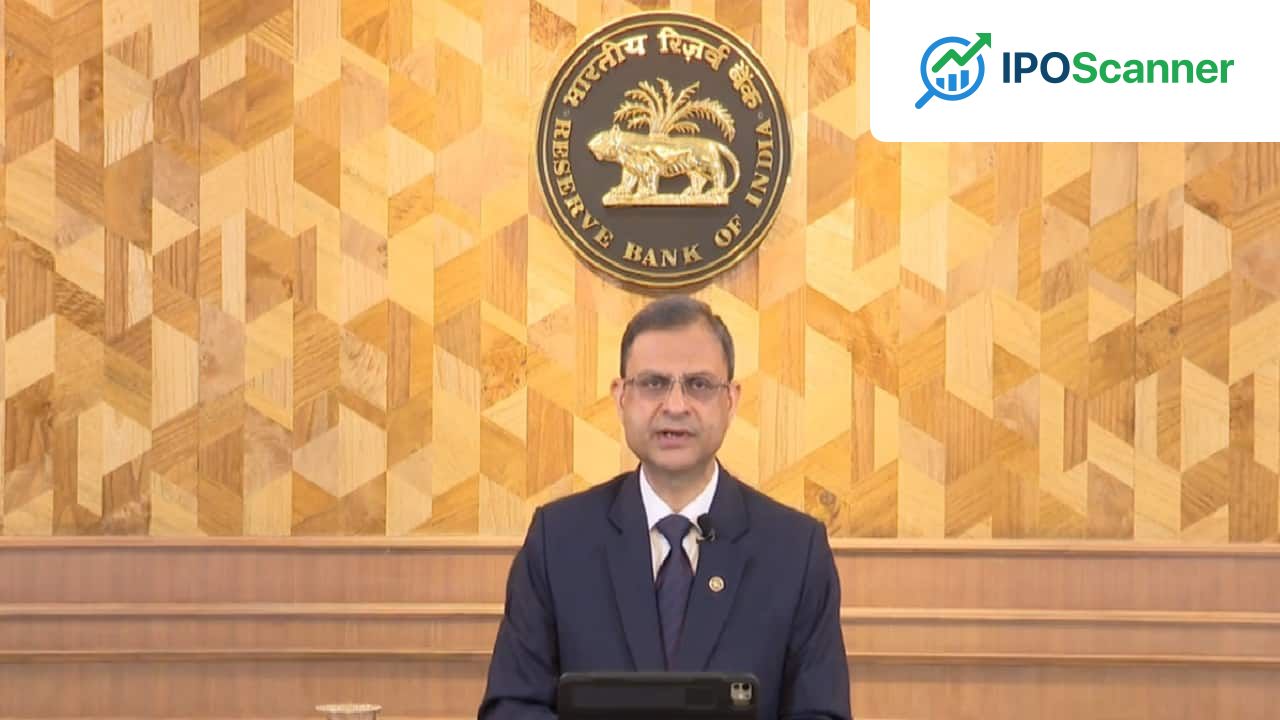
India Sees Potential for Up to $40 Billion in Foreign Currency Inflows Following RBI Measures
Reserve Bank of India Holds Rates Steady, Rolls Out Aggressive Measures to Boost Inflows
The Reserve Bank of India (RBI) on June 5 held the rates steady, but took bold measures to shore up inflows into the country's currency and fixed-income markets. In a bid to boost the bond market, the central bank extended the Fully Accessible Route (FAR) to ultra-long tenors (15, 30, and 40 years) and removed investment caps on other government securities.
This move is expected to have a significant impact on foreign inflows, with potential incremental inflows of $20 billion-$40 billion over the next 12-18 months. The RBI's move is expected to provide meaningful support to the rupee, forex reserves, and government borrowing programme.
The rupee and the benchmark 10-year bond yield reacted positively to the RBI's move. The rupee gained 0.6 percent to trade at 95.24 against the dollar, while the benchmark 10-year bond yield eased to 6.95 percent.
Read also: Rising Tuition Fees in Foreign Countries Exceed Rs 2 Crore in Many Destinations
FAR is an investment framework introduced by the central bank that allows overseas investors to park their funds in Indian government debt. Under FAR, the cumulative foreign institutional inflows across various tenors for FY26 were $970 million, according to Bloomberg data.
Until now, the eligible universe was largely restricted to government bonds with maturities of up to 10 years. However, the RBI's move is aimed at allowing foreign investors with better access to India's longer-dated sovereign debt market.
Market participants said the measures will boost inflows into the country, which can shore up investment into the currency and debt markets. The expansion of FAR is expected to deliver the largest and fastest inflows, with the demand for longer-dated securities expected to increase.
Historically, the demand for longer-dated securities has been low, as investors prefer the five-year and 10-year bonds. Longer tenured bonds have higher sensitivity to and rate change risks, as compared to the 5-year or 10-year bond. However, the RBI's move is expected to change this trend.
Read also: HNGIL Warns Bira91 Investors of Potential Insolvency Proceedings Over Outstanding Dues
The benchmark 10-year yield is trading around 6.94 percent, while US rates are currently at 4.5 percent. This has resulted in investors seeking returns in developed markets, leading to low demand for 10-year bonds.
RBI's Monetary Policy Committee Holds Repo Rate Steady
The RBI's monetary policy committee held the repo rate steady at 5.25 percent while sticking to a "neutral" stance. The committee's decision is expected to provide stability to the economy and support growth.
Key Developments
| Tenor | Cumulative Foreign Institutional Inflows (FY26) |
|---|---|
| 15 years | Not disclosed |
| 30 years | Not disclosed |
| 40 years | Not disclosed |
| Total | $970 million |
Note: The breakup of inflows across various tenors is not known.
Investor Takeaway
India may see significant foreign currency inflows following RBI measures.
More in Economy

Rising Tuition Fees in Foreign Countries Exceed Rs 2 Crore in Many Destinations

HNGIL Warns Bira91 Investors of Potential Insolvency Proceedings Over Outstanding Dues

ICICI Prudential and HDFC Mutual Fund Restrict Gold ETF Investments: Impact on Investors and SIPs Unchanged