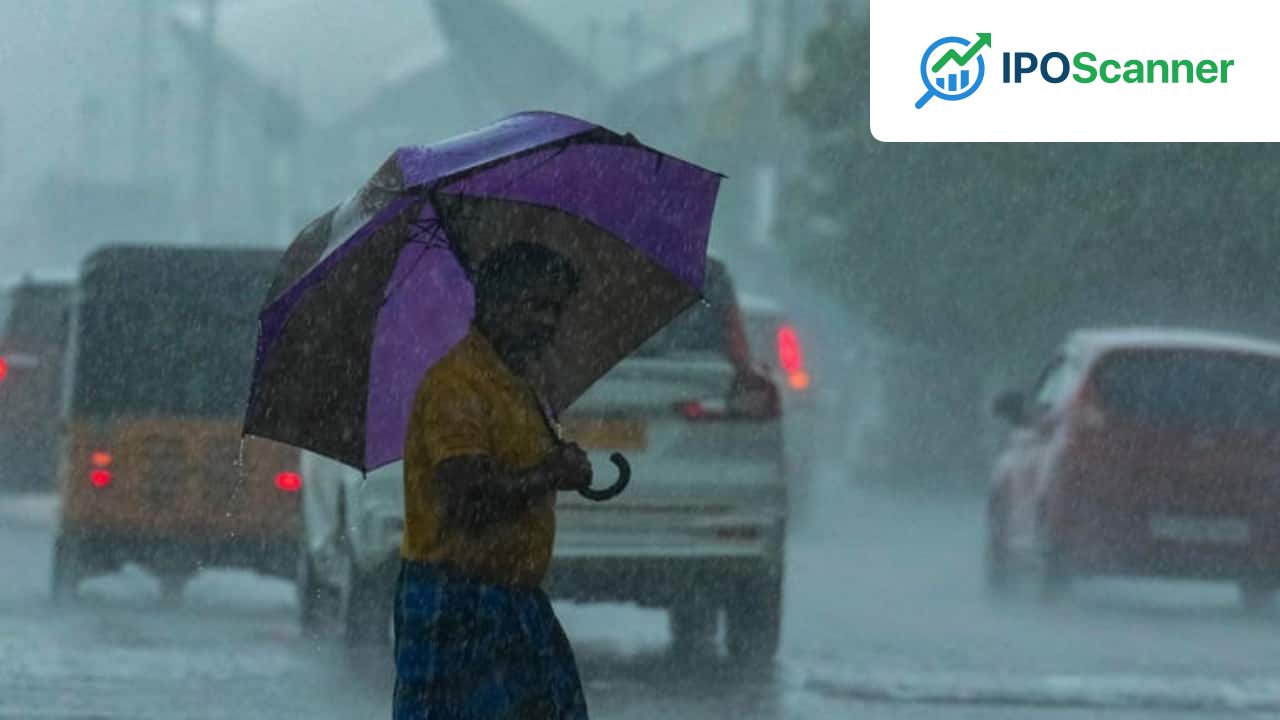
India May Experience Below-Normal Monsoon in 2026 Due to Elevated El Niño Risk, Skymet Weather Predicts
India Braces for Below-Normal Southwest Monsoon in 2026
Skymet Weather has forecast a below-normal southwest monsoon for India in 2026, with rainfall likely at around 94% of the long-period average. This forecast raises concerns for agriculture and the broader economy, as a strengthening El Niño could weigh on rainfall, especially in the latter half of the season.
India's monsoon system is central to its climate and economy, driven by seasonal wind shifts caused by temperature differences between land and sea. The southwest monsoon, spanning June to September, accounts for nearly three-fourths of the country's annual rainfall and is critical for the kharif crop cycle, including rice, cotton, and sugarcane. This phase is followed by the northeast monsoon from October to December, which brings rainfall mainly to southeastern regions such as Tamil Nadu and parts of Andhra Pradesh, where it serves as a primary water source.
Despite gradual improvements in irrigation, a significant portion of India's farmland still depends on monsoon rains, making agricultural output highly sensitive to rainfall patterns. With a large share of the population reliant on farming, a healthy monsoon typically supports rural incomes, boosts food production, and strengthens economic growth, while a weak or uneven season can trigger crop losses, drought conditions, and inflationary pressures.
Read also: Treasury Yields Experience Largest Increase in Two Weeks Following Release of Labor Market Data
Increasing climate variability has further complicated the outlook. Erratic rainfall patterns, ranging from delayed onset to intense downpours or extended dry spells, are disrupting crop cycles, reducing yields, and adding stress to rural livelihoods. Even winter rainfall linked to western disturbances remains crucial for rabi crops such as wheat in northern India, underscoring the broader dependence on seasonal weather patterns.
| Monsoon Phase | Duration | Impact |
|---|---|---|
| Southwest Monsoon | June to September | Accounts for nearly three-fourths of India's annual rainfall, critical for kharif crop cycle |
| Northeast Monsoon | October to December | Brings rainfall mainly to southeastern regions, serving as a primary water source |
Investor Takeaway
Investors should be cautious of potential economic impacts due to a below-normal monsoon in India.
More in Economy

Treasury Yields Experience Largest Increase in Two Weeks Following Release of Labor Market Data

US-Iran Tensions Spark Uptick in Oil Prices Amid Global Market Decline

MoSPI Releases Uniform Norms for DDP Estimates with 2022-23 Base Year

