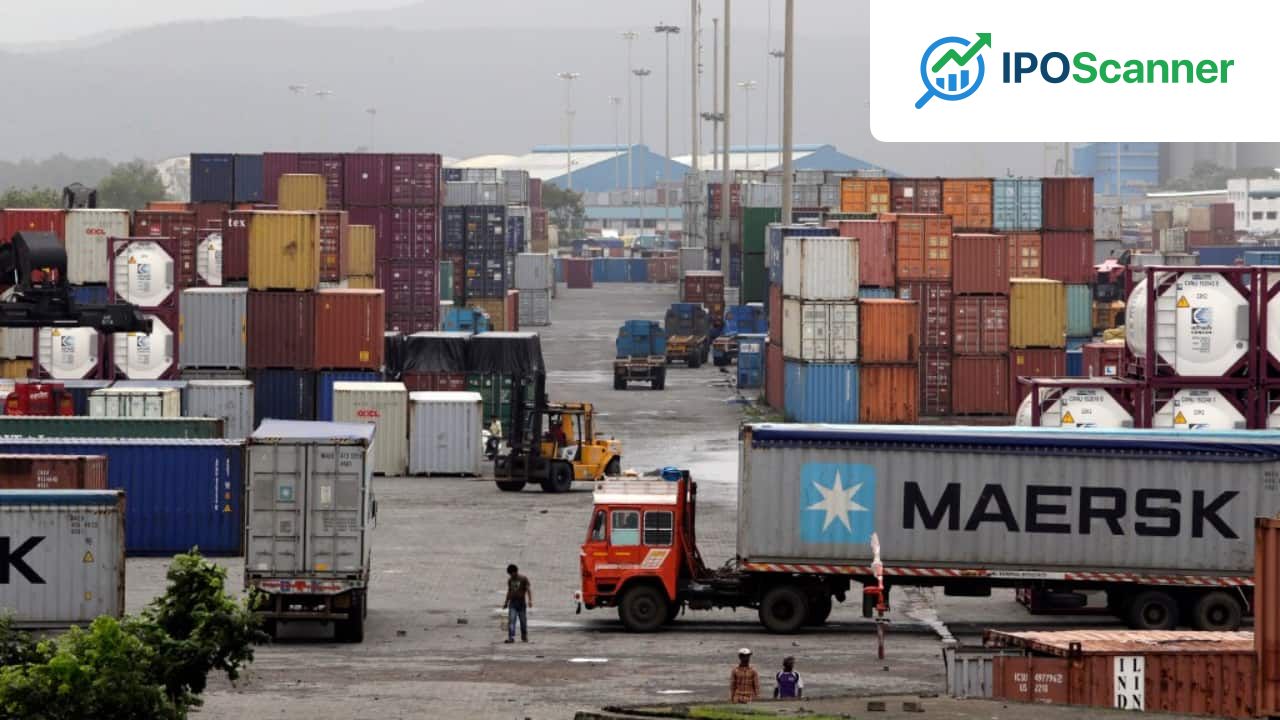
India Lacks Policy to Restrict Non-Essential Imports, Commerce Secretary Says
India's Commerce Secretary Clarifies Stance on Non-Essential Imports
On May 15, India's Commerce Secretary Rajesh Agrawal clarified that the government currently has no policy proposal to curb non-essential imports. Despite this, Agrawal emphasized that the government remains committed to promoting growth in outbound shipments through new free trade agreements and diversification. The goal is to achieve a target of $1 trillion in overall exports by FY27.
The clarification comes as India's merchandise trade deficit widened sharply to $28.38 billion in April from $20.67 billion in March. This increase was attributed to higher imports and elevated crude oil prices, as well as strong domestic demand. Merchandise exports rose 13.78 percent year-on-year to $43.56 billion in April, while imports increased 10.03 percent to $71.94 billion.
| Month | Merchandise Exports | Merchandise Imports |
|---|---|---|
| April 2026 | $43.56 billion (13.78% YoY) | $71.94 billion (10.03% YoY) |
| March 2026 | $38.36 billion | $65.25 billion |
| April 2025 | $38.26 billion | $65.04 billion |
Read also: Treasury Yields Experience Largest Increase in Two Weeks Following Release of Labor Market Data
Total exports, including services, were estimated at $80.80 billion during the month, up 13.59 percent from a year ago. Agrawal stated that the government will continue working with exporters to sustain strong growth momentum and achieve a growth of 15-16 percent to reach the target of $1 trillion in exports.
The Export Promotion Mission and new operational FTAs in the next few months are expected to contribute to meeting the target and export diversification. Additionally, Agrawal mentioned that export diversification and the new operational FTAs will help meet the target.
Country-wise data released by the ministry showed that Sri Lanka recorded the highest export growth among major destinations in April at 214.65 percent year-on-year, followed by Singapore at 179.18 percent, Tanzania at 157.63 percent, Hong Kong at 90.61 percent, and Bangladesh at 64.16 percent. The United States continued to remain India's largest export market during the month.
On the import side, shipments from Peru rose 315.56 percent year-on-year, followed by Oman at 246.42 percent, Saudi Arabia at 30.29 percent, China at 20.85 percent, and Russia at 18.21 percent. China remained India's largest import source.
Read also: US-Iran Tensions Spark Uptick in Oil Prices Amid Global Market Decline
Agrawal also noted that exports to West Asia declined 28 percent year-on-year in April, while imports from the region dropped 30 percent. Additionally, gold imports rose 81.7 percent year-on-year to $5.63 billion in April 2026 from $3.11 billion a year earlier, while increasing about 84 percent from March levels.
The recent increase in import duty on gold and silver to 15 percent from 6 percent is expected to impact lower gold and silver imports. Agrawal stated that the impact may be slightly less, but consumption-based usage of gold should decrease due to the duty hike.
More in Economy

Treasury Yields Experience Largest Increase in Two Weeks Following Release of Labor Market Data

US-Iran Tensions Spark Uptick in Oil Prices Amid Global Market Decline

MoSPI Releases Uniform Norms for DDP Estimates with 2022-23 Base Year

