India Faces Tensions between Fiscal Discipline and Economic Development
India Fends Off Economic Emergency Amid Rising Commodity Prices
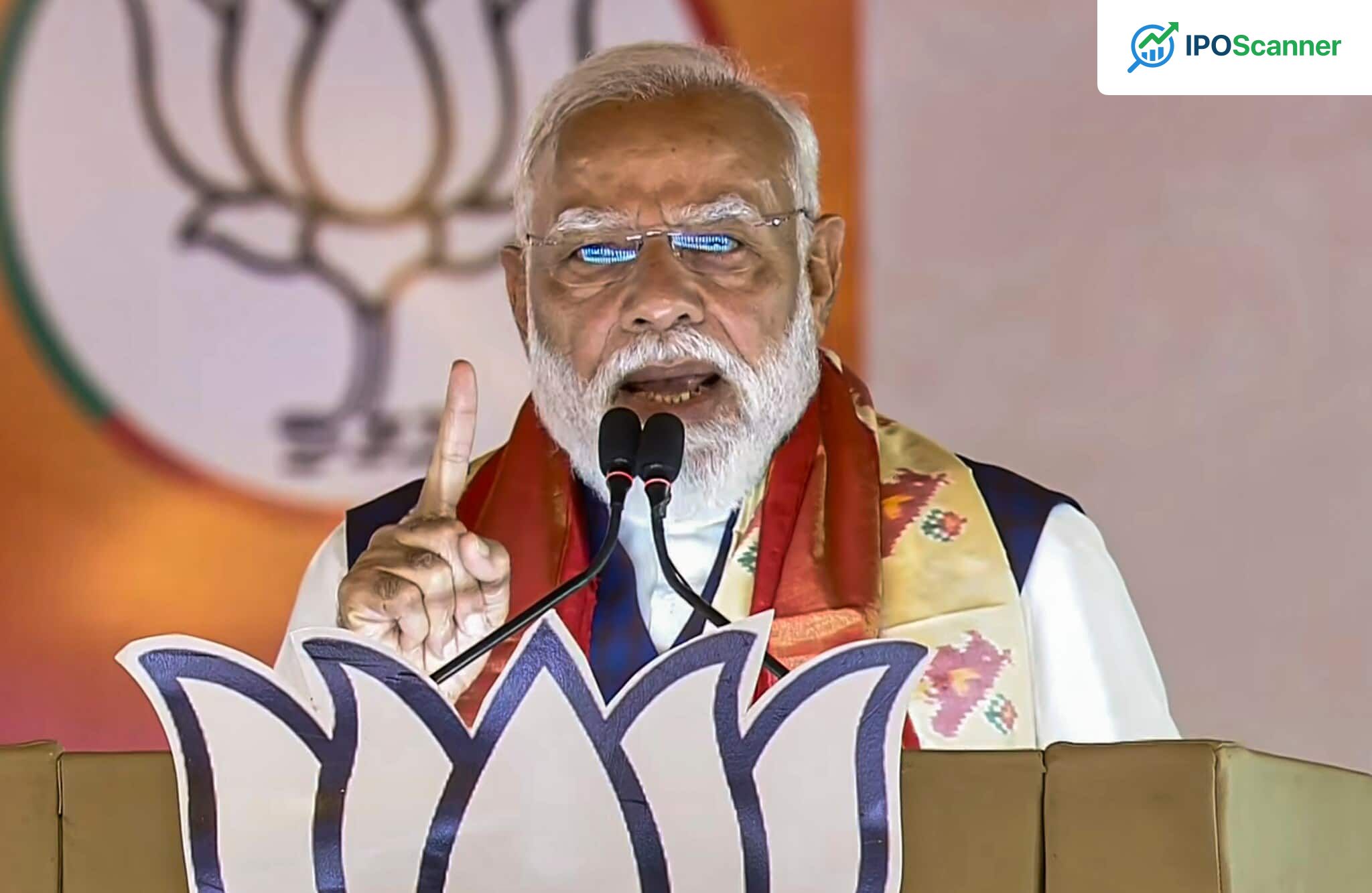
In a bid to combat the impact of rising commodity prices and balance-of-payments pressures, Prime Minister Narendra Modi has opted for direct public appeals urging citizens to exercise restraint in consumption, rather than declaring an economic emergency. This calibrated response aims to moderate import demand and conserve foreign exchange without resorting to distortionary or emergency measures.
Over the past week, Mr. Modi has called on Indians to reduce petrol and diesel use, postpone gold purchases for at least a year, embrace work-from-home arrangements where feasible, and limit non-essential foreign travel. These appeals, framed as acts of "national prudence" amid disruptions in West Asia, have sparked debate and, in the case of gold, some unintended panic buying.
India's Current Account Deficit (CAD) on the Rise
A widening current account deficit (CAD) is not new to India. The CAD could exceed 2 per cent of GDP in FY27 if tensions persist, compared with around 1-1.3 per cent in recent quarters. As of the first three quarters of FY26, the CAD stood at a comfortable 1.0 per cent of GDP, rising to 1.3 per cent ($13.2 billion) in the October-December period. While manageable for now, the shift underscores underlying vulnerabilities in India's external sector.
| FY Quarter | CAD as a Percentage of GDP | CAD in Dollars (Billion) |
|---|---|---|
| Q1 FY26 | 0.9% | $10.1 |
| Q2 FY26 | 1.1% | $11.4 |
| Q3 FY26 | 1.3% | $13.2 |
India's foreign exchange reserves, though down from peaks near $730 billion, remain robust at approximately $690-700 billion, offering ample import cover. Strong services exports, along with steady remittances, continue to provide a natural cushion against the persistent goods trade deficit. Nevertheless, financing the CAD relies significantly on capital inflows, including volatile foreign portfolio investment (FPI).
| Net FDI | Portfolio Flows |
|---|---|
| Softened amid global uncertainty | Witnessed outflows due to risk aversion, shifts in US policy, and rupee depreciation |
Read also: RBI Policy Preview: A Cautionary Wait Ahead
Fiscal Austerity and its Risks
The government's calls for voluntary austerity represent a calibrated response aimed at moderating import demand and conserving foreign exchange. By encouraging behavioural changes - lower fuel consumption, deferred gold purchases, and reduced foreign travel - authorities hope to ease pressure on the balance of payments while protecting critical infrastructure spending that supports employment and long-term productivity.
Fiscal consolidation remains on track, with the Centre targeting a deficit of around 4.3 per cent of GDP for FY27, even as it grapples with rising subsidy burdens and lower dividends from public sector oil companies. However, an over-reliance on austerity carries its own risks. Sharp compression of domestic demand could prove recessionary, weakening private investment and consumption at a moment when global headwinds are already complicating the outlook.
Lessons from Earlier Crises
India has successfully navigated far more severe current account pressures in the past. In 2012-13, the CAD ballooned to 4.7-4.8 per cent of GDP - one of the highest levels in the country's post-reform history. Surging gold imports, persistently high oil prices, and a weakening trade balance left the economy exposed. However, that episode was primarily about oil prices; with the Strait of Hormuz under tension today, the present challenge concerns both price and supply volumes.
In 1991, India faced a full-blown balance-of-payments emergency, with reserves plunging to under $1 billion - barely enough to cover three weeks of imports. Political instability, the collapse of the Soviet Union, and high fiscal deficits forced the country to pledge gold for emergency IMF support. Over the years, India reduced its dependence on external financing of deficits.
A More Resilient Economy, But Risks Remain
Today's situation differs markedly from these earlier episodes. Foreign exchange reserves are ample, the economy is significantly more diversified and resilient, services surpluses offer a reliable offset, and institutional reforms have strengthened shock-absorbing capacity. Growth is still projected in the 6.5-7 per cent range, the highest among major economies.
The RBI, under Governor Sanjay Malhotra, continues to play a central role through foreign-exchange interventions, liquidity management, and forward guidance aimed at preserving stability. Long-term solutions, however, must address structural vulnerabilities by accelerating the transition towards renewable energy, building strategic petroleum reserves, diversifying import sources, boosting manufacturing and exports through production-linked incentive schemes, and deepening domestic capital markets to reduce dependence on volatile foreign inflows.
Prime Minister Modi's appeals represent proactive jawboning rather than panic. No capital controls or drastic austerity measures are currently under consideration. The strategy blends behavioural nudges with targeted fiscal and monetary adjustments to buy time for a more orderly adjustment.
Investor Takeaway
India's economic development may be impacted by rising commodity prices and balance-of-payments pressures, but the government is taking steps to manage the situation.
More in Economy

FirstClub Secures $55 Million in Funding from Peak XV, Sofina, and Other Investors 9 Months After $22 Million Series A Round
RBI Policy Preview: A Cautionary Wait Ahead

RBI Rate Cuts May Come to an End Amid Rising Oil Prices and Weakening Rupee: Expert Analysis