India Expected to Become Second-Largest Solar Market in 2026: Report
India Poised to Become World's Second-Largest Solar Market in 2026
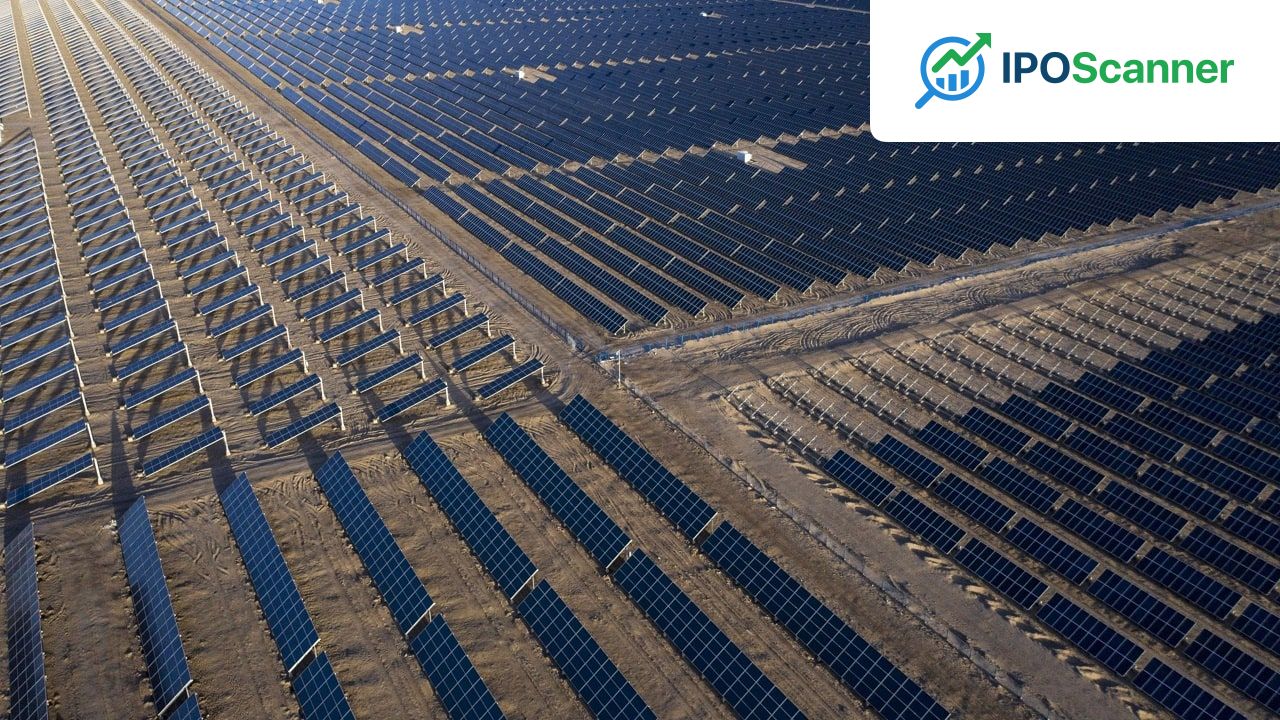
India is on track to become the world's second-largest solar market in 2026, with the National Solar Energy Federation of India (NSEFI) projecting an annual installation of 280-300 GW to support the country's 500 GW non-fossil capacity target by 2030.
The country has made rapid progress in the solar sector, achieving its fastest-ever addition of 50 GW of solar capacity in just 14 months, reaching the landmark 150 GW milestone. This significant acceleration is compared to the 11 years it took to reach the first 50 GW, followed by nearly three years to scale up to 100 GW.
According to NSEFI, solar energy is expected to play a critical role in India's renewable energy deployment, with the country witnessing strong potential for solar capacity to exceed projections driven by initiatives such as PM Surya Ghar, the upcoming PM KUSUM 2.0, dedicated floating solar policies, and the growing demand linked to the National Green Hydrogen Mission over the next four years.
Read also: Treasury Yields Experience Largest Increase in Two Weeks Following Release of Labor Market Data
| Market | Projected Annual Installations (2026) |
|---|---|
| India | 280-300 GW |
| United States | 20-25 GW |
| European Union | 15-20 GW |
Global trends point to a potential slowdown in capacity additions across major markets, such as the United States and the European Union, which are currently competing for the second position in terms of annual installed capacity. In contrast, India continues to accelerate its renewable energy deployment and consistently outpaces key milestones.
NSEFI highlights that Distributed Renewable Energy (DRE) and Commercial & Industrial (C&I) solar adoption will be the key drivers of growth over the next three years. The C&I segment has surpassed expectations, crossing double-digit annual installations of nearly 10 GW for the first time. Policy enablers, such as Green Energy Open Access, Virtual Power Purchase Agreements (VPPAs), and the Renewable Consumption Obligation (RCO) framework, are unlocking substantial demand.
| Segment | Projected Capacity Additions (2023-2025) |
|---|---|
| C&I | 10-15 GW |
| Utility-led PPAs | 5-10 GW |
Read also: US-Iran Tensions Spark Uptick in Oil Prices Amid Global Market Decline
Flagship government programmes, such as PM Surya Ghar and PM KUSUM, have significantly boosted DRE adoption. While DRE currently accounts for nearly 20 per cent of India's installed solar capacity, NSEFI projects this share to increase to 35 per cent by 2030.
On the manufacturing front, India has made considerable strides, supported by Production-Linked Incentive (PLI) schemes, the Approved List of Models and Manufacturers (ALMM), and Basic Customs Duty (BCD) measures. The country has established strong domestic capabilities in module manufacturing and is rapidly progressing towards self-reliance in solar cells.
NSEFI emphasizes that the next phase of growth will hinge on strengthening upstream supply chains from wafers and ingots to polysilicon and quartz. Looking ahead, 2026 is expected to mark a phase of integrated clean energy growth for India, with energy storage playing a critical role. The NSEFI forecasts that India will achieve double-digit energy storage capacity within the next 18 months.
Recent policy and regulatory interventions, including viability gap funding (VGF) and provisions for non-solar hour connectivity, have laid a strong foundation. Over the next 12 to 18 months, we anticipate a significant acceleration in energy storage deployment, enabling India to reach a new milestone in its journey towards a clean energy future.
Investor Takeaway
Investors should consider the growth potential of the solar energy sector in India.
More in Economy

Treasury Yields Experience Largest Increase in Two Weeks Following Release of Labor Market Data

US-Iran Tensions Spark Uptick in Oil Prices Amid Global Market Decline

MoSPI Releases Uniform Norms for DDP Estimates with 2022-23 Base Year

