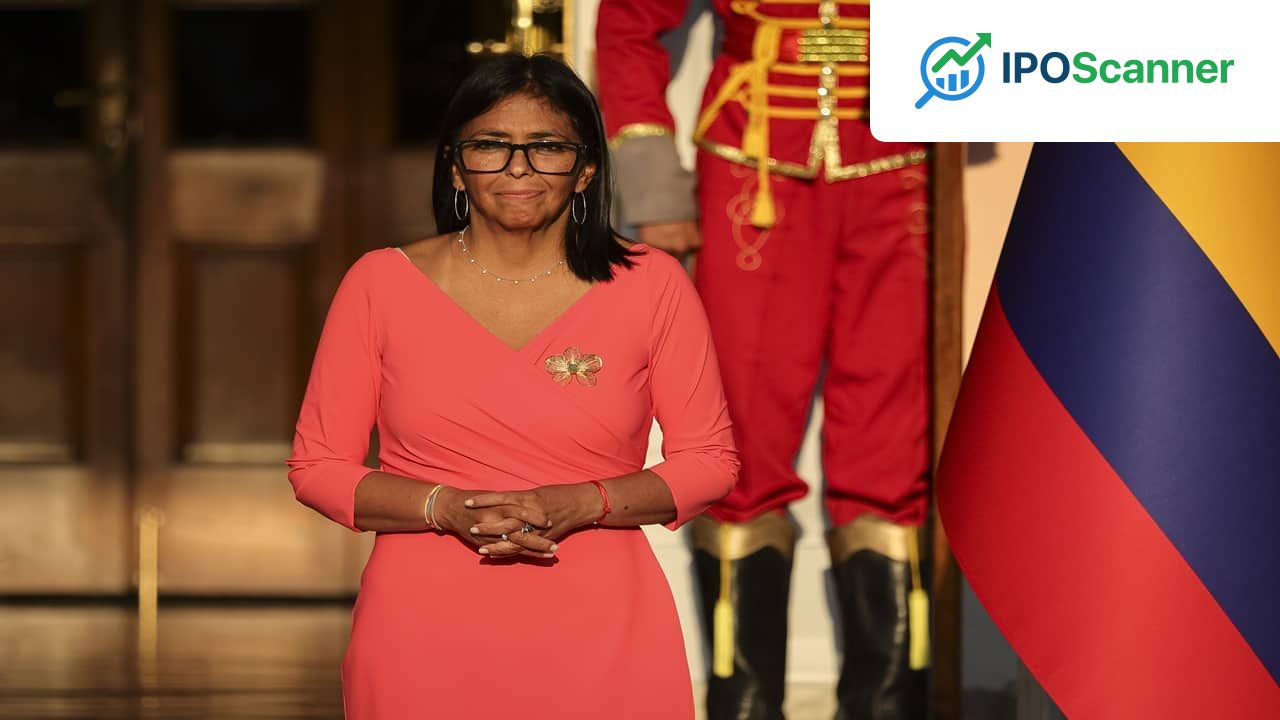
India and Venezuela Strengthen Diplomatic Ties Through South-South Cooperation in Multipolar Global Context
India and Venezuela Strengthen Ties as Global Diplomacy Shifts
New Delhi and Caracas are rekindling their relationship, with Acting President Delcy Rodríguez set to visit India for high-level talks with Prime Minister Narendra Modi. This renewed engagement reflects a shift in global diplomacy, with the partnership increasingly framed around two key themes: South-South cooperation and the push for a multipolar world order.
For both countries, the partnership offers strategic, economic, and political benefits in a world where geopolitical tensions, energy disruptions, and debates over global governance are reshaping international relations. Energy security remains the foundation of India-Venezuela relations, with Venezuela possessing some of the world's largest proven oil reserves and India being one of the fastest-growing energy consumers, importing nearly 90% of its crude requirements.
The importance of this relationship has grown following disruptions in global energy markets and concerns over supply routes in West Asia. India has resumed purchases of Venezuelan crude after sanctions-related restrictions eased, and imports have risen sharply in recent months. Officials in New Delhi view Venezuela as an important source of diversification at a time when energy security has become a central strategic concern.
Read also: Treasury Yields Experience Largest Increase in Two Weeks Following Release of Labor Market Data
| Country | Oil Reserves (billion barrels) | Crude Import Percentage |
|---|---|---|
| India | 0 | 90% |
| Venezuela | 302.1 | 0 |
A Shared Commitment to the Global South
Beyond oil, India and Venezuela increasingly describe their relationship through the language of the Global South. Both countries have consistently argued that developing nations deserve a stronger voice in international institutions such as the United Nations, the International Monetary Fund, and the World Bank. They have also advocated reforms that would make global governance structures more representative of emerging economies.
India's efforts to position itself as a leading voice of the Global South, particularly through initiatives such as the Voice of Global South Summit and its G20 presidency, have found resonance in Venezuela. For Caracas, closer ties with India fit into a broader strategy of strengthening partnerships with emerging powers outside traditional Western alliances. For New Delhi, engagement with Latin America reinforces its ambition to build stronger political and economic links across the developing world.
Read also: US-Iran Tensions Spark Uptick in Oil Prices Amid Global Market Decline
The Multipolar World Vision
The revival of India-Venezuela ties is also linked to a broader debate about the future international order. India has long pursued a policy of strategic autonomy, seeking to maintain relations across competing geopolitical blocs while avoiding excessive dependence on any single power centre. This approach aligns with its support for a multipolar world in which influence is distributed among several major powers rather than concentrated in one dominant bloc.
Venezuela has similarly championed multipolarity, arguing that emerging economies should have greater freedom to pursue independent political and economic partnerships. The convergence of these views has created space for deeper cooperation, with both countries increasingly seeing value in expanding diplomatic and economic options beyond traditional frameworks and strengthening ties among developing nations.
Expanding Cooperation Beyond Oil
While energy dominates headlines, the relationship is gradually broadening into other sectors. Indian public sector companies have invested significantly in Venezuela's energy industry, including through ONGC Videsh's participation in oil exploration and production projects. At the same time, both governments are exploring opportunities in pharmaceuticals, healthcare, transportation, technology, and renewable energy.
The Venezuelan delegation's planned visits to Indian facilities in the energy, pharmaceutical, and automobile sectors underscore the growing emphasis on industrial and technological cooperation. India's development partnership model, which focuses on capacity building, technology transfer, and skills development rather than traditional aid, also offers opportunities for deeper engagement with Venezuela and other Latin American countries.
A Relationship Rooted in Decades of Engagement
India and Venezuela established diplomatic relations in 1959 and have maintained cordial ties for more than six decades. The relationship gained momentum during the presidency of Hugo Chávez, whose 2005 visit to India helped strengthen political and economic cooperation. Since then, regular ministerial exchanges and energy partnerships have remained central to bilateral engagement.
Rodríguez's latest visit marks her sixth trip to India, having previously visited as foreign minister and vice president. Her delegation includes ministers responsible for foreign affairs, economy and finance, science and technology, communications, and transportation, highlighting the broad agenda under discussion.
Why the Relationship Matters Now
The timing of the renewed engagement is significant. India is seeking to diversify energy supplies amid uncertainty in global oil markets, while Venezuela is looking to attract investment and expand export opportunities after years of economic isolation and sanctions-related challenges.
For Caracas, deeper engagement with one of the world's largest and fastest-growing energy markets offers a pathway to economic recovery. For New Delhi, Venezuela provides an additional source of crude and a strategic partner in Latin America. At the diplomatic level, both countries see value in strengthening cooperation among developing nations and advancing a more balanced international order.
Investor Takeaway
India and Venezuela's strengthened diplomatic ties may lead to increased energy cooperation and trade.
More in Economy

Treasury Yields Experience Largest Increase in Two Weeks Following Release of Labor Market Data

US-Iran Tensions Spark Uptick in Oil Prices Amid Global Market Decline

MoSPI Releases Uniform Norms for DDP Estimates with 2022-23 Base Year

