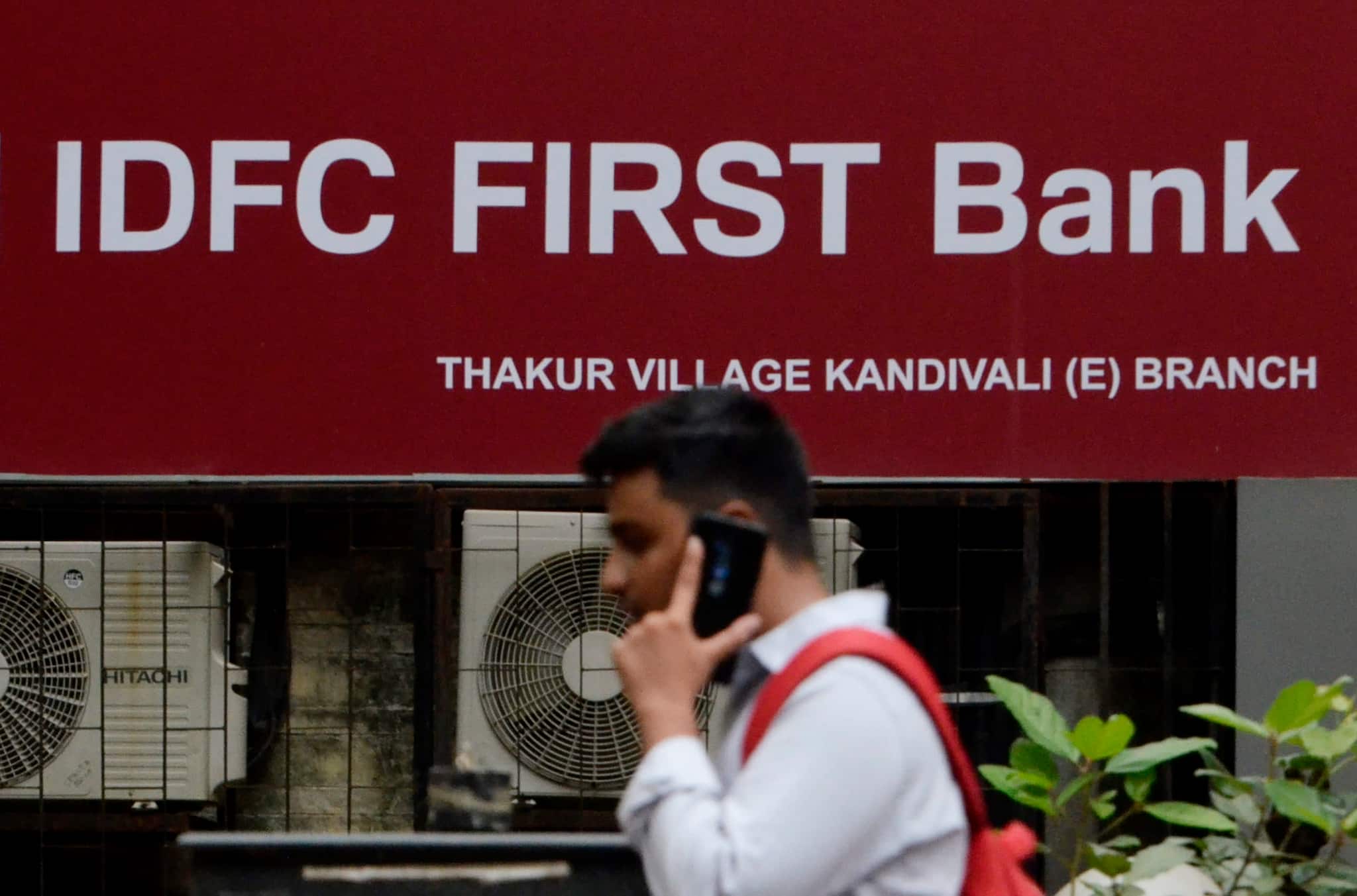
IDFC First Bank Exposes Rs 590 Crore Fraud, Raising Questions About Govt-Banking Partnerships
IDFC First Bank, AU Small Finance Bank Face Reputational Damage Amid Government De-Empanelment
Key Figures:
- Rs 590 crore: Amount of fraud uncovered in an IDFC First Bank branch in Chandigarh
- Rs 200 crore: Amount of deposits withdrawn by the Haryana government due to de-empanelment
- Rs 1,110 crore: Amount of funds belonging to three civic bodies stuck in a private bank during the Maharashtra government's move to close its accounts
Overview
Read also: Treasury Yields Experience Largest Increase in Two Weeks Following Release of Labor Market Data
The recent de-empanelment of IDFC First Bank and AU Small Finance Bank by the Haryana and Odisha governments, respectively, has highlighted the fraught relationship between government departments and private banks. This development has caused reputational damage to the affected banks, with IDFC First Bank's deposits from the Haryana government accounting for only 0.5% of its total deposits.
Historical Context
The federal government lifted an embargo on private banks participating in government business in February 2021, creating a level-playing field for government transactions. This move was intended to increase private banks' Current Account and Savings Account (CASA) ratios, providing access to low-cost and stable deposits. However, the relationship between government departments and private banks has not panned out as expected.
Recent Incidents
Read also: US-Iran Tensions Spark Uptick in Oil Prices Amid Global Market Decline
- June 2025: The Odisha government de-empanelled HDFC Bank, ICICI Bank, and Axis Bank due to poor performance in executing government flagship schemes.
- June 2025: The Punjab state government de-empanelled HDFC Bank and instructed all departments to cease government transactions due to non-cooperation and failure to execute time-bound transactions.
- March 2020: The Maharashtra government ordered the closure of all accounts associated with private and cooperative banks, moving funds to public banks.
Expert Insights
Experts suggest that private banks must exercise higher caution and create more guardrails for high-value transactions to prevent frauds. The use of artificial intelligence and other technologies for fraud detection is crucial in this regard. Additionally, the premium that public banks, such as SBI, command in terms of trust and reliability must be addressed.
Conclusion
The recent incidents highlight the need for strengthened guardrails to prevent frauds and maintain trust between government departments and private banks. Private banks must adapt to the evolving technology landscape to secure their platforms and maintain their reputation.
Investor Takeaway
Investors should be cautious of potential risks associated with government-banking partnerships.
More in Economy

Treasury Yields Experience Largest Increase in Two Weeks Following Release of Labor Market Data

US-Iran Tensions Spark Uptick in Oil Prices Amid Global Market Decline

MoSPI Releases Uniform Norms for DDP Estimates with 2022-23 Base Year

