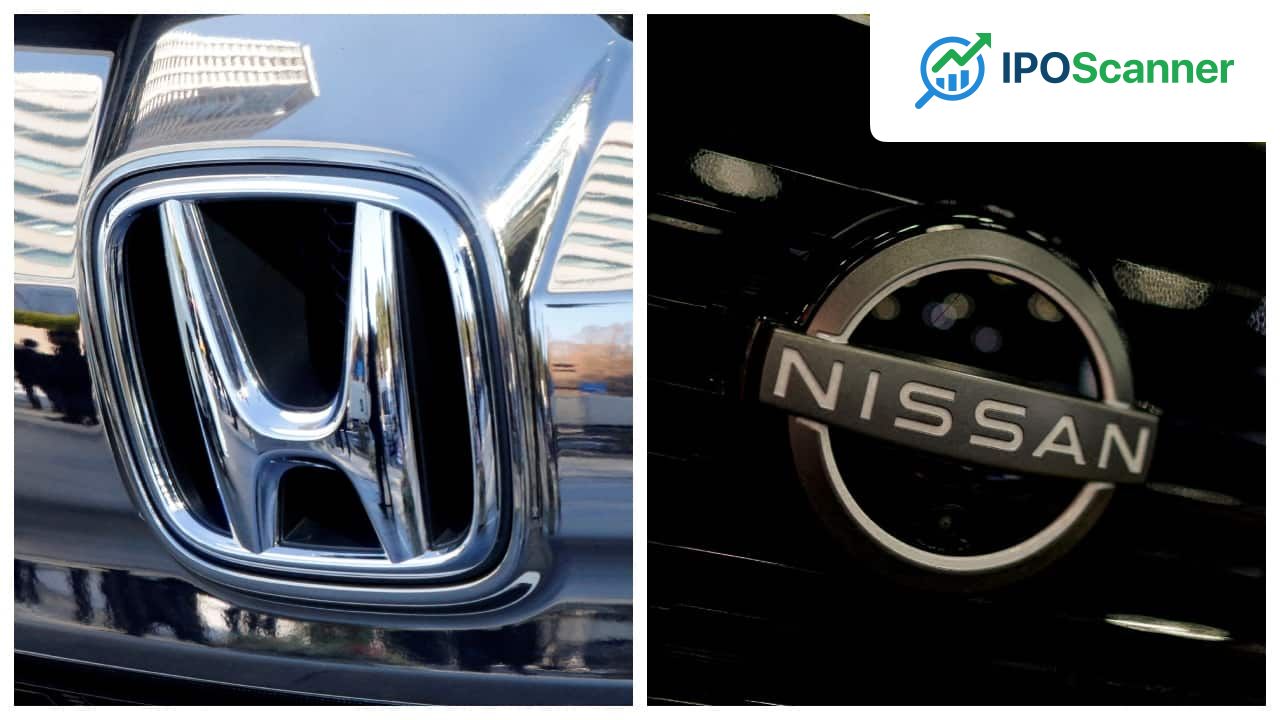
Honda and Nissan's Financial Fortunes Diverge, Raising Speculation of Industry Consolidation
Rival Japanese Automakers Honda and Nissan Reconsider Merger Talks
In a dramatic reversal, Honda Motor Co. and Nissan Motor Co. have found themselves in a situation similar to one year ago, when plans for a merger between the two companies collapsed. However, with Nissan now posting an annual operating profit, while Honda has slid into the red, some analysts believe that a renewed attempt at a tie-up could be on the horizon.
Nissan's financial position had been deteriorating rapidly at the time of the failed merger talks, prompting Honda to be seen as a white knight. However, the prospective tie-up fell apart due to Nissan's resistance to demands from Honda, including that it become a wholly owned subsidiary.
A year later, Nissan has managed to post an annual operating profit, while Honda has reported a ¥414.3 billion ($2.6 billion) operating shortfall for the year ended in March. This is the company's first annual loss since it was founded in the late 1940s, following a ¥2.5 trillion writedown for a misplaced bet on electric vehicles in the US. Honda's five consecutive quarters of losses in its automotive business is a distress signal from its core business.
Read also: Treasury Yields Experience Largest Increase in Two Weeks Following Release of Labor Market Data
| Company | Operating Profit/Loss (Year Ended March) |
|---|---|
| Nissan | ¥414.3 billion (loss) |
| Honda | ¥-414.3 billion (loss) |
The two companies are struggling against Chinese rivals, rising development costs, and the industry's shift toward electrification and automation. A renewed tie-up would test whether scale and shared investment can outweigh the risks of combining two weakened carmakers with overlapping products and markets.
Both companies face systemic problems, including an aging car lineup in key markets such as the US and China, and a lack of momentum in emerging battlegrounds such as India and Mexico due to inroads by Chinese carmakers such as BYD Co. and SAIC Motor Corp.'s MG brand.
Nissan has squandered its once-promising lead in EVs and has faced falling retail sales in the US and China due to uninspired product offerings. The company has been forced to slash 20,000 jobs and shutter seven factories, shrinking production volumes and revenue.
Read also: US-Iran Tensions Spark Uptick in Oil Prices Amid Global Market Decline
Honda and Nissan executives forecast a profit for the current fiscal year, which started in April. However, those best-case scenarios come at a time when the auto industry is beset with challenges ranging from soaring materials costs and trade wars to increasingly price-sensitive buyers and rapidly shifting technology.
Merging two struggling carmakers competing in the same markets with similar products could raise questions in the minds of some investors about the potential upside and ultimate purpose. However, it would create one of the biggest carmakers in the world by volume, providing Nissan and Honda with scale economies for everything from shipping logistics to parts procurement.
Ivan Espinosa, Nissan's chief executive officer, has indicated that the door is open for more intense talks with Honda. "The discussions continue actively with them. We continue exploring opportunities for collaboration and as soon as we have something to share, we will be sharing with you."
A tie-up between them would divide Japan's automotive industry into two camps: Honda, Nissan, and junior partner Mitsubishi Motors Corp. on one side, and Toyota Motor Corp. and its roster of smaller carmakers on the other.
Investor Takeaway
Investors should monitor potential industry consolidation in the auto sector.
More in Market

Treasury Yields Experience Largest Increase in Two Weeks Following Release of Labor Market Data

US-Iran Tensions Spark Uptick in Oil Prices Amid Global Market Decline

Indian Stocks to Watch: BHEL, Agarwal Industrial, JBM Auto, Rajesh Exports, Indian Energy Exchange, Lenskart Solutions in Market Focus on June 4.