Government May Hesitate on Further Quality Control Order Withdrawals: Officials' Assessment
Quality Control Orders: Government to Exercise Caution
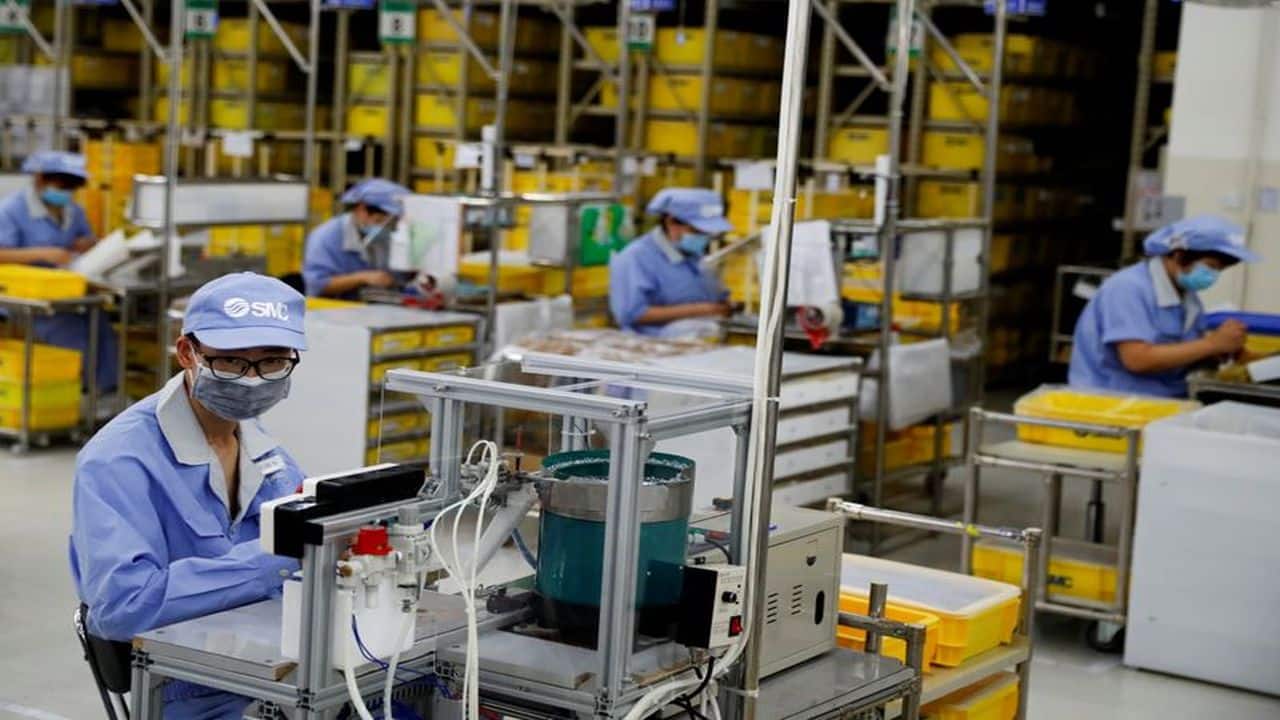
The central government is likely to slow down further withdrawals of 14 quality control orders (QCOs) across three sectors, as the priority is on ensuring that high quality goods are manufactured for domestic consumption as well as exports. This decision comes after the withdrawal of 14 QCOs in November 2025, primarily in the chemical polymer and fibre-based materials sectors.
Free Trade Agreements and Non-Tariff Barriers
The withdrawal of QCOs is a key strategy to address concerns of other countries around non-tariff barriers as India negotiates free trade agreements (FTAs) with advanced economies. In 2025, 9 FTAs were signed, including the pacts with the UK and EU.
Read also: Treasury Yields Experience Largest Increase in Two Weeks Following Release of Labor Market Data
Government's Stance on Quality Control
Government officials have stated that while there is an internal suggestion to pause issuing new QCOs on raw materials, quality cannot be compromised. The government will evaluate new QCOs on a case-to-case basis. The aim is to ensure that high quality goods are manufactured, which will boost India's exports.
NITI Aayog's Recommendations
A NITI Aayog panel had recommended pausing upcoming QCOs on raw materials and capital goods, restricting new QCOs to products that pose direct safety or environmental risks. The panel also suggested reviewing new QCOs by the Inter-Ministerial Group (IMG) to prevent premature rollout and compliance burdens on manufacturers and MSMEs.
Read also: US-Iran Tensions Spark Uptick in Oil Prices Amid Global Market Decline
Reforming Quality Inspection Process
The government is working on reforming the certification scheme of the Bureau of Indian Standards (BIS), which currently operates 10 certification schemes. The NITI Aayog report had suggested rationalising and consolidating the existing schemes into two principal ones.
Quality Council of India Standards
The Quality Council of India (QCI) has announced a comprehensive set of next-generation quality reforms aimed at strengthening India's quality ecosystem. The QCI has unveiled the 'Q Mark', a QR-coded Mark of quality designed to enhance transparency and trust.
Key Statistics
- As of December 31, 2025, a total of 143 QCOs, covering 723 products, have been notified by various ministries.
- In 2019, a total of 214 products were covered under QCOs.
- The government plans to train 1 lakh MSMEs and Self-Help Groups in quality, packaging, and branding in 2026.
Investor Takeaway
Investors should be cautious of potential delays in quality control order withdrawals, which may impact India's trade agreements.
More in Economy

Treasury Yields Experience Largest Increase in Two Weeks Following Release of Labor Market Data

US-Iran Tensions Spark Uptick in Oil Prices Amid Global Market Decline

MoSPI Releases Uniform Norms for DDP Estimates with 2022-23 Base Year

