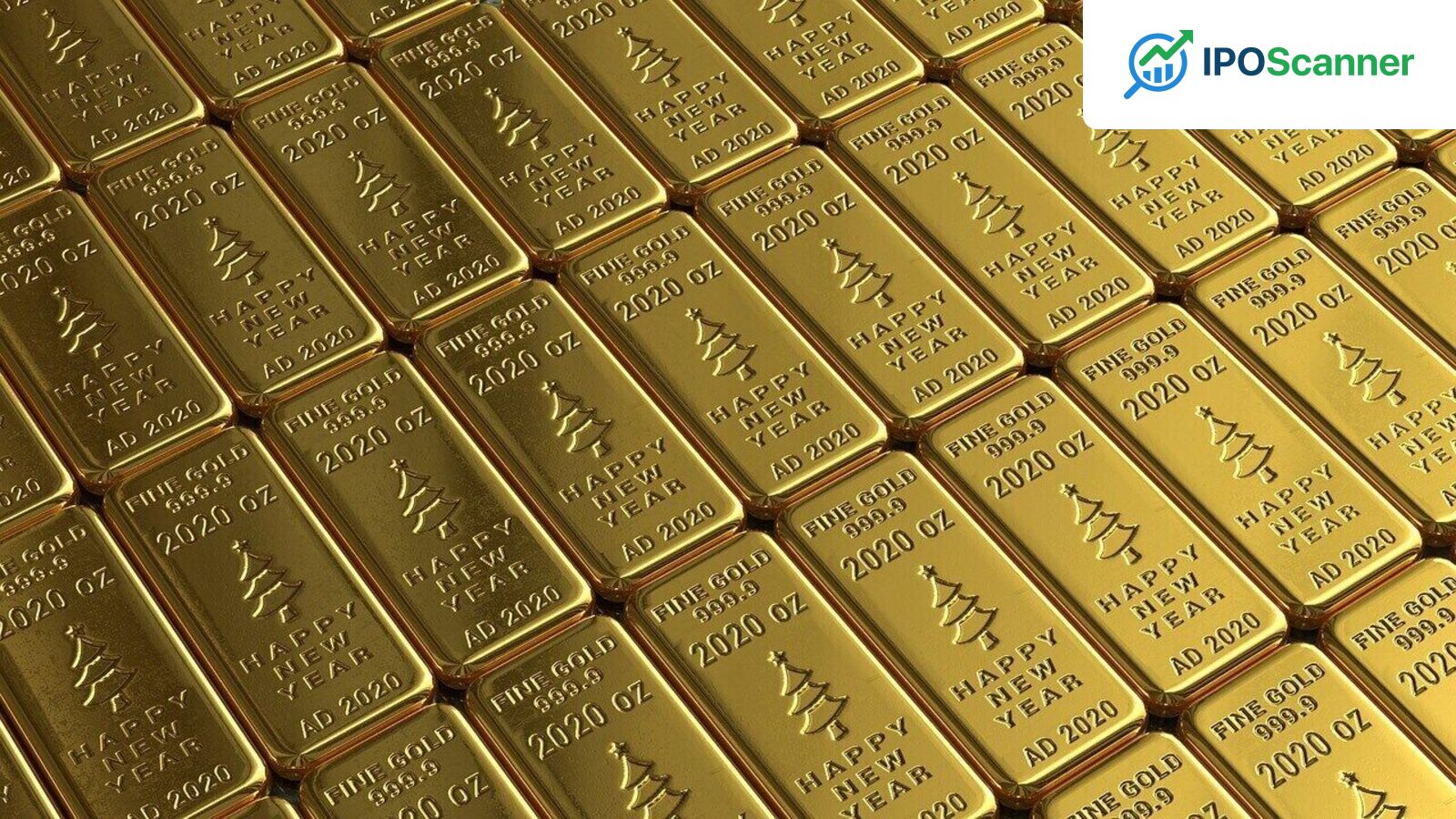
Gold Price Forecast Suggests Historic Surge in Next Five Years: Deutsche Bank Predicts $8000 Value
Gold on the Verge of a Structural Breakout: Deutsche Bank Report
A recent report from Deutsche Bank has sparked excitement in the gold market, suggesting that the precious metal may be on the verge of a structural breakout, rather than just a cyclical rally. According to the report, changing global power dynamics, shifting reserve strategies, and aggressive central bank buying could push prices to unprecedented levels, potentially as high as $8000 over the next five years.
The report highlights a major change in how countries manage their foreign exchange reserves, particularly in emerging markets. Gold is increasingly being preferred over the US dollar as a store of value in an uncertain world. Even in an environment where emerging market foreign exchange reserves decline to $5 trillion, gold prices could still rise to $8000 over the next five years, if emerging market countries all target a 40% gold share.
The bank notes that gold's share in global central bank reserves has doubled in the past four years to nearly 30% today, with the gap between the dollar and gold now just 10%. This shift is being driven largely by emerging market central banks, which have been steadily accumulating gold over the past decade.
Read also: Treasury Yields Experience Largest Increase in Two Weeks Following Release of Labor Market Data
Key Drivers of the Rally
The bullish case for gold rests on three core drivers: rising central bank purchases, increasing gold prices, and a potential decline in foreign exchange reserves. Emerging market central banks have been the biggest buyers of gold since the 2008 financial crisis, reversing a trend seen in the 1990s when developed economies were actively selling.
| Central Bank Purchases | Emerging Market Central Banks | Advanced Economy Central Banks |
|---|---|---|
| 225mn troy oz over 17 years | 225mn troy oz over 17 years | -200mn troy oz in the 1990s |
This steady accumulation is not just a diversification strategy but also reflects deeper concerns about the global financial system. The report points out that geopolitical tensions, sanctions risk, and the "weaponisation" of the dollar-based financial system have made gold more attractive.
Read also: US-Iran Tensions Spark Uptick in Oil Prices Amid Global Market Decline
Potential Decline in Emerging Market Foreign Exchange Reserves
During the 1990s and 2000s, emerging market economies built massive dollar reserves due to globalization and trade surpluses. However, this trend may now reverse as countries use these reserves for domestic investments, defense spending, and economic resilience. The enormous build of foreign exchange reserves in emerging markets may now go into reverse, as countries draw on savings to build strategic autonomy in defense and energy.
The Interplay of Factors
The interplay of these factors creates a powerful feedback loop—central bank buying pushes gold prices higher, which in turn increases gold's share in reserves, reinforcing the trend further.
What Needs to Happen for Gold to Reach $8000
The $8000 scenario is based on a combination of assumptions rather than a base-case forecast. The most critical among these is the target allocation of gold in central bank reserves. Historically, gold accounted for 40-70% of global reserves before the 1990s. Today, that figure is closer to 30%, with emerging markets holding even lower allocations at around 16%.
The report argues that a "return to history" scenario—marked by geopolitical fragmentation, inflation pressures, and reduced trust in fiat currencies—could push gold's share back towards 40%. Under such a scenario, even if emerging market foreign exchange reserves decline to around $5 trillion, increased gold purchases could still drive prices sharply higher.
For investors, the takeaway is not just about a price target but about understanding the structural shift underway. The gold rally is no longer driven purely by inflation or interest rates—it is increasingly tied to geopolitics, reserve diversification, and the evolving global monetary order.
Investor Takeaway
Investors should consider gold as a potential store of value in an uncertain world.
More in Economy

Treasury Yields Experience Largest Increase in Two Weeks Following Release of Labor Market Data

US-Iran Tensions Spark Uptick in Oil Prices Amid Global Market Decline

MoSPI Releases Uniform Norms for DDP Estimates with 2022-23 Base Year

