Gold ETFs and EGRs: Investment Options Amid PM's One-Year Purchase Halt Call
India's Gold Appetite Remains Unchanged Amid Government's Appeal
India's Prime Minister Narendra Modi has recently appealed to citizens to defer non-essential gold buying for a year, citing concerns over the country's external balances. However, this move is not a commentary on the value of gold as an asset class, but rather a measure to mitigate the impact of gold imports on the trade deficit and the rupee.
India's large gold imports, which are predominantly denominated in dollars, have contributed to the country's trade deficit, particularly in a period of elevated crude prices. According to estimates, India sits atop a massive 30,000 tonnes of household gold, the world's largest private stockpile. Recycling even 1 percent of this stockpile could replace 300 tonnes of annual imports, saving billions in foreign exchange at a time when the government is calling for national economic restraint.
Digital Alternatives to Physical Gold Ownership
Read also: Treasury Yields Experience Largest Increase in Two Weeks Following Release of Labor Market Data
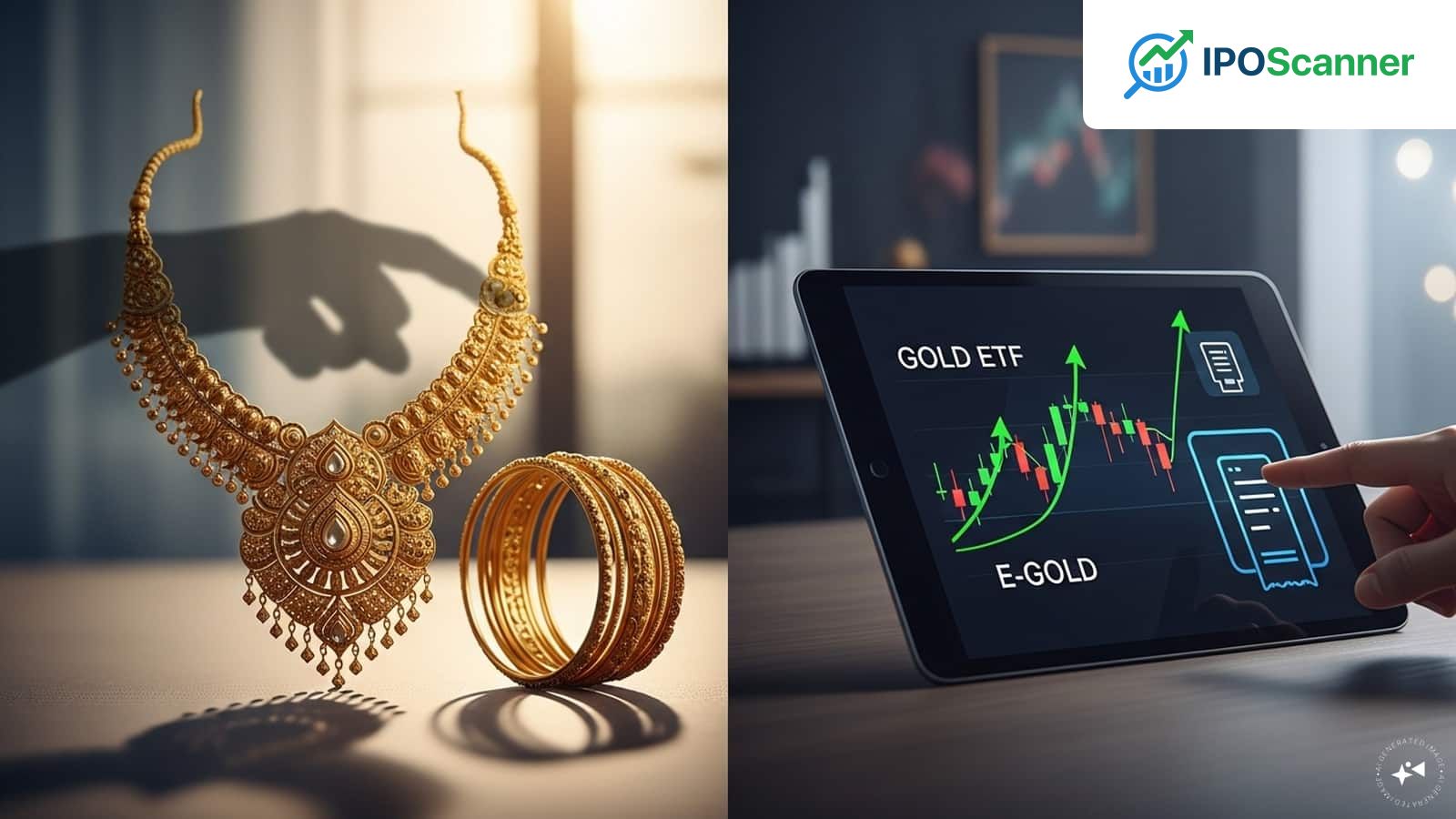
Investors are increasingly shifting their demand from physical gold ownership to financial ownership through instruments such as gold exchange-traded funds (ETFs) and electronic gold receipts (EGRs). These digital alternatives offer full price participation without triggering a single dollar of import demand.
Both ETFs and EGRs are regulated by the Securities and Exchange Board of India (SEBI) and are considered safer than unregulated digital gold platforms. While conversion to physical gold through EGR remains an attractive option compared to a Gold ETF, EGR is directly linked to physical stocks in vaults, and Goods and Services Tax (GST) applies only to the physical delivery conversion.
| Instrument | Q1 2026 Transactions (Rs billion) | Year-over-Year Growth |
|---|---|---|
| UPI Gold Transactions | 70 | 300% |
| Recycled Scrap Supply | 20% |
Central Banks Continue to Accumulate Gold
Read also: US-Iran Tensions Spark Uptick in Oil Prices Amid Global Market Decline
From a macro perspective, the broader bullish theme for gold remains intact. Central banks globally, including the Reserve Bank of India, continue to accumulate gold as part of diversification away from dollar dependence and the larger de-dollarisation trend. Between October 2025 and March 2026, the RBI brought home over 104 metric tonnes of gold, reflecting its continued strategic preference for the metal.
Gold as a Hedge and Investment Opportunity
Gold continues to serve as an effective hedge for Indian investors, as any rupee weakness driven by rising imports or global uncertainty typically pushes domestic gold higher. In Q1 2026, UPI gold transactions nearly quadrupled year-over-year to Rs 70 billion, while recycled scrap supply rose 20 percent.
For investors, the decision between gold ETFs and EGRs should depend more on liquidity, taxation, ease of trading, and investment convenience rather than on expectations of weaker gold demand. Gold ETFs remain one of the most efficient and investor-friendly ways to invest in gold, offering simplicity, liquidity, transparency, and a relatively straightforward taxation framework.
Ultimately, the ownership pattern of gold is simply becoming more digital and financialised, and people are unlikely to stop buying gold.
Investor Takeaway
Investors should consider digital gold investment options to avoid impacting India's external balances.
More in Economy

Treasury Yields Experience Largest Increase in Two Weeks Following Release of Labor Market Data

US-Iran Tensions Spark Uptick in Oil Prices Amid Global Market Decline

MoSPI Releases Uniform Norms for DDP Estimates with 2022-23 Base Year

