Global Supply Chain Disruptions Continue Amid Rise of India as Key Semiconductor Provider
India Takes a Leap Forward in Semiconductor Manufacturing
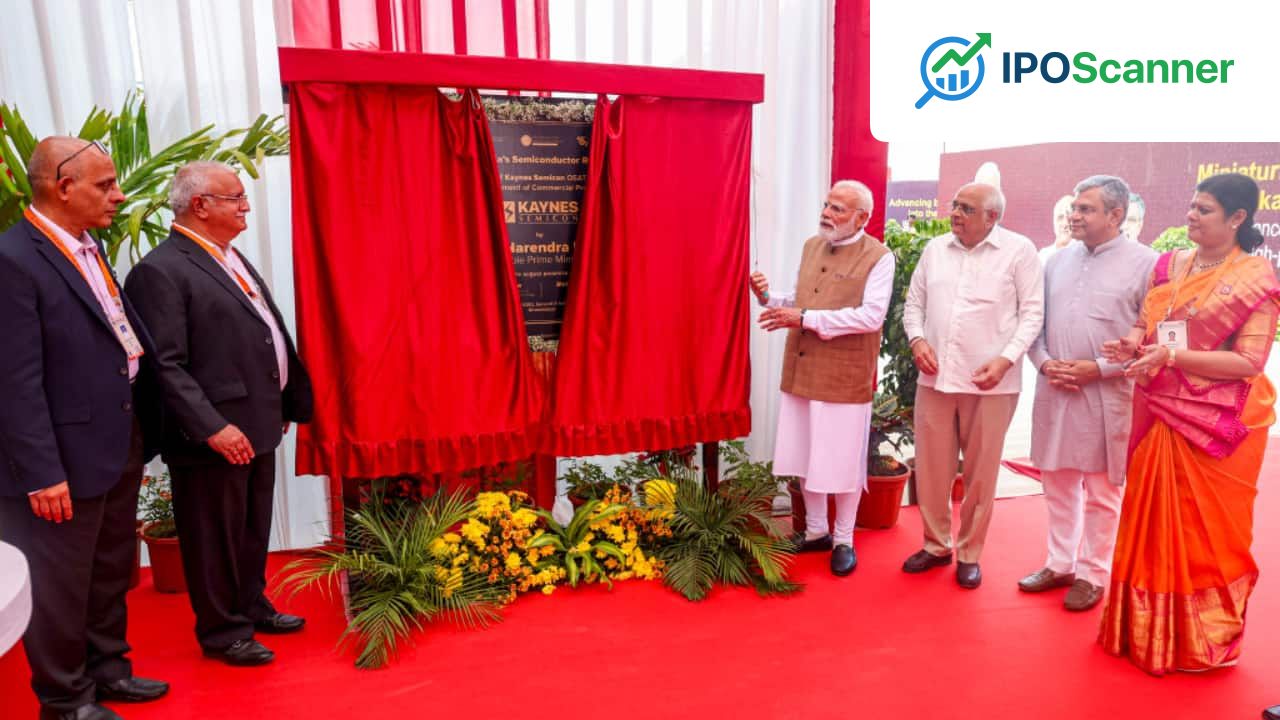
On Tuesday, Prime Minister Narendra Modi inaugurated Kaynes Semicon's outsourced semiconductor plant in Sanand, marking a significant milestone in India's efforts to strengthen its role as a reliable semiconductor supplier in the global market.
The Prime Minister emphasized that the 21st Century has brought several challenges, including conflicts that have disrupted global supply chains. However, he noted that India is laying a strong foundation for technology and energy security in the coming decades. Modi highlighted India's participation in Pax Silica, a US-led strategic coalition launched in December 2025 to secure critical technology supply chains, with a special focus on semiconductors, AI, and rare earth elements.
India's Semiconductor Ecosystem
Read also: Treasury Yields Experience Largest Increase in Two Weeks Following Release of Labor Market Data
India is actively building a robust semiconductor ecosystem, with significant efforts being made to establish a resilient supply chain for raw materials. The government has launched the National Critical Minerals Mission, with a focus on mining and production of critical minerals. A scheme of Rs 1,500 crore has been launched to promote the recycling of minerals.
Modi referred to the announcement of a 'rare earth corridor' in this year's Budget, encompassing coastal states such as Odisha, Andhra Pradesh, Tamil Nadu, and Kerala. This corridor will serve as an integrated network, forging a robust value chain spanning mining, refining, and manufacturing.
India's 'Techade'
India believes that the 21st Century is not just an era of economic competition, but also a pivotal moment to shape the technological landscape of the future. Modi referred to this decade as India's 'Techade,' highlighting the technology-related initiatives that India is undertaking. He noted that Indians are leading the world in AI adoption and that the success of Digital India and Fintech shows Indians' trust in technology.
Read also: US-Iran Tensions Spark Uptick in Oil Prices Amid Global Market Decline
Semiconductor Market in India
The Prime Minister cited industry estimates, stating that India's semiconductor market is at Rs 4.5 lakh crore, expected to cross Rs 9 lakh crore. He emphasized that this shows the potential of the sector and that India's target is to manufacture within India most of the chips it requires.
Investments and Reforms
Modi noted that India is making unprecedented investments and undertaking reforms across every critical technology sector. He called the inauguration of the second semiconductor plant at Sanand a "moment of pride" as an Indian company has joined the global semiconductor supply chain.
Key Statistics
| Sector | Current Value | Expected Value |
|---|---|---|
| India's semiconductor market | Rs 4.5 lakh crore | Rs 9 lakh crore |
These initiatives are intrinsically linked to the accelerated progress of humanity. Any disruption in supply chains or their flow impacts the development of the entire human race. Therefore, it is extremely important that for the development of the entire world, a democratic nation like India advances in this direction.
Under the India Semiconductor Mission, works of Rs 1.60 lakh crore are underway across ten states. The government has launched Semiconductor Mission 2 in the last budget to make India self-reliant in every sector of its production. Additionally, a scheme to train professionals in semiconductor design is underway, with more than 400 universities and startups given access to advanced design tools.
Investor Takeaway
India is strengthening its role as a reliable semiconductor supplier in the global market.
More in Economy

Treasury Yields Experience Largest Increase in Two Weeks Following Release of Labor Market Data

US-Iran Tensions Spark Uptick in Oil Prices Amid Global Market Decline

MoSPI Releases Uniform Norms for DDP Estimates with 2022-23 Base Year

