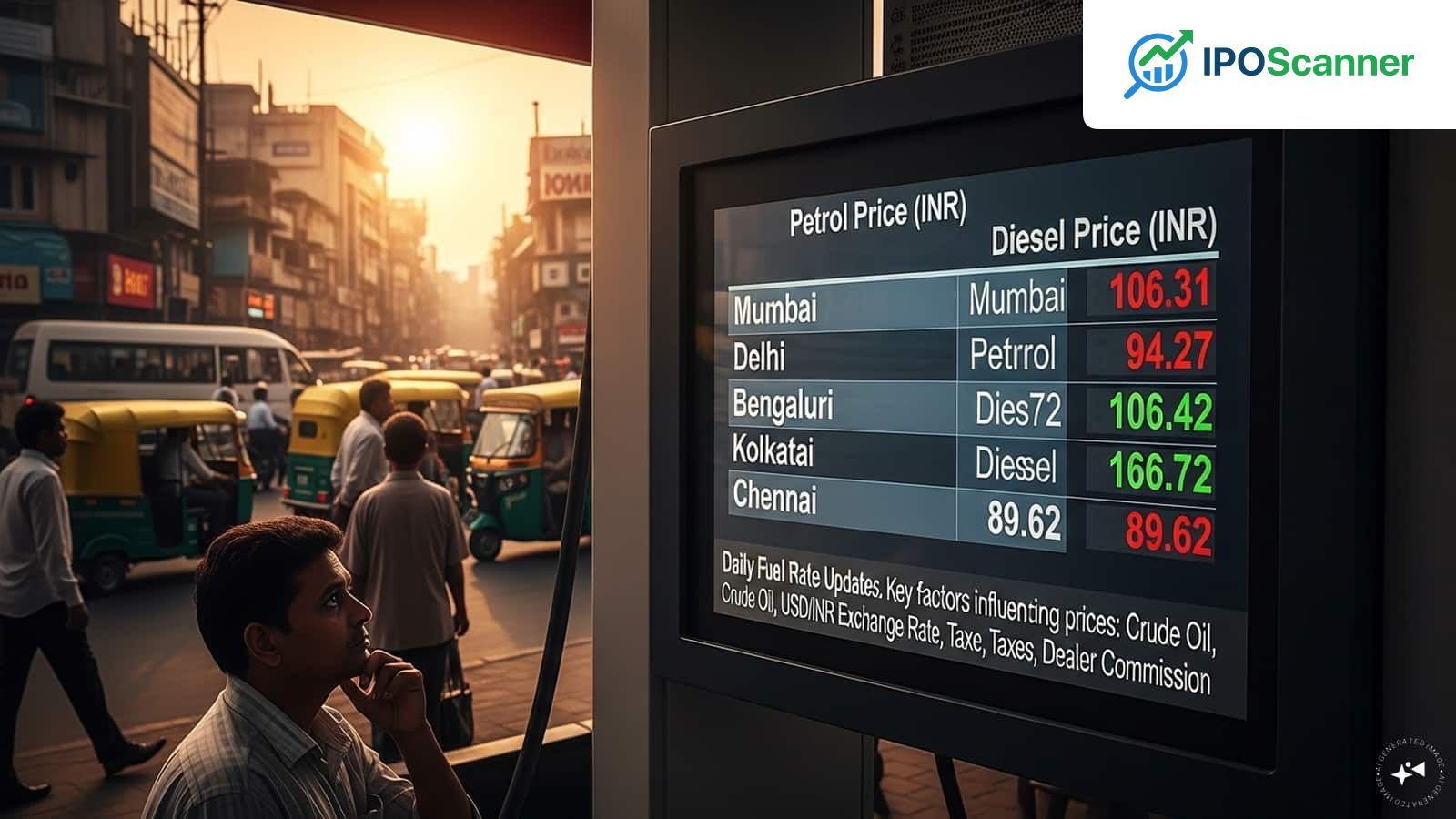
Fuel Prices Rise: Petrol Price Increase of Rs 5 Confirmed in Some Cities
Petrol and Diesel Prices Remain Stable in India
Key Figures:
- Rs 94.77 per litre: petrol price in Delhi
- Rs 87.67 per litre: diesel price in Delhi
- Rs 103.49 per litre: petrol price in Mumbai
- Rs 90.03 per litre: diesel price in Mumbai
Fuel Prices in India
Read also: Treasury Yields Experience Largest Increase in Two Weeks Following Release of Labor Market Data
On March 27, 2026, fuel rates across major Indian cities remained largely unchanged, extending the period of stability in retail prices maintained by state-run oil companies. However, Nayara Energy, a private fuel retailer, increased petrol prices by Rs 5 per litre and diesel by Rs 3 per litre, citing elevated crude oil prices due to the ongoing West Asia conflict.
Oil Marketing Companies (OMCs)
The three major oil marketing companies in India, Indian Oil Corporation (IOC), Bharat Petroleum Corporation Limited (BPCL), and Hindustan Petroleum Corporation Limited (HPCL), continue to revise fuel prices daily to align with global crude oil movements and currency exchange rates. Despite recent volatility in international oil markets, these companies have not made any changes to retail fuel prices.
Price Variations by City
Read also: US-Iran Tensions Spark Uptick in Oil Prices Amid Global Market Decline
Petrol prices remain above Rs 100 per litre in most locations, including Mumbai, Bengaluru, Hyderabad, and Kolkata, while diesel prices continue to remain below the Rs 100 mark in these cities.
Factors Affecting Petrol and Diesel Prices
Retail fuel prices in India are influenced by several factors, including:
- Crude Oil Prices: The price of crude oil in international markets is the primary driver of fuel prices.
- Rupee-Dollar Exchange Rate: A weaker rupee can increase the cost of imported crude, potentially pushing up fuel prices.
- Taxes: Taxes imposed by the central and state governments form a major component of petrol and diesel prices, which is why fuel rates vary from state to state.
- Transportation Costs: Transportation costs and demand-supply dynamics also influence the final retail price paid by consumers.
Investor Takeaway
Investors should be cautious of potential price volatility in the energy sector due to global crude oil movements.
More in Economy

Treasury Yields Experience Largest Increase in Two Weeks Following Release of Labor Market Data

US-Iran Tensions Spark Uptick in Oil Prices Amid Global Market Decline

MoSPI Releases Uniform Norms for DDP Estimates with 2022-23 Base Year

