Fuel Prices in Major Cities on May 6: Latest Updates
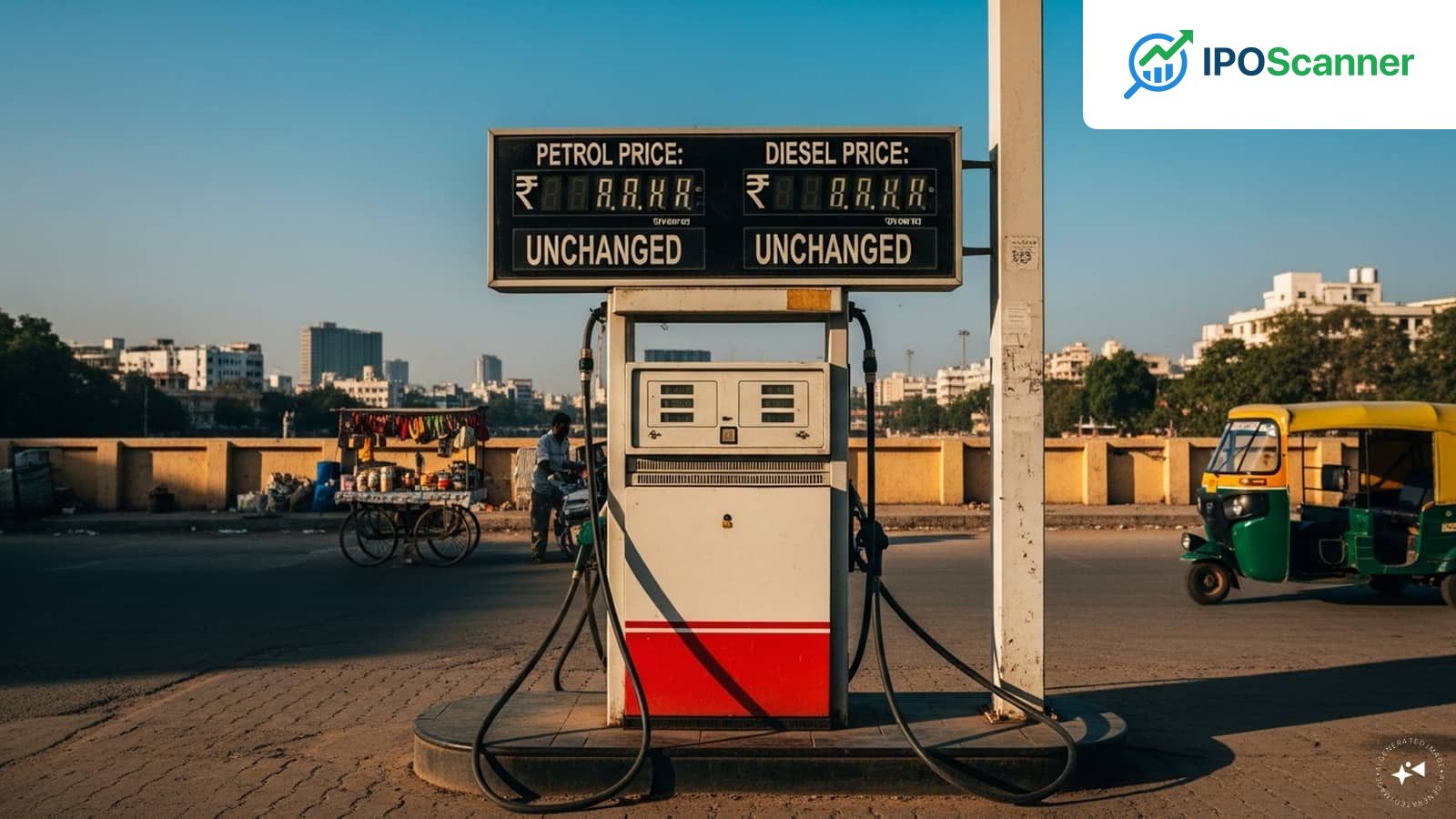
Petrol and Diesel Prices Remain Unchanged in Major Indian Cities
Fuel rates across major Indian cities have continued to hold steady on Wednesday, May 6, 2026, extending the ongoing phase of stability in petrol and diesel prices. Despite fluctuations in global crude oil markets and currency movements, retail fuel prices have remained unchanged.
The three major oil marketing companies (OMCs) in India - Indian Oil Corporation (IOC), Bharat Petroleum Corporation Limited (BPCL), and Hindustan Petroleum Corporation Limited (HPCL) - revise fuel prices daily to align with global crude oil prices and foreign exchange rate movements. However, prices have remained stable in recent sessions.
In Delhi, petrol continues to be priced at Rs 94.77 per litre, while diesel stands at Rs 87.67 per litre. Prices remain higher in Mumbai, where petrol is retailing at Rs 103.49 per litre and diesel at around Rs 90.03 per litre.
Read also: Treasury Yields Experience Largest Increase in Two Weeks Following Release of Labor Market Data
Petrol and Diesel Prices Comparison
| City | Petrol Price (Yesterday) | Petrol Price (Today) | Diesel Price (Yesterday) | Diesel Price (Today) |
|---|---|---|---|---|
| Mumbai | Rs 105.49 | Rs 103.49 | Rs 92.03 | Rs 90.03 |
| Delhi | Rs 95.57 | Rs 94.77 | Rs 88.67 | Rs 87.67 |
Among major metro cities, petrol prices remain above Rs 100 per litre in most locations, including Mumbai, Bengaluru, Hyderabad, and Kolkata, while diesel prices continue to remain below the Rs 100 mark.
Fuel prices in India are revised daily based on movements in global crude oil prices and changes in foreign exchange rates. Despite volatility in global crude oil markets, petrol and diesel prices in India have remained largely stable over the past few years. Retail fuel prices have seen limited movement since May 2022, when excise duties and state taxes were reduced.
Read also: US-Iran Tensions Spark Uptick in Oil Prices Amid Global Market Decline
Retail fuel prices are influenced by multiple factors, including global crude oil prices, the rupee-dollar exchange rate, central and state taxes, transportation costs, and demand-supply dynamics. Since India imports a large share of its crude oil, any fluctuation in global prices or currency movements can impact domestic fuel rates.
More in Economy

Treasury Yields Experience Largest Increase in Two Weeks Following Release of Labor Market Data

US-Iran Tensions Spark Uptick in Oil Prices Amid Global Market Decline

MoSPI Releases Uniform Norms for DDP Estimates with 2022-23 Base Year

