Financial Regulations Update: Key Changes and Implications for Individuals and Businesses
Changes to Everyday Finances Take Effect on April 1, 2026
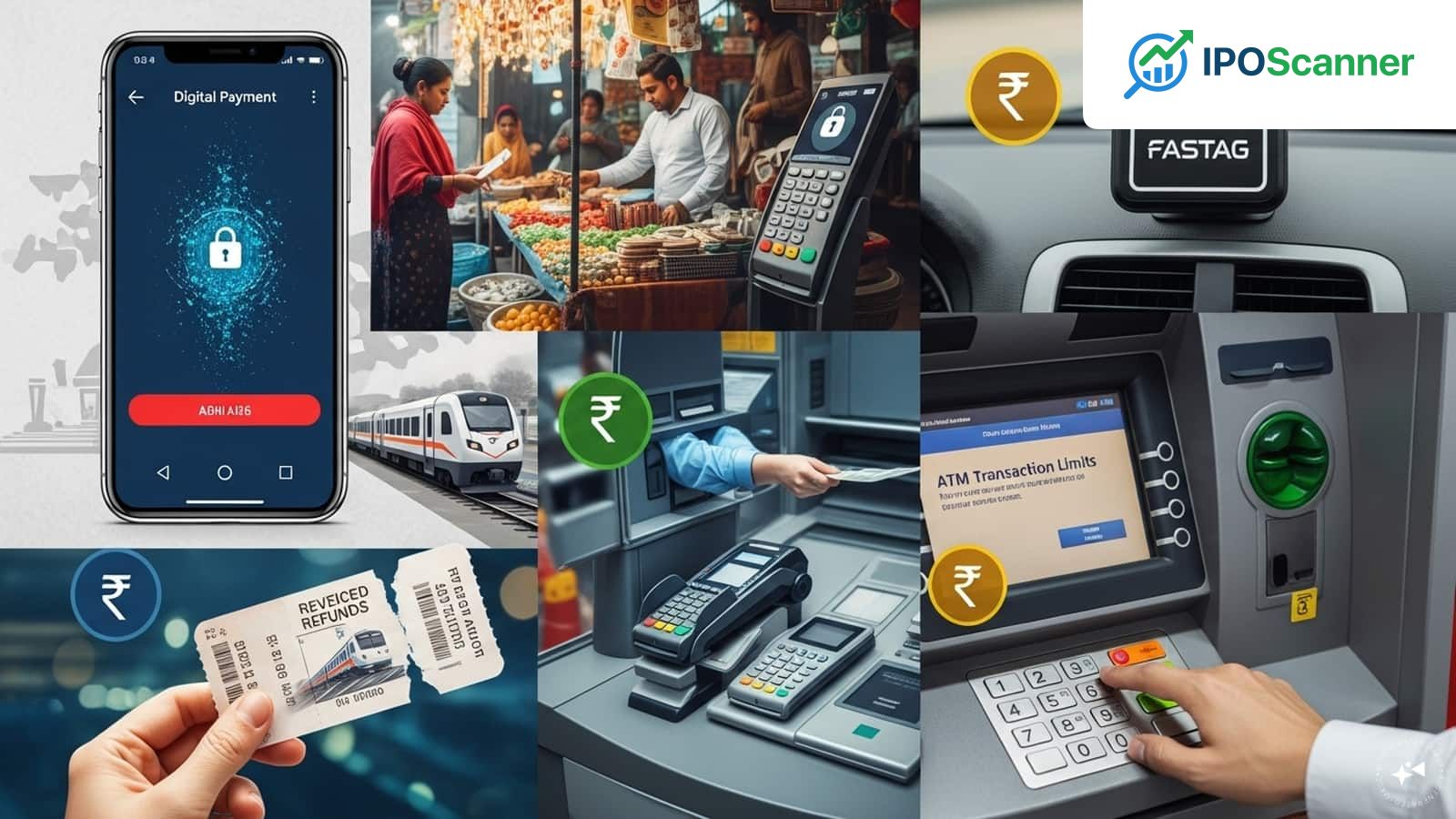
Starting April 1, 2026, several changes will come into effect, impacting various aspects of everyday finances. These updates include stricter digital payment security, revised train ticket cancellation rules, increased FASTag annual pass cost, PAN-related changes, loans against silver collateral, updated bank ATM rules, and changes to credit card policies.
Stricter Digital Payment Security
To enhance fraud protection, mandatory two-factor authentication (2FA) will apply across UPI and card transactions from April 1, 2026. This means that customers will need to provide an additional form of verification, such as a password, SMS-based OTP, or biometric authentication, in addition to their existing credentials.
Read also: Treasury Yields Experience Largest Increase in Two Weeks Following Release of Labor Market Data
Train Ticket Cancellation Rules Updated
The Indian Railways has revised its ticket cancellation policy, tightening the refund window. Passengers will now receive no refund if tickets are cancelled within 8 hours of departure, compared to the earlier 4-hour limit. The revised refund structure is as follows:
| Cancellation Time | Refund Percentage |
|---|---|
| 8-24 hours before departure | 50% deduction, remaining amount refunded |
| 24-72 hours in advance | 25% deduction, 75% refund |
| More than 72 hours prior | Standard Indian Railways cancellation charges apply |
FASTag Annual Pass Cost Increased
Read also: US-Iran Tensions Spark Uptick in Oil Prices Amid Global Market Decline
The National Highways Authority of India (NHAI) has announced a revision to the FASTag annual pass for the financial year 2026-27. The revised fee will be applicable from April 1, 2026, and will increase from Rs 3,000 to Rs 3,075 for FY27. The pass will remain valid for one year from activation or up to 200 trips, whichever comes first.
PAN-Related Changes
From April 1, applicants will be required to use updated PAN application forms to obtain a PAN card. In addition to Aadhaar, they will need to submit additional documents as proof of date of birth. Quoting a PAN will also become mandatory for applying for a credit card, and existing cardholders will be required to link their cards with their PAN.
Loans Against Silver Collateral
Starting April 1, 2026, the Reserve Bank of India's new Lending Against Gold and Silver Collateral Directions, 2025 will permit regulated entities, including commercial banks and NBFCs, to accept silver jewellery, ornaments, and coins as eligible collateral for loans.
Bank ATM Rules Updated
Several banks have revised their ATM transaction rules, impacting withdrawal limits and charges. HDFC Bank has announced that UPI-based ATM withdrawals will now be included within the monthly free transaction limit, while Bandhan Bank has updated its ATM usage policy to offer three free transactions per month in metro cities and five in non-metro locations. Punjab National Bank has reduced debit card cash withdrawal limits for select card variants, ranging between Rs 50,000 and Rs 75,000, depending on the card type.
Credit Card Changes
Axis Bank has revised the cashback structure of the Airtel Axis Bank Credit Card, linking rewards to base cycle earnings. Cashback earned on transactions made via Zomato, Blinkit, and District by Zomato will be credited directly to partner wallets. Additionally, the benefit of four complimentary domestic airport lounge visits will be discontinued. YES Bank has revised charges on utility and transportation transactions, with utility payments attracting a fee of 1 percent plus GST once monthly spending exceeds specified limits.
New Labour Codes
The new labour laws, which will come into force in the new financial year, will require employers to allocate at least 50 percent of an employee's total salary as the basic wage component. This may result in a reduction in take-home salaries for some employees.
More in Economy

Treasury Yields Experience Largest Increase in Two Weeks Following Release of Labor Market Data

US-Iran Tensions Spark Uptick in Oil Prices Amid Global Market Decline

MoSPI Releases Uniform Norms for DDP Estimates with 2022-23 Base Year

