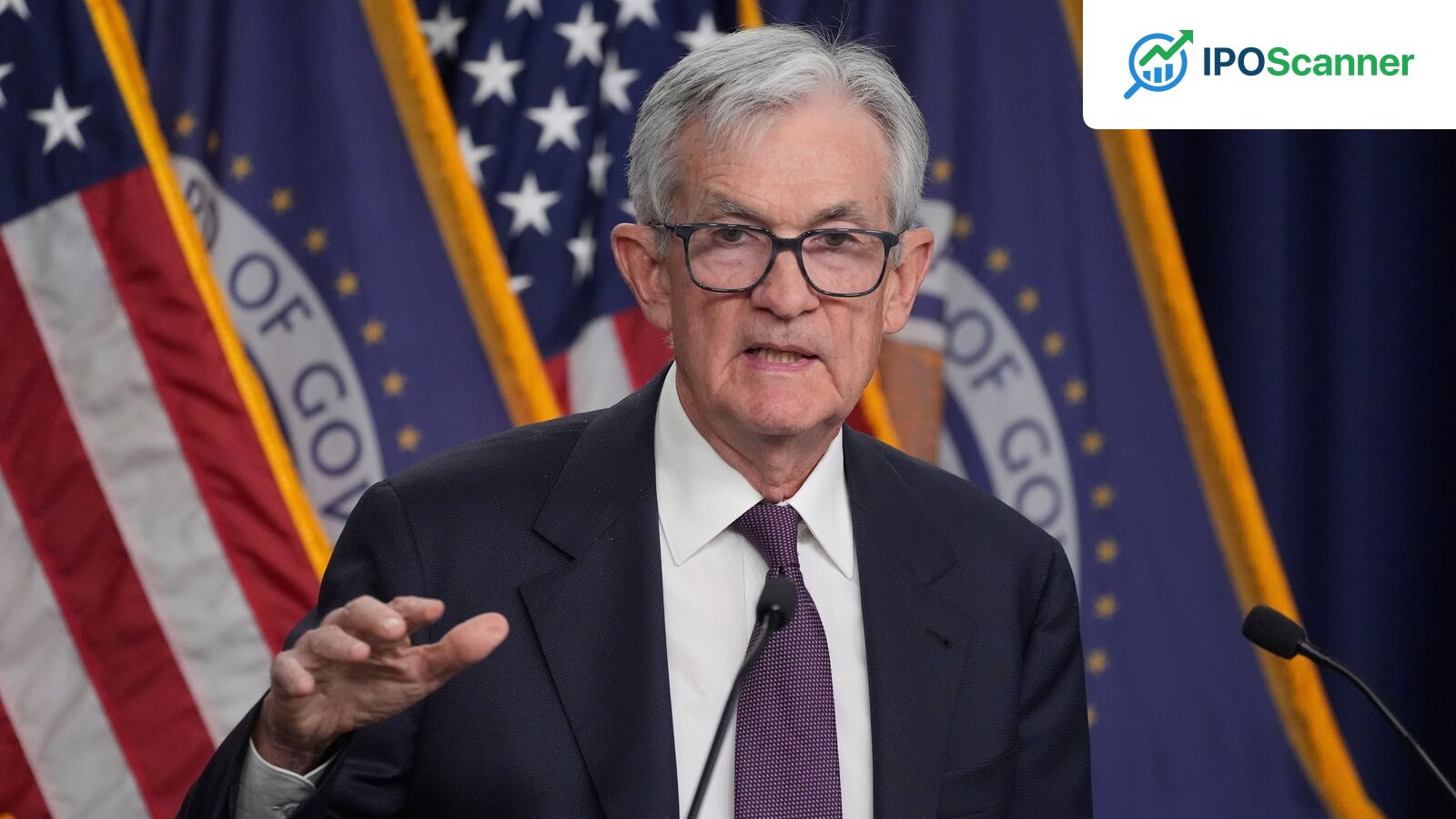
Federal Reserve Maintains Interest Rates at Current Level for Third Consecutive Meeting
Federal Reserve Maintains Interest Rate Unchanged Amid Global Uncertainty
The US Federal Reserve on Wednesday, April 29, made its third consecutive decision to keep the federal funds rate unchanged at a range of 3.5% to 3.75%. This move was anticipated by markets, as the risk of an inflation flare-up remains high due to elevated global energy prices.
Brent Crude prices continue to hover above $110 per barrel, exacerbated by the effective closure of the Strait of Hormuz amid stalled US-Iran talks. The Federal Open Market Committee (FOMC) met on April 28-29 to deliberate on policy rates amidst high uncertainty stemming from the West Asian war, the last such meeting for Jerome Powell as Fed chief, whose term expires on May 15.
Powell expressed his intention to remain at the central bank as governor even after his term as chairman ends. U.S. President Donald Trump has nominated Kevin Warsh to lead the Federal Reserve after Powell, with the Senate Banking Committee voting along party lines to advance Warsh's nomination to the full Republican-controlled Senate, clearing a key procedural hurdle for him to succeed Powell.
Read also: Treasury Yields Experience Largest Increase in Two Weeks Following Release of Labor Market Data
Key Takeaways from the US Fed April Policy Meeting
| Parameter | Current Status | Previous Status |
|---|---|---|
| Federal Funds Rate | 3.5% to 3.75% | 3.5% to 3.75% |
| Number of Dissenters | 4 | 3 |
The FOMC voted 8-4 to maintain the benchmark interest rate, highlighting increased uncertainty due to the war in West Asia. The Committee seeks to achieve maximum employment and inflation at the rate of 2% over the longer run. Developments in the Middle East contribute to a high level of uncertainty about the economic outlook.
In contrast to previous meetings, the number of dissenters rose, with Stephen I. Miran calling for lowering the target range for the federal funds rate by 25 basis points. Three policymakers supported the pause but showed no inclination to lower interest rates.
Read also: US-Iran Tensions Spark Uptick in Oil Prices Amid Global Market Decline
The FOMC highlighted the increased risk of inflation from recent increases in global energy prices. US inflation remained above the Fed's 2% target even before the US-Iran conflict started. The conflict has added another layer of uncertainty, making the situation complex for the Federal Reserve to fulfill its dual mandate of keeping inflation near its long-term 2% target while ensuring maximum employment.
Economic activity has been expanding at a solid pace, with job gains remaining low, on average, and the unemployment rate little changed in recent months. The FOMC will continue to monitor the incoming information for the economic outlook and adjust the monetary policy stance if risks emerge that could impede the attainment of the committee's goals.
More in Economy

Treasury Yields Experience Largest Increase in Two Weeks Following Release of Labor Market Data

US-Iran Tensions Spark Uptick in Oil Prices Amid Global Market Decline

MoSPI Releases Uniform Norms for DDP Estimates with 2022-23 Base Year

